Introduction
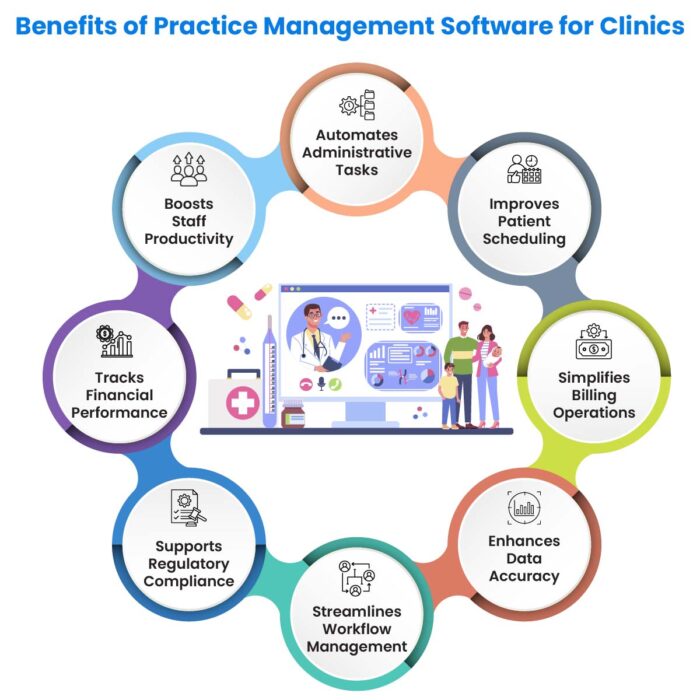
Running a clinic in 2026 is more complex than ever. Medical practices are expected to deliver excellent patient care while also operating like efficient businesses—balancing staffing shortages, rising costs, payer requirements, patient expectations, compliance demands, and constant pressure to improve collections. For many clinics, the biggest operational challenge is not clinical decision-making. It is workflow management: scheduling, intake, communication, billing, eligibility checks, claim follow-ups, patient payments, reporting, and coordination between the front office and clinical teams. This is exactly where Practice Management Software becomes critical. Practice Management Software is designed to streamline and automate the non-clinical operations of a medical practice. When implemented correctly—especially when integrated with EHR/EMR software—practice management tools can significantly reduce administrative workload, improve revenue cycle performance, enhance patient experience, and help clinics scale without chaos. This guide explains the benefits of practice management software for clinics in detail, highlights the must-have features in 2026, and explains how to evaluate systems to ensure ROI. Whether you are opening a new clinic, growing to multiple providers, or planning to replace outdated software, understanding the benefits of practice management technology can help you make a smarter buying decision that supports long-term growth.
What Is Practice Management Software for Clinics?
Practice Management Software (often abbreviated as PMS) is the operational system that helps clinics manage daily administrative and financial functions. While EHR/EMR systems focus on clinical documentation and patient records, practice management software focuses on the business side of healthcare operations. Core functions typically include appointment scheduling, patient registration, insurance eligibility, claim submission, billing, payment processing, statements, collections reporting, provider productivity tracking, and administrative analytics. In modern systems, practice management software also includes features like automated reminders, patient portal tools, online scheduling, digital intake forms, consent signing, and communication workflows. The best practice management software does not simply digitize tasks. It automates them, reduces human error, and ensures operational consistency across providers and locations. In 2026, medical practices increasingly choose integrated solutions where EHR + practice management + billing operate as one platform. That integration is key because it reduces workflow gaps between clinical documentation and revenue cycle, eliminating the most common cause of billing errors and administrative friction: disconnected systems.
Why Clinics Are Investing More in Practice Management Software in 2026
Clinics are investing in practice management solutions because healthcare business operations have become more demanding. Patients expect consumer-like digital experiences. Payers are stricter and denials are more common. Staffing is harder and more expensive. Compliance requirements continue to grow. Meanwhile, independent practices must compete against larger groups and corporate-owned clinics that have better systems and stronger administrative infrastructure. Practice management software helps clinics respond to these pressures by improving efficiency, reducing dependency on manual tasks, and creating a smoother patient journey. It allows smaller practices to operate with the sophistication of larger organizations without building large administrative teams. In practical terms, practice management software helps clinics stop losing revenue due to missed charges and poor billing workflows, stop losing patients due to poor communication and scheduling delays, and stop wasting staff hours on repetitive tasks that can be automated.
Benefit #1: Faster and More Accurate Appointment Scheduling
Scheduling is the front door of the practice. If scheduling is inefficient, the entire clinic suffers. Practice management software improves scheduling by providing centralized, real-time appointment calendars, provider availability settings, room or resource scheduling, and conflict prevention. It allows staff to schedule faster and more accurately while reducing double-bookings, missed slots, and workflow confusion. In multi-provider or multi-location clinics, scheduling becomes even more complicated. Modern practice management systems allow clinics to manage multiple calendars, assign appointments by location or service type, and optimize provider utilization. In 2026, advanced practice management systems also support patient self-scheduling through online booking, which reduces call volume and increases appointment conversions. Faster scheduling directly improves revenue by maximizing filled slots and improving patient access. It also improves patient satisfaction, because modern patients do not want to wait on hold or play phone tag to schedule an appointment. Clinics that offer digital scheduling options, automated confirmations, and clear appointment workflows are more likely to retain patients long-term.
Benefit #2: Reduced No-Shows Through Automated Reminders
No-shows are one of the biggest hidden revenue drains in outpatient healthcare. Every missed appointment reduces clinic revenue and disrupts provider schedules. Practice management software helps reduce no-shows through automated appointment reminders sent via SMS, email, and sometimes voice calls. These reminders can be customized based on appointment type, provider, location, or patient category. Modern systems also allow patients to confirm or reschedule quickly, improving appointment retention. Automated reminders reduce workload for staff because the system replaces manual reminder calls. Over time, this not only improves revenue but also improves efficiency and reduces staff frustration. Many clinics in 2026 view automated reminders as a basic requirement because of the measurable financial impact. Even a small reduction in no-show rates can translate into thousands or tens of thousands of dollars annually depending on volume.
Benefit #3: Smoother Patient Check-In and Registration
The patient experience begins before the clinical encounter. When registration is slow, paperwork is confusing, and check-in takes too long, patient satisfaction declines. Practice management software improves the check-in process through digital intake forms, automated demographic updates, insurance capture workflows, and electronic consent signing. Instead of asking patients to fill out paperwork in the waiting room, clinics can send intake forms ahead of time through a patient portal. This reduces front-desk workload, shortens waiting times, and improves data accuracy. It also improves clinical efficiency because providers receive more complete and structured information before the visit begins. Efficient registration workflows reduce errors in patient demographics and insurance details, which are common causes of claim denials. A modern intake workflow is not just about convenience. It is a revenue protection mechanism.
Benefit #4: Insurance Eligibility Verification and Reduced Claim Denials
Claim denials are costly. They require staff time to correct and resubmit and often delay payment for weeks or months. One of the most common causes of denial is incorrect insurance information or lack of eligibility verification. Practice management software supports eligibility checking so clinics can confirm coverage before the appointment or at check-in. This reduces denial risk and improves financial clarity. When eligibility is verified early, clinics can also communicate patient responsibility, copays, and deductible expectations upfront. This reduces patient payment delays and increases collections. In 2026, eligibility checking is considered a must-have function because payers are stricter, and patient financial responsibility is rising.
Benefit #5: Improved Billing Efficiency and Faster Claims Submission
Billing is the backbone of clinic profitability. Practice management software helps clinics streamline billing workflows by automating charge capture, coding workflows, claim generation, claim scrubbing, claim submission, and payment posting. When billing is integrated with the EHR, documentation and billing workflows become synchronized. This reduces manual charge entry errors and improves coding accuracy. The practice can submit claims faster and more consistently. Faster claims submission means faster reimbursement. It also improves cash flow predictability, which is critical for small and mid-sized practices. Clinics that rely on outdated billing processes often have slow claim submission cycles, which creates cash flow stress and limits growth.
Benefit #6: ERA Posting and Streamlined Payment Reconciliation
Electronic Remittance Advice (ERA) is a core function for modern revenue cycle management. Practice management systems that support ERA streamline payment posting by reducing manual reconciliation and minimizing posting errors. ERA automation improves financial accuracy, speeds up payment processing, and helps billing teams focus on exceptions and denials rather than routine posting. This translates into improved revenue cycle performance and reduced administrative labor.
Benefit #7: Better Patient Payments and Collections
Patient collections are becoming more important every year. In 2026, many practices collect a larger share of revenue directly from patients due to high deductibles and coinsurance. Practice management software improves patient collections by enabling online bill pay, automated payment reminders, patient statements, saved payment methods, and payment plans. These features make it easier for patients to pay and reduce accounts receivable aging. Clinics that offer convenient payment options and clear billing communication typically collect faster. They also reduce the number of billing-related calls, which can overwhelm front-desk staff. Integrated payment workflows are one of the most direct ways practice management software improves ROI.
Benefit #8: Increased Staff Productivity and Reduced Burnout
Healthcare staffing challenges continue in 2026. Hiring and retaining skilled front-office and billing staff is difficult and expensive. Practice management software reduces workload by automating repetitive tasks, improving workflow consistency, and reducing errors that require rework. Automation reduces the number of phone calls for reminders. Digital forms reduce paperwork. Eligibility checking reduces denial rework. Billing workflows reduce manual charge entry. Patient portals reduce messaging overhead. The cumulative impact is a more manageable workload. This improves staff satisfaction and reduces burnout-related turnover, which has significant operational and financial costs. Practice management software enables a clinic to grow without increasing staff proportionally. That scalability is one of the most valuable benefits for growing practices.
Benefit #9: Stronger Patient Communication and Engagement
Patient engagement is no longer optional. Clinics compete for patients not only on clinical outcomes but also on convenience and communication. Practice management software supports stronger communication through appointment reminders, broadcast messages, portal messaging, follow-up instructions, and care coordination workflows. Patients value quick, secure communication. A modern system improves patient satisfaction because patients can access information, schedule appointments, receive updates, and communicate with the office without repeated phone calls. Stronger engagement also improves retention. Patients who have a smooth experience are more likely to return and refer others.
Benefit #10: Operational Reporting and Business Analytics
Clinics must make decisions using data, not guesses. Practice management software provides reporting across scheduling, no-show rates, provider productivity, collections, aging reports, payer performance, denial patterns, and profitability metrics. This reporting helps practice owners understand what is working and what needs improvement. Clinics can identify appointment bottlenecks, optimize schedules, adjust staffing, track collection performance, and improve revenue cycle outcomes. In 2026, analytics will be even more important because practices operate in tighter financial environments. Those who use reporting effectively improve profit margins and scale faster.
Benefit #11: Support for Multi-Location and Multi-Provider Clinics
As clinics expand, operational complexity increases dramatically. Practice management software simplifies expansion by centralizing scheduling, billing, reporting, and patient communication across locations. A modern platform allows clinics to manage multiple providers, assign services by location, and generate reports by site or provider. This is especially important for clinics operating across different states and time zones. In 2026, cloud-based systems with location management capabilities will be the standard choice for growing medical organizations.
Benefit #12: Better Compliance and Audit Readiness
Compliance risks are increasing. Practices must maintain accurate documentation, secure patient information, maintain audit logs, and manage access controls. Practice management systems support compliance through controlled user roles, logging, secure storage of documents, and standardized workflows that reduce errors. They also help clinics respond faster to audits because records, billing logs, and operational data are accessible and organized. A compliant workflow protects the practice from financial penalties and legal exposure.
Benefit #13: Integration with EHR/EMR Improves Total Practice Efficiency
While practice management software alone offers major benefits, the strongest results happen when practice management is integrated with EHR/EMR. Integration ensures that clinical documentation supports billing, coding, and claim creation seamlessly. It also ensures scheduling and patient records are unified, minimizing duplicate workflows. Integrated systems reduce operational friction across departments. Front office, clinical team, and billing team work in one ecosystem. That is what makes all-in-one platforms highly attractive in 2026.
Benefit #14: Lower Total Cost of Ownership Compared to Fragmented Systems
Many clinics assume buying separate tools is cheaper. In reality, fragmented systems often cost more over time due to separate vendor contracts, integration costs, training complexity, workflow inefficiencies, and rework caused by system gaps. Unified practice management platforms reduce vendor complexity, reduce IT overhead, reduce duplicate workflows, and improve efficiency. Practices that select integrated solutions often see better financial outcomes because they reduce hidden operational costs.
How Clinics Should Choose Practice Management Software in 2026
Selecting the right practice management software is a strategic decision. Clinics should evaluate systems based on workflow fit, scalability, and integration. Important criteria include cloud-based access, scheduling flexibility, patient portal capabilities, automation tools, eligibility checking, billing workflows, payments integration, reporting, compliance features, and vendor support. Practices should also evaluate pricing transparency and avoid systems with excessive hidden fees for essential features.
In 2026, the best practice management systems are those that are designed for modern clinics and operate as full operational platforms, not just basic scheduling software. Clinics that invest in modern systems position themselves for growth, stability, and profitability.
Final Thoughts: Practice Management Software Is a Revenue and Growth Tool, Not Just an Admin Tool
Practice management software is often mistakenly treated as “office software.” In reality, it is a direct driver of clinic revenue, patient satisfaction, efficiency, and scalability. The best practice management systems reduce administrative burden, improve claims performance, increase patient collections, enhance communication, and provide analytics that drive smart business decisions. For clinics looking to compete and grow in 2026, modern practice management software is not optional. It is foundational. Practices that choose the right system—especially integrated with EHR/EMR—build a stronger operational engine that supports patient care and business success at the same time.
To see how DocVilla can optimize your Medical Practice documentation and billing, schedule a free demo today.