
Estimated reading time: 9 minutes
Key Takeaways
- The cost of EHR system for medical practice includes subscription fees, implementation, productivity impact, and integration costs.
- Evaluating only subscription rates can mislead practices; they must analyze total cost of ownership for a complete financial picture.
- Hidden costs often arise from underestimating implementation, staff training, and potential productivity loss during the transition period.
- Integrated EHR platforms reduce overall expenses by consolidating multiple functions, enhancing workflow efficiency, and minimizing hidden fees.
- Practices should carefully assess costs and functionalities before signing an EHR contract to ensure strategic investment and long-term profitability.
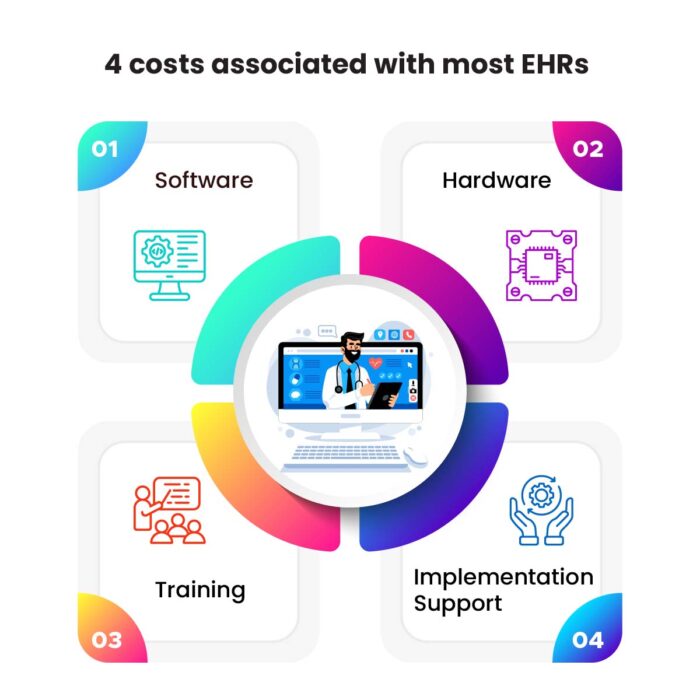
Electronic Health Records (EHRs) and Electronic Medical Records (EMRs) are no longer optional in modern healthcare. In 2026, every medical practice—from solo primary care clinics to multispecialty groups—relies on digital systems for documentation, scheduling, billing, prescribing, reporting, and patient engagement. Yet despite widespread adoption, many providers underestimate the true cost structure of EHR and EMR systems. Vendors often advertise competitive monthly subscription pricing, but the visible fee is only one part of the financial equation. The real cost of an EHR includes direct expenses, indirect productivity impact, technology infrastructure requirements, integration fees, compliance considerations, and long-term scalability implications. For medical practices evaluating EHR, EMR, and practice management software, understanding the four major cost categories associated with most systems is essential to making a financially sound decision. These costs are: subscription and licensing fees, implementation and training expenses, productivity and workflow impact, and integration plus hidden add-on costs. Each of these influences total cost of ownership (TCO) and long-term return on investment. This guide breaks down each cost in detail and explains how integrated cloud-based platforms can reduce overall expense while improving operational performance.
Why EHR Cost Evaluation Is More Complex Than It Appears
When practices search for EHR software, pricing is often the first filter. Vendors advertise per-provider monthly rates, sometimes bundled with basic features. However, comparing only subscription rates can be misleading. Two systems with similar monthly pricing can have vastly different total costs depending on feature inclusion, workflow efficiency, billing integration, and scalability. Practices must evaluate total cost of ownership over three to five years rather than focusing solely on upfront fees. They must also consider how the system impacts documentation speed, billing accuracy, denial rates, staff productivity, and patient engagement. A system that appears inexpensive but reduces efficiency can cost far more in lost revenue than a slightly higher-priced but highly usable platform. Therefore, cost analysis must include operational performance considerations.
Cost #1: Subscription and Licensing Fees
The most visible cost associated with most EHRs and EMRs is subscription pricing. Vendors typically charge on a per-provider, per-month basis. Some systems charge flat monthly rates regardless of volume, while others offer tiered pricing based on feature access. Practices must examine what is included in the base subscription and what requires additional fees. Commonly excluded features include e-prescribing (eRx), Electronic Prescribing of Controlled Substances (EPCS), telehealth modules, patient portal access, reporting dashboards, lab integration interfaces, eligibility verification tools, and revenue cycle management add-ons. Multi-location practices may incur additional fees for location management. If the practice plans to grow by adding providers, subscription cost scales accordingly. Practices should also examine contract length. Some vendors require long-term commitments with penalties for early termination. A low monthly rate may appear attractive, but inflexible contracts increase financial risk if the system does not meet expectations.
Beyond provider licenses, some systems charge for user access for administrative staff. Others include limited user seats and charge extra for additional access. Practices should carefully evaluate how many staff members require system access and whether this will increase subscription cost. Over several years, these incremental expenses add up significantly.
Hidden Subscription Escalations
Some EHR vendors increase pricing after the first contract year. Practices should request written confirmation of renewal pricing and escalation policies. Additionally, practices should clarify whether pricing changes when new features are introduced. For example, if compliance updates require additional modules, will those modules incur separate fees? Transparency in subscription pricing protects long-term financial planning.
Cost #2: Implementation, Data Migration, and Training Expenses
Implementation costs are frequently underestimated. Transitioning to a new EHR involves onboarding support, configuration of templates, staff training, and data migration. Vendors may charge setup fees that vary depending on practice size and complexity. Data migration is particularly critical. Historical patient records, problem lists, medications, allergies, lab results, and billing balances must transfer accurately. Data extraction from previous vendors may also incur fees. Some vendors charge for importing structured data, while others only migrate PDF summaries.
Training costs extend beyond vendor invoices. Staff time spent in training sessions reduces productivity during the onboarding phase. Providers may see fewer patients during the initial weeks of implementation. Administrative staff may require extra time to adapt to new scheduling and billing workflows. This temporary productivity dip represents an indirect financial cost. Practices should budget for reduced patient volume during the first month of transition.
Additionally, workflow customization may require consulting support. Configuring templates for primary care, behavioral health, or specialty visits takes time. A well-designed implementation plan reduces long-term inefficiencies, but the short-term cost must be accounted for.
Opportunity Cost of Implementation
The opportunity cost of implementation includes potential billing delays during transition. If documentation workflows are disrupted, claims submission may slow temporarily. Practices should plan a financial buffer to manage short-term revenue fluctuations. However, strong vendor onboarding support and clear internal workflow mapping can minimize these disruptions.
Cost #3: Productivity and Workflow Impact
The third cost category is often the most significant yet least visible: productivity impact. An EHR system influences how quickly providers can document visits, how efficiently staff can schedule appointments, how smoothly billing teams can submit claims, and how easily patients can communicate with the clinic. If usability is poor, charting time increases. Providers may spend additional hours completing notes after clinic hours. Over time, this reduces appointment capacity or contributes to burnout and turnover. Each additional minute spent per patient accumulates across dozens of visits daily.
For example, if an EHR increases documentation time by five minutes per visit and a provider sees twenty patients per day, that equals one hundred extra minutes daily. Over a month, this represents dozens of lost clinical hours. The financial impact of reduced patient volume or overtime labor may exceed subscription cost differences between systems.
Similarly, inefficient scheduling interfaces can increase no-show rates. Lack of automated reminders or eligibility verification tools can lead to denied claims. Poor integration between documentation and billing modules increases manual corrections. These inefficiencies represent hidden financial costs.
Burnout and Turnover Costs
Burnout related to poor EHR usability leads to staff turnover. Recruiting and training new providers or administrative staff is expensive and disruptive. High turnover reduces continuity of care and patient satisfaction. Therefore, usability directly influences both financial stability and workplace morale. When evaluating EHR systems, practices must test real-world workflows rather than relying solely on demonstrations.
Cost #4: Integration, Add-On Modules, and Long-Term Scalability
The fourth major cost associated with most EHRs and EMRs is integration and add-on expenses. Modern medical practices require integration with laboratories, pharmacies, clearinghouses, payment processors, telehealth platforms, and reporting systems. Some EHR vendors charge interface fees for each integration. Lab interfaces, for example, may require setup fees and ongoing maintenance costs. Clearinghouse services for electronic claim submission often involve per-claim charges. Payment processing tools may include transaction fees. Telehealth modules may be billed separately.
Over time, add-on modules increase total cost. Practices that begin with basic documentation may later need advanced reporting, patient engagement automation, inventory management, or multi-location support. If the original vendor charges separately for each module, cost escalates. Practices should request a comprehensive breakdown of optional modules and pricing.
Scalability is another cost consideration. If the practice expands by adding providers or new locations, will pricing remain sustainable? Some vendors charge significantly higher rates for enterprise-level functionality. Migrating to a different system later due to scalability limitations can be extremely expensive and disruptive.
Infrastructure and IT Considerations
On-premise EHR systems require hardware servers, IT maintenance, software updates, and security monitoring. Cloud-based systems typically reduce these infrastructure costs. However, practices must ensure reliable internet connectivity and secure device management. Evaluating infrastructure needs is essential when comparing systems.
Compliance and Security Costs
Compliance with privacy regulations requires secure systems, audit trails, and encrypted data transmission. Some EHR vendors include these features in base pricing, while others charge for advanced security modules. Cybersecurity insurance premiums may also depend on system security posture. Choosing a secure, cloud-based EHR can reduce risk and potential financial penalties.
Total Cost of Ownership (TCO) Framework
To evaluate total cost of ownership, practices should calculate subscription fees over five years, implementation expenses, training costs, projected productivity impact, add-on module fees, integration charges, and scalability expenses. Comparing this holistic figure across vendors provides a clearer picture than focusing solely on monthly subscription rates. Practices should also consider revenue improvement potential. An EHR that improves billing accuracy and reduces denial rates may generate additional revenue that offsets higher subscription cost.
How Integrated Platforms Reduce Cost Complexity
Integrated EHR and practice management systems reduce cost fragmentation by consolidating scheduling, documentation, billing, reporting, telehealth, and patient engagement into one platform. This reduces the need for multiple vendors and interface fees. Automation features reduce manual workload and improve productivity. Integrated charge capture reduces claim errors. Automated reminders reduce no-shows. These efficiencies reduce indirect costs associated with workflow inefficiency.
How DocVilla Addresses the Four Cost Categories
DocVilla is designed as a cloud-based integrated EHR and practice management platform that addresses subscription transparency, streamlined implementation, workflow efficiency, and integration consolidation. Customizable templates reduce documentation time. Integrated scheduling and automated reminders improve operational flow. Built-in billing support aligns documentation with revenue cycle processes. Secure patient portal and telehealth integration eliminate the need for separate systems. Reporting dashboards provide visibility into financial performance. By centralizing workflows, DocVilla reduces hidden add-on expenses and supports scalable growth without fragmented software costs.
Strategic Considerations Before Signing an EHR Contract
Before committing to an EHR vendor, practices should request a detailed cost breakdown covering subscription pricing, add-on modules, implementation fees, data migration, integration charges, and renewal terms. They should calculate productivity impact and test usability. They should assess scalability for future expansion. Transparency and flexibility are critical. The lowest advertised price is rarely the most economical choice over time.
Final Thoughts: Cost Is More Than Price
The four major costs associated with most EHRs and EMRs—subscription fees, implementation expenses, productivity impact, and integration plus scalability costs—collectively determine financial success. Practices that evaluate these categories comprehensively avoid unpleasant surprises and protect long-term profitability. In 2026, selecting an EHR is not just a technology decision; it is a strategic business investment. Integrated cloud-based platforms that balance transparency, usability, and scalability provide the strongest return on investment. By focusing on total cost of ownership rather than surface-level pricing, medical practices can select systems that support sustainable growth and operational excellence.
To see how DocVilla can optimize your Medical Practice documentation and billing, schedule a free demo today.