Electronic Health Records have transformed healthcare delivery over the past two decades. They have improved documentation accuracy, enabled digital prescribing, facilitated patient data sharing, and strengthened regulatory compliance. However, one area where EHR systems have created unintended complexity is messaging. In modern medical practices, EHR messaging is used for internal communication between staff, patient portal communication, lab result notifications, prescription refill requests, billing coordination, referral tracking, and administrative alerts. While these tools are essential for coordinated care, poorly designed messaging systems can overwhelm physicians and clinical staff. In many practices, physicians receive dozens or even hundreds of messages daily. These messages range from clinical inquiries to administrative updates and patient requests. When messaging workflows are inefficient or poorly filtered, physicians experience notification fatigue, administrative overload, and reduced productivity. Simplifying EHR messaging has therefore become one of the most important strategies for improving physician work-life balance and clinic efficiency. By designing messaging systems that prioritize clinical relevance, automate routine tasks, and integrate seamlessly with practice management workflows, modern EHR platforms can significantly improve physician satisfaction while maintaining high-quality patient communication. For medical practices evaluating EHR, EMR, and practice management software, messaging efficiency has become a key factor in determining whether a system supports or hinders physician productivity.
The Growing Messaging Burden in Healthcare
In the early days of electronic health records, messaging capabilities were limited primarily to internal notes between providers and staff. Over time, patient portals expanded communication channels dramatically. Patients now send messages requesting prescription refills, asking clinical questions, seeking appointment clarification, requesting lab interpretations, or discussing treatment concerns. While this direct communication can improve patient engagement, it also dramatically increases the volume of messages physicians must review. Studies in recent years have shown that many physicians spend several hours each week managing inbox messages outside of scheduled patient visits. This additional workload contributes to administrative fatigue and reduces time available for clinical care. The messaging burden is particularly significant in primary care settings where patient communication volume is high. Without proper workflow design, physicians may find themselves acting as both clinicians and administrative coordinators.
Notification Fatigue and Its Impact on Physician Well-being
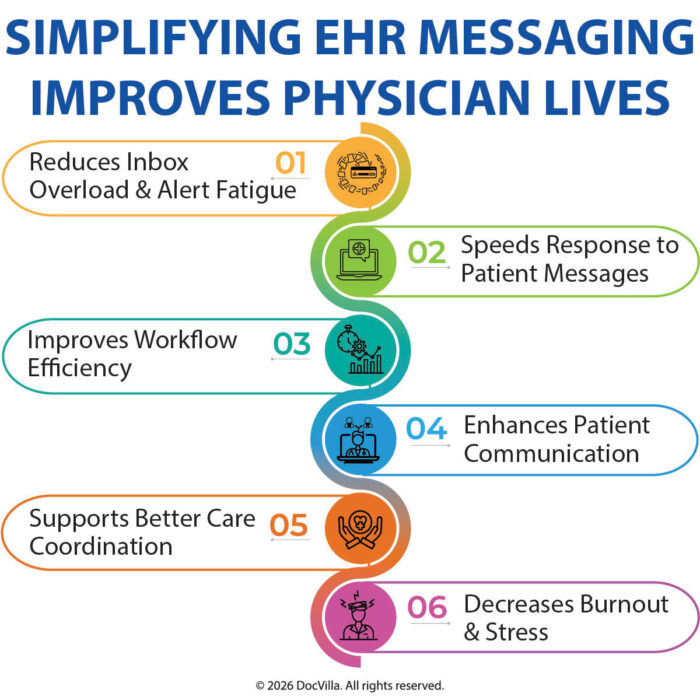
Notification fatigue occurs when users receive such a high volume of alerts that it becomes difficult to distinguish urgent information from routine updates. In EHR systems with poorly structured messaging systems, physicians may receive alerts for non-clinical matters such as appointment scheduling changes, billing questions, or internal administrative updates. When these notifications appear alongside clinically important alerts such as abnormal lab results or urgent patient messages, the risk of missed or delayed responses increases. Over time, constant notifications contribute to stress and cognitive overload. Physicians may spend significant time sorting through messages to identify what requires immediate attention. This inefficiency affects both productivity and job satisfaction. Reducing notification fatigue requires better message categorization, role-based routing, and automation.
The Administrative Burden of EHR Messaging
EHR messaging often becomes a catch-all communication tool for many operational functions within a clinic. Staff may send messages to physicians asking for clarification on documentation, medication approval, insurance authorization questions, or referral confirmations. Patients may send multiple messages about appointment scheduling or billing inquiries that could be addressed by administrative staff. When messages are not appropriately routed, physicians end up performing tasks that could be handled by other team members. This administrative burden increases after-hours work and contributes to physician burnout. Effective messaging systems should allow practices to triage messages so that administrative requests are handled by administrative staff, clinical questions are directed to nurses or medical assistants when appropriate, and only critical clinical decisions reach the physician.
The Relationship Between Messaging Efficiency and Physician Burnout
Physician burnout has become one of the most widely discussed challenges in modern healthcare. Excessive administrative workload is frequently cited as a primary cause. Messaging inefficiencies amplify this burden by extending work beyond clinic hours. Physicians often review portal messages during evenings or weekends, reducing personal time and increasing stress. Simplifying EHR messaging workflows can significantly reduce this burden. When systems allow automated message routing, template responses, and task delegation, physicians spend less time managing routine inquiries. This not only improves work-life balance but also allows physicians to focus on direct patient care.
Patient Communication and the Expectations of Digital Healthcare
While messaging overload presents challenges for physicians, patient expectations for digital communication continue to grow. Patients appreciate the convenience of sending secure messages to their healthcare providers through patient portals. They expect timely responses to questions about medications, lab results, and follow-up instructions. Messaging systems therefore must balance accessibility with efficiency. Practices must ensure that patient messages are acknowledged promptly without overwhelming physicians. This requires structured communication workflows where staff triage incoming messages and address routine inquiries. Automated responses confirming receipt of messages also reassure patients that their request is being processed.
Structured Communication Templates
Templates provide standardized responses for frequently asked questions. For example, after reviewing lab results, a physician may send a template message explaining normal results and recommended follow-up. Similarly, medication refill approvals can include standardized instructions regarding dosage and follow-up appointments. Templates save time while maintaining clarity. They also reduce the risk of inconsistent messaging across different staff members.
Integration with Clinical Workflows
Effective messaging systems integrate with clinical workflows rather than functioning as separate communication tools. For example, when a patient sends a message about symptoms, the system should allow staff to create a task or schedule an appointment directly from the message. Lab result notifications should link directly to the patient’s record. Medication refill requests should integrate with prescribing workflows. Integration reduces the need for multiple system transitions and improves efficiency.
Messaging and Telehealth Integration
Telehealth has expanded digital communication between patients and providers. Messaging systems often serve as the gateway for telehealth appointment requests and follow-up discussions. Integrated EHR platforms allow telehealth sessions to be scheduled directly from messaging threads. After the virtual visit, follow-up instructions can be sent through the same messaging channel. This continuity improves patient engagement while maintaining organized documentation.
Reporting and Monitoring Messaging Workload
Practice administrators should monitor messaging volume and response times. Reporting dashboards within EHR systems can track the number of messages received daily, average response times, and distribution of tasks among staff. These metrics help practices identify bottlenecks or staffing imbalances. For example, if physicians receive an unusually high percentage of administrative messages, workflow adjustments may be necessary. Data-driven insights support continuous improvement in messaging efficiency.
Patient Education and Messaging Etiquette
Educating patients about appropriate messaging use can also reduce workload. Practices may provide guidelines explaining when messaging is appropriate versus when patients should schedule appointments or call the clinic. For example, urgent medical concerns should not be communicated through messaging systems. Clear expectations help patients use messaging responsibly while preserving accessibility.
Security and Compliance in Messaging Systems
Secure messaging is essential to protect patient privacy. EHR messaging systems must comply with healthcare privacy regulations and use encrypted communication channels. Staff should be trained in appropriate handling of sensitive information. Secure messaging ensures that patient communication remains confidential while allowing convenient digital interaction.
The Role of Technology in Reducing Messaging Complexity
Technology is central to simplifying messaging workflows. Integrated EHR and practice management systems consolidate communication channels within one platform. Automation tools categorize and route messages. Templates standardize responses. Reporting dashboards provide visibility into workload distribution. By reducing manual coordination and fragmentation, technology allows physicians to focus on clinical decision-making rather than administrative communication.
How Simplified Messaging Improves Physician Quality of Life
When messaging systems are simplified, physicians regain valuable time. They spend fewer hours sorting through administrative notifications and more time engaging with patients. Reduced after-hours messaging improves work-life balance and decreases burnout risk. Physicians can close charts more quickly and leave the clinic without lingering administrative tasks. Improved communication workflows also reduce frustration among staff, creating a more collaborative work environment.
The Impact on Patient Experience
Simplified messaging benefits patients as well. Structured workflows ensure faster response times and clearer communication. Patients receive consistent instructions and follow-up guidance. When staff handle administrative inquiries efficiently, patients experience fewer delays. Overall satisfaction improves when communication feels organized and responsive.
How DocVilla Supports Simplified Messaging Workflows
DocVilla provides an integrated cloud-based EHR and practice management platform designed to streamline communication within medical practices. Secure patient portal messaging allows patients to communicate with the practice while maintaining privacy compliance. Messaging threads integrate with scheduling, documentation, and billing workflows so that tasks can be completed without switching systems. Reporting dashboards provide visibility into communication patterns and response times. By consolidating messaging functions within a unified platform, DocVilla helps practices reduce administrative burden while maintaining efficient patient communication.
Strategic Considerations When Evaluating Messaging Features in EHR Systems
Medical practices evaluating new EHR platforms should carefully assess messaging functionality. Key considerations include message routing capabilities, automation tools, integration with scheduling and prescribing workflows, template availability, reporting dashboards, and mobile accessibility. Practices should also evaluate how the system supports staff collaboration and task delegation. Messaging features should enhance workflow efficiency rather than creating additional complexity.
Final Thoughts: Messaging Simplicity Is Essential for Modern Healthcare
EHR messaging systems were designed to improve communication, but without thoughtful workflow design they can become a significant source of administrative burden. Simplifying messaging through automation, role-based routing, templates, and integrated workflows dramatically improves physician productivity and job satisfaction. It also enhances patient communication and overall clinic efficiency. In the evolving healthcare environment of 2026, medical practices must prioritize EHR systems that support streamlined messaging and collaborative workflows. By adopting integrated EHR and practice management platforms with efficient messaging tools, practices can reduce burnout, improve operational performance, and deliver better patient care.
To see how DocVilla can optimize your Medical Practice documentation and billing, schedule a free demo today.