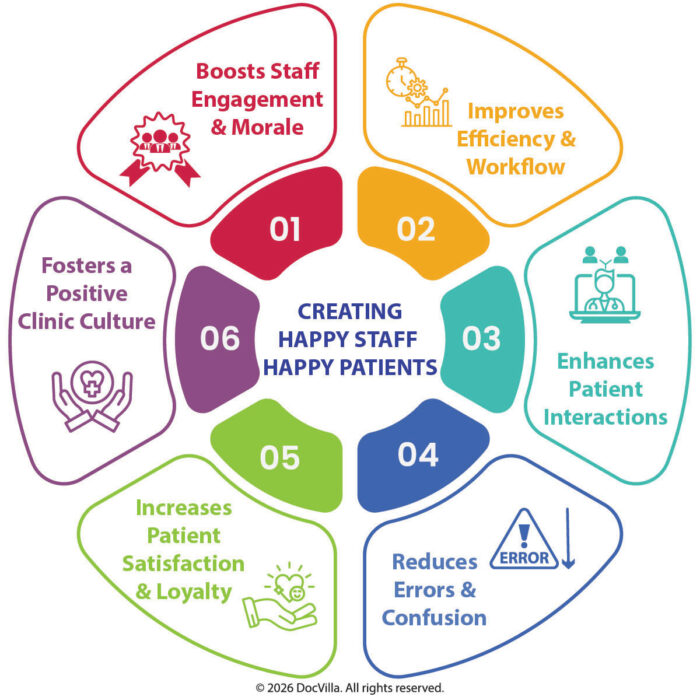
Healthcare organizations have long focused on patient satisfaction as a key measure of success. In 2026, patient experience scores, online reviews, retention rates, and referral patterns all influence the growth and reputation of medical practices. However, one factor that is sometimes overlooked in the pursuit of patient satisfaction is staff happiness. The truth is that the patient experience is inseparable from the employee experience. The nurses, medical assistants, front desk staff, billers, and administrative coordinators who interact with patients every day shape the atmosphere of a clinic. When staff members feel respected, supported, and empowered, they communicate more effectively, show more empathy, resolve problems more quickly, and contribute to a positive environment that patients notice immediately. When staff members feel overwhelmed, underappreciated, or burdened by inefficient workflows, the opposite occurs. Stress becomes visible, communication deteriorates, errors increase, and patient experiences suffer. For medical practices seeking sustainable growth, creating happy staff members is not merely a human resources objective—it is a strategic operational investment that improves patient satisfaction, clinical outcomes, and financial performance. This article explores the direct relationship between employee satisfaction and patient experiences, the operational factors that influence staff happiness, and how modern EHR, EMR, and practice management software can support a positive workplace culture.
Why Staff Satisfaction Matters in Healthcare
Healthcare is a people-driven industry. Unlike many other service sectors, medical practices rely on coordinated teamwork between clinical staff and administrative personnel. Front desk staff manage appointment scheduling and patient check-in. Medical assistants collect vitals and prepare charts. Providers diagnose and treat patients. Billing teams manage claims and financial communication. If even one part of this workflow becomes strained, the patient experience is affected. Staff satisfaction influences how effectively these roles interact. Employees who feel valued tend to be more engaged, more cooperative, and more proactive in solving problems. They communicate more respectfully with patients and colleagues. They take pride in their work. When employees feel supported, they are more likely to stay with the organization, reducing turnover and preserving institutional knowledge. High staff satisfaction therefore contributes directly to operational stability.
The Direct Connection Between Staff Mood and Patient Perception
Patients are highly perceptive to the emotional atmosphere of a clinic. They notice how staff speak to one another, how front desk employees answer questions, how calmly nurses manage procedures, and how organized the clinic appears. A welcoming environment builds confidence. Patients interpret friendly communication as evidence that the practice cares about their well-being. Conversely, when staff appear rushed, frustrated, or disengaged, patients may assume the practice is disorganized or inattentive. These perceptions influence trust and satisfaction. Even when clinical care is technically excellent, poor interpersonal interactions can damage the patient experience. Research in healthcare service quality consistently shows that interpersonal factors such as courtesy, empathy, and responsiveness strongly influence patient satisfaction scores.
Burnout and Its Impact on Patient Care
Healthcare professionals face significant stress. Administrative workload, regulatory compliance, documentation demands, and patient volume pressures contribute to burnout. Burnout manifests as emotional exhaustion, reduced empathy, and decreased job satisfaction. When staff members are overwhelmed, they may unintentionally communicate impatience or disengagement. This affects both colleagues and patients. Burnout can also lead to higher turnover rates, which disrupt continuity of care and increase training costs. Reducing burnout requires both cultural support and operational efficiency. Modern healthcare technology can play a key role by reducing repetitive tasks and simplifying workflows.
Workplace Culture and Its Influence on Patient Outcomes
A positive workplace culture encourages collaboration, respect, and open communication. Practices that cultivate supportive environments often observe stronger teamwork and improved patient care coordination. Staff members feel comfortable raising concerns, sharing insights, and suggesting improvements. This collaborative atmosphere reduces errors and improves problem-solving. Patients benefit because their care is delivered by a cohesive team rather than isolated individuals. Workplace culture also influences how staff respond to unexpected challenges such as scheduling delays or complex patient cases. In a supportive environment, staff approach these situations calmly and professionally.
Leadership’s Role in Creating Happy Staff
Leadership sets the tone for workplace culture. Practice owners and administrators influence staff morale through communication style, decision transparency, and recognition of contributions. Leaders who actively listen to staff feedback and address workflow concerns demonstrate respect for employees. Providing clear expectations, opportunities for professional development, and fair workload distribution improves job satisfaction. Recognition programs, performance feedback, and team-building initiatives reinforce a culture of appreciation. Leadership that prioritizes staff well-being ultimately strengthens patient care.
Communication and Team Collaboration
Effective communication is the foundation of a happy workplace. Staff members who feel heard and informed are more confident in their roles. Regular team meetings allow staff to discuss workflow improvements, share patient care insights, and address operational challenges. Transparent communication about practice goals and performance metrics fosters alignment. Collaborative communication also reduces misunderstandings that can lead to frustration. When team members trust each other, they support one another during busy periods and contribute to a smoother patient experience.
Workflow Efficiency as a Driver of Staff Satisfaction
Operational inefficiencies are one of the most common sources of staff frustration. Repetitive data entry, slow systems, unclear scheduling processes, and fragmented software tools increase workload and stress. When staff must navigate multiple disconnected systems for scheduling, documentation, billing, and communication, productivity decreases. Integrated EHR and practice management platforms streamline these workflows. Automated reminders reduce appointment confusion. Digital intake forms minimize paperwork. Charge capture alignment improves billing accuracy. By reducing administrative burden, efficient systems allow staff to focus on patient interaction rather than technical obstacles.
The Role of EHR Usability in Staff Happiness
Electronic Health Records are essential tools, but poorly designed systems can create frustration. Excessive clicking, slow loading times, rigid templates, and confusing navigation increase cognitive load. Providers may spend hours completing charts after clinic hours. Administrative staff may struggle to locate patient information quickly. Usable EHR systems reduce these challenges. Customizable templates, intuitive dashboards, integrated scheduling, and streamlined documentation workflows improve efficiency. When technology supports rather than hinders daily tasks, staff satisfaction improves significantly.
Training and Professional Development
Investing in staff training enhances both competence and confidence. Employees who understand how to use systems effectively experience less frustration. Training should include both clinical procedures and technology workflows. Continuous learning opportunities also signal that the organization values employee growth. Staff members who feel that their skills are developing are more likely to remain engaged and motivated.
Recognition and Appreciation
Simple recognition can have a powerful impact on morale. Acknowledging staff contributions publicly or privately reinforces the importance of their work. Celebrating milestones, achievements, and positive patient feedback fosters pride in the team. Appreciation does not always require financial incentives; sincere gratitude from leadership can strengthen workplace relationships and motivation.
Flexibility and Work-Life Balance
Healthcare schedules can be demanding. Offering flexible scheduling where possible helps staff manage personal responsibilities. Work-life balance contributes significantly to long-term job satisfaction. Practices that respect employee time and encourage healthy boundaries often see lower burnout rates and higher retention.
Patient Engagement and Staff Empowerment
Empowering staff to participate in patient engagement initiatives improves morale. For example, staff members who help implement new patient portal features or communication strategies feel invested in practice improvements. Empowerment encourages creativity and ownership of outcomes. When staff see the positive impact of their contributions on patient experiences, job satisfaction increases.
Technology’s Role in Supporting Staff and Patient Happiness
Modern healthcare technology supports both employee and patient satisfaction. Integrated EHR and practice management systems reduce workflow friction. Automated appointment reminders reduce scheduling confusion. Secure patient portals streamline communication. Reporting dashboards provide insight into operational performance. When staff have access to reliable tools, they can perform their roles more efficiently. Reduced administrative burden allows more time for meaningful patient interaction.
Telehealth and Digital Communication
Telehealth and digital messaging have become standard components of healthcare delivery. These technologies must be integrated into the EHR to avoid fragmentation. Staff benefit when telehealth scheduling, documentation, and billing occur within the same platform. Patients benefit from convenient access to care. Properly implemented telehealth workflows reduce stress for both staff and patients.
Financial Transparency and Billing Communication
Billing conversations can be stressful for both staff and patients. Integrated practice management software that verifies eligibility and generates clear statements simplifies communication. When staff have accurate information at their fingertips, they can explain financial responsibilities confidently. Clear billing processes reduce patient frustration and staff stress simultaneously.
Measuring the Impact of Staff Satisfaction
Medical practices can track indicators that reflect the relationship between staff happiness and patient outcomes. Employee turnover rates, patient satisfaction surveys, online reviews, appointment adherence rates, and complaint frequency all provide insight into workplace culture. Practices that invest in staff well-being often observe improvements across these metrics. Reporting tools within practice management systems help leadership monitor these trends.
The Business Case for Investing in Staff Happiness
Staff happiness is not only an ethical objective but also a financial strategy. Recruiting and training new employees is expensive. High turnover disrupts patient relationships and reduces productivity. Engaged staff deliver better service, which increases patient retention and referrals. Positive patient experiences lead to stronger online reputation and organic growth. By investing in workplace culture and efficient systems, practices strengthen both operational stability and revenue potential.
How DocVilla Supports Efficient Workflows and Staff Satisfaction
DocVilla provides an integrated cloud-based EHR and practice management platform designed to simplify healthcare workflows. Customizable templates help providers document efficiently. Automated reminders reduce front desk workload. Integrated billing support streamlines revenue cycle management. Secure patient portal messaging improves communication. Telehealth integration supports remote care delivery without requiring separate platforms. Reporting dashboards provide visibility into operational metrics. By consolidating clinical and administrative workflows into one system, DocVilla reduces technology fragmentation and allows staff to focus on patient care rather than software complexity. When staff can perform tasks efficiently, their daily work experience improves, which in turn enhances patient satisfaction.
Final Thoughts: Staff Happiness Is a Strategic Investment
Happy staff members create a positive environment that patients immediately recognize. Professional communication, empathy, efficient workflows, and collaborative teamwork contribute to a supportive healthcare experience. In 2026, medical practices must align workplace culture with modern technology to achieve sustainable success. Efficient EHR and practice management systems reduce administrative burden and allow staff to focus on patient relationships. Leadership that values employee well-being fosters engagement and loyalty. Ultimately, creating happy staff members leads to happier patients, stronger outcomes, and healthier medical practices.
To see how DocVilla can optimize your Medical Practice documentation and billing, schedule a free demo today.