Key Takeaways
- Cybersecurity for medical practices is essential due to increasing reliance on digital systems and sensitive data management.
- Healthcare organizations face various threats, including ransomware and phishing, which can disrupt operations and damage trust.
- Implementing strong access controls, staff training, and data encryption helps protect patient information from breaches.
- Regular backups and disaster recovery plans ensure quick recovery from cyberattacks, minimizing operational impact.
- Investing in cybersecurity is a financially sound strategy that safeguards both patient data and practice continuity.
Cybersecurity has become one of the most critical concerns for modern healthcare organizations. As medical practices increasingly rely on Electronic Health Records (EHR), practice management software, telehealth platforms, and digital patient communication tools, the volume of sensitive healthcare data stored and transmitted electronically continues to grow. This digital transformation has improved efficiency, coordination of care, and patient engagement. However, it has also made healthcare organizations prime targets for cyberattacks. Medical records contain valuable personal, financial, and clinical information that can be exploited for identity theft, insurance fraud, and financial gain. For this reason, healthcare data is often considered more valuable on the black market than financial information alone. In 2026, cybersecurity preparation is no longer optional for medical practices—it is an operational necessity. Independent clinics, specialty practices, urgent care centers, and multispecialty groups must take proactive steps to secure their digital infrastructure, protect patient information, and maintain regulatory compliance. Cybersecurity readiness involves more than installing antivirus software; it requires a comprehensive strategy that includes secure EHR systems, staff training, data encryption, access controls, backup procedures, and ongoing risk monitoring. Medical practices that prioritize cybersecurity not only protect patient trust but also ensure operational continuity and financial stability in an increasingly digital healthcare environment.
Why Cybersecurity Is Critical for Medical Practices
Healthcare organizations manage enormous amounts of sensitive data. Patient records contain personal identifiers, medical histories, prescription data, insurance information, and payment details. If compromised, this data can lead to identity theft, fraudulent insurance claims, and financial loss for patients. For medical practices, a cybersecurity breach can have devastating consequences. Beyond financial penalties and regulatory consequences, a breach can disrupt clinical operations, damage reputation, and erode patient trust. Patients expect their healthcare providers to safeguard confidential information. Any failure to protect this data can lead to long-term reputational damage.
Cyberattacks targeting healthcare have increased significantly in recent years. Ransomware attacks, phishing campaigns, and unauthorized system access attempts are common threats. Smaller medical practices are particularly vulnerable because they often lack dedicated cybersecurity teams. Attackers frequently target small and mid-sized clinics precisely because they assume defenses may be weaker. Preparing now for cybersecurity threats is therefore essential for protecting both patient information and practice operations.
Common Cybersecurity Threats in Healthcare
Understanding the types of threats that healthcare organizations face is the first step toward building effective defenses. Ransomware is one of the most damaging threats. In a ransomware attack, malicious software encrypts critical data and demands payment in exchange for restoring access. If a medical practice loses access to patient records, scheduling systems, and billing platforms, clinical operations can grind to a halt. Phishing attacks are another common threat. These attacks involve deceptive emails or messages designed to trick staff members into revealing passwords or downloading malicious attachments. Once attackers gain access to login credentials, they can infiltrate systems and steal data.
Another growing threat is credential theft through compromised passwords. If staff members use weak or reused passwords, attackers may gain access through brute-force attacks or credential leaks from unrelated platforms. Insider threats also pose risks when employees accidentally or intentionally misuse access privileges. These risks highlight the importance of implementing strong security policies and monitoring systems.
The Role of EHR Systems in Cybersecurity
Electronic Health Record systems are central to modern medical practice operations. Because EHR platforms store large volumes of patient data, they must be designed with strong security architecture. Cloud-based EHR platforms often offer advantages in cybersecurity because they incorporate centralized security updates, encryption, and continuous monitoring. Secure EHR systems include features such as role-based access controls, audit trails, encrypted data storage, and multi-factor authentication. These capabilities help prevent unauthorized access and provide visibility into system activity.
Medical practices evaluating EHR and practice management software should consider cybersecurity features as a top priority. Systems that provide regular software updates, secure cloud hosting, and robust authentication protocols help reduce risk. Security should be built into the technology infrastructure rather than treated as an afterthought.
Implementing Strong Access Controls
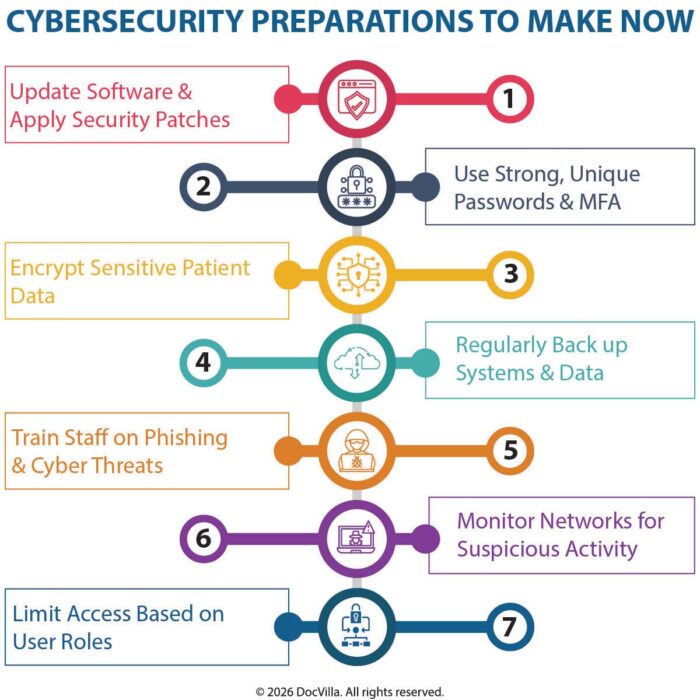
Access control is one of the most effective ways to protect sensitive data. Not every staff member needs access to every type of patient information. Role-based access control ensures that employees only have access to the data required for their job responsibilities.
Implementing multi-factor authentication adds an additional layer of protection by requiring users to verify their identity through multiple methods. This may include a password combined with a mobile authentication code or biometric verification. Multi-factor authentication significantly reduces the risk of unauthorized system access even if login credentials are compromised.
Training Staff on Cybersecurity Awareness
Technology alone cannot prevent cybersecurity breaches. Human behavior often plays a significant role in security incidents. Staff members must be trained to recognize potential threats and follow best practices for data protection. Training should include recognizing phishing emails, avoiding suspicious downloads, using strong passwords, and understanding proper procedures for handling sensitive information. Regular cybersecurity awareness sessions help reinforce these practices.
Employees should also know how to report potential security incidents promptly. Early detection of suspicious activity can prevent minor issues from escalating into major breaches. Creating a culture of cybersecurity awareness ensures that every member of the organization contributes to protecting patient data.
Data Encryption and Secure Communication
Encryption protects data by converting it into an unreadable format that can only be accessed with authorized keys. Both stored data and transmitted data should be encrypted. Encryption ensures that even if attackers intercept information, they cannot read it without proper authorization. Secure communication channels are also essential for protecting patient interactions. Patient portal messaging systems and telehealth platforms should use encrypted communication protocols to maintain confidentiality.
Medical practices should ensure that their EHR and communication systems support end-to-end encryption and comply with healthcare privacy regulations. Secure communication tools allow patients to interact with providers while maintaining the confidentiality of sensitive information.
Regular Data Backups and Disaster Recovery Planning
Even with strong security defenses, no system is completely immune to cyber threats. Regular data backups are essential for ensuring that medical practices can recover quickly if a breach or system failure occurs. Backups should be stored securely and tested periodically to ensure that data restoration processes work correctly. Disaster recovery planning outlines the steps required to restore operations after a cybersecurity incident.
A well-designed disaster recovery plan includes clear roles and responsibilities, communication protocols, and procedures for restoring critical systems. Regular testing of backup and recovery processes ensures that the practice can resume operations quickly in the event of a cyberattack.
Monitoring and Detecting Security Threats
Continuous monitoring of system activity helps identify potential security threats before they cause significant damage. Security monitoring tools track login attempts, system changes, and unusual patterns of activity. For example, if a user account attempts to access data outside normal working hours or from an unfamiliar location, the system can flag this activity for investigation. Audit logs provide a detailed record of system interactions and can help identify the source of suspicious activity.
Healthcare organizations should implement monitoring tools that provide real-time alerts for potential security incidents. Early detection allows administrators to respond quickly and minimize the impact of an attack.
Compliance with Healthcare Security Regulations
Healthcare organizations must comply with strict regulations governing the protection of patient data. Regulatory frameworks require practices to implement administrative, technical, and physical safeguards to protect sensitive information. Compliance includes maintaining secure systems, conducting risk assessments, and documenting security policies. Failure to comply with regulatory requirements can result in significant financial penalties and legal consequences.
Practices should work with technology vendors that understand healthcare compliance requirements and provide systems designed to meet regulatory standards. Regular security audits help ensure that the practice remains compliant as technology and regulations evolve.
Securing Remote Work and Mobile Access
The expansion of telehealth and remote work has introduced new cybersecurity challenges. Providers and staff may access EHR systems from home offices or mobile devices. While this flexibility improves convenience and productivity, it also increases the risk of unauthorized access if devices are not properly secured. Medical practices should implement secure virtual private networks (VPNs), device management policies, and strong authentication measures for remote access.
Mobile device management tools can enforce security settings such as password protection, encryption, and remote device wiping. These measures ensure that patient data remains secure even when accessed outside the clinic environment.
Vendor Security and Third-Party Risk Management
Medical practices often rely on third-party vendors for services such as billing, laboratory integration, payment processing, and telehealth platforms. Each of these vendors may have access to sensitive patient data. Evaluating vendor security practices is therefore essential. Practices should ensure that vendors follow strong cybersecurity standards and provide secure integration with EHR systems.
Vendor contracts should include clear provisions regarding data protection responsibilities, incident response procedures, and compliance obligations. Managing third-party risk reduces the likelihood of breaches originating from external partners.
The Financial Impact of Cybersecurity Preparedness
Investing in cybersecurity may appear costly initially, but the financial consequences of a breach can be far greater. Data breaches can lead to regulatory fines, legal costs, operational disruptions, and reputational damage. Patients may lose trust in a practice that fails to protect their information. Preventive cybersecurity measures are therefore a cost-effective strategy for protecting long-term financial stability.
Cybersecurity preparedness also improves operational resilience. Practices that maintain secure systems and reliable backup procedures can continue delivering care even during security incidents. This continuity protects both patient safety and revenue flow.
How Integrated Technology Platforms Improve Security
Integrated EHR and practice management platforms provide a centralized environment for managing clinical and administrative workflows. This consolidation reduces the number of separate systems that must be secured. Integrated platforms also simplify monitoring and access control management. When patient data resides within a unified system rather than scattered across multiple software tools, security policies can be applied more consistently.
Cloud-based platforms often include dedicated security teams that continuously monitor system infrastructure. These teams apply security updates and patches promptly, reducing vulnerabilities that attackers might exploit. For many medical practices, adopting a secure cloud-based EHR platform is one of the most effective ways to strengthen cybersecurity defenses.
How DocVilla Supports Healthcare Cybersecurity
DocVilla provides a cloud-based EHR and practice management platform designed with security and compliance in mind. The platform incorporates role-based access controls, secure authentication methods, encrypted data storage, and detailed audit trails that track system activity. Automated updates ensure that security patches are applied promptly, reducing vulnerabilities. Secure patient portal communication allows patients to interact with providers while maintaining privacy protection. Integrated workflows reduce reliance on multiple software systems, simplifying security management. By providing a centralized and secure digital infrastructure, DocVilla helps medical practices protect patient information while maintaining efficient clinical and administrative operations.
Preparing for the Future of Healthcare Security
As healthcare technology continues to evolve, cybersecurity threats will also become more sophisticated. Artificial intelligence, connected medical devices, and expanded telehealth services will introduce new security considerations. Medical practices must adopt a proactive approach to cybersecurity that includes continuous monitoring, regular staff training, and investment in secure technology infrastructure.
Preparing for future threats requires a commitment to ongoing improvement rather than a one-time solution. Practices should conduct regular risk assessments, review security policies, and stay informed about emerging threats. Collaboration with trusted technology partners ensures that security measures remain up to date.
Final Thoughts: Cybersecurity Is Essential for Modern Medical Practices
Cybersecurity preparation is no longer optional in healthcare. The increasing reliance on digital systems means that protecting patient data and clinical operations requires a comprehensive strategy. Medical practices must implement secure EHR systems, train staff on cybersecurity awareness, enforce strong access controls, and maintain reliable backup procedures. By prioritizing cybersecurity, practices protect patient trust, maintain regulatory compliance, and ensure operational continuity. Integrated EHR and practice management platforms provide the foundation for secure and efficient healthcare delivery. As the healthcare industry continues to evolve, practices that invest in cybersecurity today will be better prepared to navigate the challenges of tomorrow’s digital healthcare landscape.
To see how DocVilla can optimize your Medical Practice documentation and billing, schedule a free demo today.