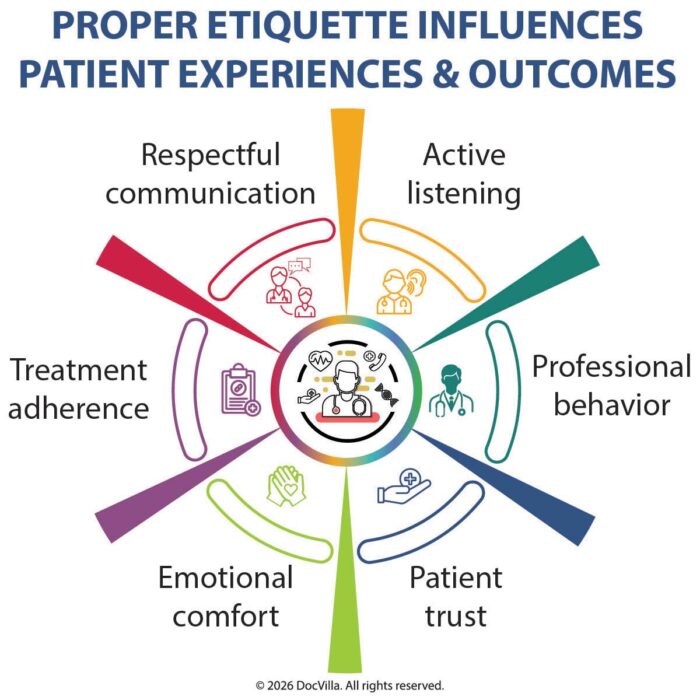
In 2026, healthcare is more technologically advanced, more data-driven, and more efficiency-focused than ever before. Electronic Health Records (EHR), telemedicine platforms, automated scheduling systems, artificial intelligence tools, and integrated practice management software have transformed the operational side of medicine. Yet despite these technological advancements, one factor continues to have an outsized impact on patient experiences and clinical outcomes: proper etiquette. Professional etiquette in healthcare is not simply about politeness or bedside manners. It encompasses communication style, tone, body language, timeliness, respect, confidentiality awareness, cultural sensitivity, digital conduct, and administrative professionalism. Proper etiquette influences patient trust, treatment adherence, satisfaction scores, online reputation, retention rates, malpractice risk, and overall health outcomes. In competitive healthcare markets, especially for independent medical practices, etiquette has become a strategic advantage. When supported by efficient EHR and practice management systems, proper etiquette amplifies operational performance and strengthens patient loyalty. This comprehensive guide explores how etiquette influences patient experiences and outcomes, how it intersects with workflow efficiency, and why medical practices must align professional conduct with modern healthcare technology to achieve sustainable growth.
The Meaning of Proper Etiquette in Healthcare
Proper etiquette in healthcare extends beyond traditional bedside manner. It includes how providers greet patients, how front desk staff answer phone calls, how quickly messages are returned, how sensitive information is discussed, how wait times are communicated, how billing conversations are handled, and how digital communication is managed. Etiquette also includes respect for patient autonomy, clarity in explanation of diagnoses, attentiveness during visits, empathy toward emotional concerns, and professionalism during challenging interactions. In outpatient clinics, etiquette influences the entire patient journey from appointment scheduling to post-visit follow-up. A patient’s perception of professionalism often begins before meeting the provider. Administrative staff tone, appointment reminders, online scheduling experience, and check-in workflows all shape first impressions. When etiquette is consistent and aligned with efficient systems, patient satisfaction increases significantly.
Why Etiquette Directly Influences Patient Outcomes
Patient outcomes are influenced not only by medical knowledge but also by patient engagement and adherence. When patients trust their provider, they are more likely to follow treatment plans, take medications as prescribed, attend follow-up appointments, and share important health details. Proper etiquette builds that trust. Active listening improves diagnostic accuracy. Clear communication reduces misunderstanding. Empathy encourages honesty about symptoms and lifestyle habits. Respect for patient concerns reduces resistance. Studies consistently show that patient satisfaction correlates with treatment compliance. When patients feel dismissed or rushed, they may withhold information or ignore instructions. Conversely, when providers demonstrate attentiveness and professionalism, patients are more engaged in their care. In this way, etiquette directly impacts measurable health outcomes.
First Impressions Begin with Administrative Etiquette
The patient experience begins long before clinical evaluation. Phone etiquette, online scheduling clarity, and front-desk professionalism shape perception. Patients expect courtesy, efficiency, and respect for their time. Long hold times, abrupt communication, unclear billing explanations, and disorganized scheduling reduce trust. Modern practice management software plays a role here. Automated reminders, streamlined check-in workflows, and digital intake forms reduce confusion. When administrative workflows are organized and supported by integrated EHR systems, staff can focus on polite and attentive communication rather than scrambling through fragmented tools. Administrative etiquette supported by efficient systems creates a professional and reassuring environment.
Time Management and Respect for Patient Schedules
One of the most common patient frustrations is excessive waiting time. While delays may be unavoidable at times, clear communication about delays demonstrates respect. Practices that use structured scheduling tools and appointment type controls reduce overbooking and improve punctuality. Automated reminders reduce no-shows and maintain predictable flow. Efficient EHR documentation reduces backlogs that cascade into scheduling delays. Respecting patient time is a powerful component of etiquette and directly influences satisfaction and retention.
Communication Clarity and Clinical Confidence
Medical terminology can be complex. Proper etiquette requires translating medical information into understandable language. Providers who explain diagnoses, lab results, medication side effects, and follow-up steps clearly empower patients. Clear communication reduces anxiety and confusion. EHR systems that generate structured after-visit summaries support clarity by providing written instructions. Digital portals allow patients to revisit information later. When communication is reinforced through organized documentation and portal access, patients feel supported.
Active Listening as a Clinical Skill
Active listening is central to etiquette and diagnostic accuracy. Allowing patients to speak without interruption, summarizing their concerns, and asking clarifying questions demonstrate respect. In busy clinics, providers may feel pressure to multitask while documenting. However, excessive screen focus can diminish perceived attentiveness. EHR usability becomes relevant here. When charting workflows are streamlined, providers can maintain eye contact and complete documentation efficiently. Reducing click burden improves interpersonal engagement.
Cultural Sensitivity and Inclusivity
Modern healthcare serves diverse populations. Proper etiquette includes cultural awareness, language sensitivity, and nonjudgmental communication. Practices should ensure that communication materials are accessible and that interpreters are available when needed. Patient portals and intake forms should accommodate diverse demographics. Inclusive etiquette strengthens trust across patient populations and reduces disparities in care outcomes.
Privacy and Confidentiality Etiquette
Respecting patient privacy is both a legal and ethical responsibility. Conversations should occur in private settings. Sensitive information should not be discussed in public areas. Secure EHR systems protect digital confidentiality. Staff should be trained in privacy protocols and understand how to handle protected health information responsibly. Digital etiquette also applies to secure messaging and telehealth sessions. Secure, encrypted platforms ensure confidentiality. When patients perceive that their information is handled carefully, trust increases.
Handling Difficult Conversations with Professionalism
Healthcare often involves delivering complex or distressing news. Proper etiquette requires empathy, patience, and clarity. Providers must balance honesty with compassion. Training in communication techniques improves effectiveness in difficult scenarios. Structured documentation within EHR systems ensures that conversations and care plans are accurately recorded, reducing confusion during follow-up.
Digital Etiquette in the Era of Patient Portals and Telehealth
In 2026, patient communication extends beyond the exam room. Secure messaging through patient portals, telehealth sessions, and digital billing notifications require professional tone and prompt responses. Delayed portal replies can create frustration. Automated acknowledgment messages and structured messaging workflows improve responsiveness. Telehealth sessions should begin punctually and maintain professionalism equivalent to in-person visits. Integrated EHR telehealth tools support organized documentation and follow-up.
Billing Transparency and Financial Etiquette
Billing conversations are sensitive. Clear explanations of copays, deductibles, and payment options reduce tension. Integrated practice management systems that provide real-time eligibility verification and online payment options simplify financial communication. Professional billing etiquette strengthens patient trust and reduces disputes.
Staff Morale and Internal Etiquette
Proper etiquette extends within the practice team. Respectful communication among providers, nurses, medical assistants, and administrative staff fosters collaboration. Positive internal culture influences external patient interactions. EHR systems that support role-based access and shared dashboards reduce workflow conflict. When internal operations run smoothly, staff interactions with patients remain calm and professional.
The Measurable Impact of Etiquette on Practice Performance
Practices that emphasize professional etiquette often observe measurable improvements in patient retention, referral rates, online reviews, and complaint reduction. Improved patient engagement leads to higher appointment adherence and improved preventive care compliance. Efficient EHR-supported workflows reinforce these gains. Data reporting dashboards within integrated systems allow practices to track satisfaction trends, no-show rates, and billing disputes. Etiquette is not intangible—it translates into measurable operational metrics.
Reducing Burnout Through Workflow Efficiency
Provider frustration can negatively influence etiquette. Burnout reduces patience and empathy. Streamlined EHR workflows reduce administrative stress and allow providers to focus on patient interaction. Customizable templates, digital intake forms, and integrated scheduling reduce time pressure. When providers are less burdened by administrative tasks, their interpersonal interactions improve.
How Technology and Etiquette Work Together
Technology should enhance, not replace, human connection. Integrated EHR and practice management platforms support etiquette by reducing friction. Automated reminders show respect for patient schedules. Online portals empower communication. Structured documentation improves clarity. Secure systems reinforce confidentiality. When technology aligns with professionalism, patient experiences improve.
The Competitive Advantage of Strong Patient Experience
In competitive healthcare markets, reputation influences growth. Patients share experiences online. Practices known for professionalism, responsiveness, and clarity attract referrals. EHR-supported operational efficiency reinforces positive experiences. Clinics that combine strong etiquette with modern technology differentiate themselves.
Training and Continuous Improvement
Etiquette training should be part of onboarding and continuing education. Role-playing exercises improve communication skills. Feedback systems allow patients to share experiences. Reporting dashboards help identify workflow bottlenecks that affect etiquette, such as long wait times or delayed responses. Continuous refinement ensures that etiquette remains a priority.
How DocVilla Supports Patient-Centered Etiquette Through Technology
DocVilla provides integrated EHR and practice management tools that support professional workflows. Customizable templates reduce documentation time, allowing providers to focus on patients. Automated reminders and scheduling tools reduce wait times. Secure patient portal messaging supports timely communication. Telehealth integration maintains professionalism in virtual care. Billing integration improves financial transparency. Reporting dashboards provide operational visibility. By consolidating workflows into one secure cloud-based platform, DocVilla reduces fragmentation and enhances patient experience consistency.
Final Thoughts: Etiquette Is a Strategic Performance Driver
Proper etiquette influences patient experiences, trust, adherence, satisfaction, and outcomes. In 2026, etiquette must extend across in-person interactions, digital communication, scheduling workflows, billing conversations, and privacy practices. Medical practices that align professional conduct with efficient EHR and practice management systems achieve stronger operational performance and long-term growth. Etiquette is not merely about politeness—it is about creating structured, respectful, efficient, and transparent care environments supported by modern healthcare technology.
To see how DocVilla can optimize your Medical Practice documentation and billing, schedule a free demo today.