
Key Takeaways
- ePrescribing has revolutionized healthcare by replacing handwritten prescriptions, reducing errors, and improving patient safety.
- Interoperability is crucial for seamless data exchange across healthcare systems, enhancing medication accuracy and care coordination.
- Automated alerts within interoperable ePrescribing systems help doctors avoid dangerous drug interactions and ensure patient safety.
- Access to real-time medication histories allows physicians to make informed prescribing decisions and reduce medication-related complications.
- DocVilla supports ePrescribing interoperability by integrating clinical decision support and secure prescription transmission into EHR systems.
The healthcare industry has undergone a major digital transformation over the past two decades, and electronic prescribing—commonly known as ePrescribing—has become one of the most impactful innovations in modern clinical practice. Historically, prescriptions were handwritten and delivered to pharmacies by patients. This process often resulted in illegible handwriting, transcription errors, lost prescriptions, and medication misunderstandings. These issues could lead to medication errors, adverse drug interactions, and delays in treatment. Today, electronic prescribing systems integrated within Electronic Health Records (EHR) have largely replaced handwritten prescriptions. However, the true potential of ePrescribing extends far beyond simply transmitting prescriptions electronically. Increased interoperability—the ability of healthcare systems to securely exchange and use data across different platforms—has the potential to significantly elevate patient safety by improving medication accuracy, reducing errors, enhancing care coordination, and providing clinicians with critical decision support information at the point of care. As medical practices adopt modern EHR, EMR, and practice management software, interoperability within ePrescribing systems is becoming an essential component of safe and efficient healthcare delivery. By connecting prescribers, pharmacies, insurers, and healthcare databases through interoperable networks, ePrescribing systems can provide physicians with a comprehensive view of a patient’s medication history, allergies, and potential drug interactions, ultimately reducing the risk of medication-related harm.
The Evolution of Prescription Management in Healthcare
Prescription management has evolved dramatically throughout the history of medicine. In earlier decades, prescriptions were written manually on paper pads and handed to patients. Pharmacists would then interpret the physician’s handwriting and manually enter the information into pharmacy systems. This process introduced several potential points of failure. Illegible handwriting could lead to incorrect medication dispensing. Missing dosage information could cause delays while pharmacists contacted the physician for clarification. Patients might lose the prescription before reaching the pharmacy. These inefficiencies not only created inconvenience but also introduced safety risks.
The introduction of electronic prescribing systems began addressing these challenges by allowing physicians to send prescriptions directly to pharmacies through digital networks. EHR systems integrated ePrescribing functionality, enabling providers to generate prescriptions within the patient’s digital medical record. This integration improved documentation accuracy and reduced transcription errors. Over time, ePrescribing networks expanded to include medication history databases, pharmacy benefit managers, and insurance formularies. However, many early systems still operated in isolated environments, limiting the full benefits of interoperability.
Understanding Interoperability in ePrescribing
Interoperability refers to the ability of different healthcare technology systems to communicate, exchange information, and interpret shared data effectively. In the context of ePrescribing, interoperability allows electronic prescribing systems to interact seamlessly with pharmacies, insurance providers, medication databases, and other healthcare providers’ EHR systems. When systems are interoperable, prescribers can access comprehensive patient medication histories, verify insurance coverage, check drug interactions, and transmit prescriptions securely across healthcare networks.
Without interoperability, ePrescribing systems may operate in silos where critical patient information remains inaccessible. For example, a physician may prescribe medication without knowing that another provider recently prescribed a conflicting drug. Interoperability eliminates these gaps by enabling real-time information exchange. This connectivity ensures that prescribers have access to the most accurate and complete patient medication data at the moment of prescribing.
Medication Errors and Patient Safety Risks
Medication errors are among the most common preventable causes of patient harm in healthcare. These errors can occur during prescribing, dispensing, administration, or monitoring of medications. Common prescribing errors include incorrect dosage instructions, duplicate medications, overlooked allergies, and dangerous drug interactions. In busy clinical environments, physicians must make prescribing decisions quickly, often relying on incomplete information if systems are not interconnected.
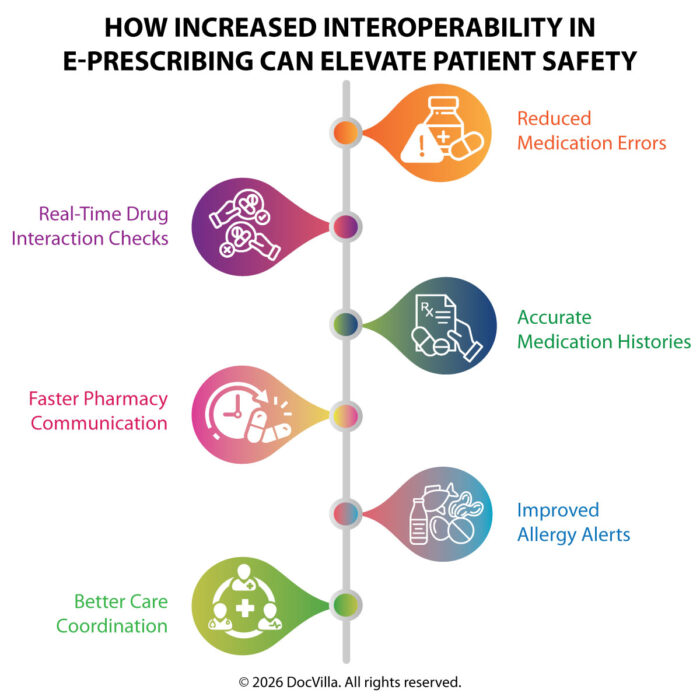
Interoperable ePrescribing systems significantly reduce these risks by providing automated safety checks. When a physician selects a medication within the EHR system, the system can automatically evaluate potential drug interactions, patient allergies, and duplicate therapies. Alerts appear instantly if potential risks are detected. This decision support helps physicians avoid prescribing medications that could harm patients.
Real-Time Medication History Access
One of the most valuable benefits of interoperable ePrescribing is access to real-time medication history. Patients may receive prescriptions from multiple providers across different healthcare settings. Without interoperability, each provider may only see medications documented within their own system. Interoperable networks aggregate medication data from pharmacies, insurance claims, and other EHR systems to create a comprehensive medication history.
Access to accurate medication histories allows physicians to identify potential drug interactions, evaluate adherence patterns, and avoid duplicating therapies. For example, if a patient is already taking a medication prescribed by another specialist, the system can alert the physician before prescribing a similar drug. This information improves clinical decision-making and reduces medication-related complications.
Drug Interaction and Allergy Alerts
Clinical decision support systems integrated with interoperable ePrescribing platforms provide automated alerts for potential safety risks. These alerts may include warnings about drug-drug interactions, drug-allergy conflicts, and contraindications based on patient medical conditions. For instance, if a patient has a documented allergy to penicillin, the system will alert the physician before prescribing a related antibiotic.
These alerts help physicians make safer prescribing decisions in real time. While clinical judgment remains essential, automated alerts serve as an additional safety net that reduces the likelihood of preventable errors.
Electronic Prescribing of Controlled Substances (EPCS)
Another important advancement in ePrescribing interoperability is the electronic prescribing of controlled substances (EPCS). Controlled medications, such as opioids and certain stimulants, are subject to strict regulatory requirements due to their potential for misuse. Historically, controlled substance prescriptions were often written on special paper forms to prevent fraud. However, modern EPCS systems allow these medications to be prescribed electronically with enhanced security protocols.
Interoperable EPCS systems integrate with prescription monitoring programs and pharmacy networks to track controlled medication dispensing. This connectivity helps identify potential misuse or duplicate prescriptions. Physicians can review prescription histories before issuing controlled substance prescriptions, improving patient safety and reducing the risk of medication abuse.
Integration with Pharmacy Benefit Information
Interoperability also improves prescribing efficiency by integrating pharmacy benefit information into the prescribing workflow. Insurance formularies determine which medications are covered and what patient copayments will be. Without real-time access to formulary information, physicians may prescribe medications that require prior authorization or have high out-of-pocket costs for patients.
Interoperable ePrescribing systems display formulary information during the prescribing process. Physicians can see which medications are covered by the patient’s insurance and select cost-effective alternatives when necessary. This transparency improves medication adherence by reducing financial barriers for patients.
Improving Care Coordination Across Providers
Modern healthcare often involves multiple providers caring for the same patient. A primary care physician, specialist, urgent care provider, and hospital team may all prescribe medications at different times. Without interoperable systems, these providers may not have visibility into each other’s prescribing decisions.
Interoperable ePrescribing networks ensure that medication data is shared across healthcare organizations. When providers can see a patient’s complete medication history, they can coordinate treatment plans more effectively. This coordination reduces duplicate prescriptions and ensures that medication regimens remain consistent.
Reducing Prescription Errors and Miscommunication
Paper prescriptions and phone-based prescription orders were historically vulnerable to miscommunication. Pharmacists might misinterpret handwriting or dosage instructions. Patients might misunderstand instructions when delivering prescriptions to pharmacies. Electronic prescribing eliminates these risks by transmitting prescriptions digitally in standardized formats.
Interoperable systems further enhance accuracy by ensuring that pharmacy systems can interpret prescription data correctly. Standardized communication protocols ensure that dosage instructions, refill quantities, and patient information are transmitted accurately.
Enhancing Patient Engagement and Medication Adherence
Patient safety is not only about accurate prescribing but also about ensuring that patients take medications correctly. Interoperable ePrescribing systems can integrate with patient portals and mobile health applications that provide medication reminders and educational resources. Patients can view their medication lists, refill prescriptions online, and receive reminders when it is time to take medications.
Improved communication between providers and patients increases adherence to treatment plans. When patients understand their medications and have convenient tools for managing prescriptions, health outcomes improve.
Regulatory and Industry Initiatives Supporting Interoperability
Healthcare regulators and industry organizations have increasingly emphasized the importance of interoperability. National initiatives promote standardized data exchange protocols that allow EHR systems and pharmacies to communicate effectively. These standards ensure that healthcare providers can share information securely while maintaining patient privacy.
Compliance with interoperability standards also enables practices to participate in broader healthcare networks. This connectivity supports coordinated care models and value-based healthcare initiatives that prioritize patient outcomes.
Cybersecurity Considerations in Interoperable Systems
While interoperability improves information exchange, it also requires strong cybersecurity protections to safeguard patient data. Secure communication protocols, encryption, and authentication mechanisms are essential to protect sensitive health information during transmission. Healthcare technology vendors must ensure that interoperable systems maintain high security standards while enabling seamless data exchange.
Cloud-based EHR platforms often include advanced security features that protect patient information while supporting interoperability. These platforms undergo regular security updates and monitoring to prevent unauthorized access.
How Integrated EHR Platforms Enable Interoperable ePrescribing
Integrated EHR and practice management platforms serve as the foundation for interoperable ePrescribing systems. When prescribing workflows are embedded within the EHR, physicians can access patient records, medication histories, allergies, and lab results within a single interface. This integration allows decision support tools to analyze patient data in real time and provide relevant alerts.
Integrated systems also streamline documentation and billing processes associated with prescriptions. For example, medication orders automatically populate the patient’s medical record and can be referenced during follow-up visits. This continuity improves both clinical care and operational efficiency.
How DocVilla Supports Interoperable ePrescribing
DocVilla provides a cloud-based EHR and practice management platform designed to support modern ePrescribing workflows. The system integrates electronic prescribing directly into the clinical documentation process, allowing providers to send prescriptions to pharmacies securely and efficiently. Built-in clinical decision support tools help identify potential drug interactions and allergy conflicts during the prescribing process. Integration with pharmacy networks enables real-time transmission of prescriptions and access to medication histories. Electronic prescribing of controlled substances (EPCS) capabilities provide secure workflows for regulated medications. By integrating ePrescribing functionality within a unified platform, DocVilla helps medical practices reduce medication errors and improve patient safety.
Preparing Medical Practices for the Future of ePrescribing
As healthcare technology continues to evolve, interoperability will play an increasingly important role in medication management. Future innovations may include advanced predictive analytics that identify medication risks before prescriptions are issued. Artificial intelligence may assist physicians in selecting optimal medications based on patient characteristics and treatment outcomes. Expanded integration with wearable devices and remote monitoring systems may provide additional insights into medication effectiveness.
Medical practices that adopt interoperable EHR platforms today will be better prepared to leverage these future innovations. By ensuring that prescribing workflows are integrated with broader healthcare networks, practices can improve both patient safety and operational efficiency.
Final Thoughts: Interoperability Is Key to Safer Prescribing
Medication safety is a fundamental component of high-quality healthcare. Electronic prescribing systems have already reduced many of the risks associated with handwritten prescriptions, but increased interoperability has the potential to elevate patient safety even further. By enabling real-time access to medication histories, insurance formularies, drug interaction alerts, and pharmacy networks, interoperable ePrescribing systems provide physicians with the information needed to make safer prescribing decisions. Integrated EHR and practice management platforms serve as the backbone of this connected healthcare ecosystem. For medical practices seeking to improve patient safety, streamline prescribing workflows, and enhance care coordination, investing in interoperable healthcare technology is a critical step toward the future of safe and efficient healthcare delivery.
To see how DocVilla can optimize your Medical Practice documentation and billing, schedule a free demo today.