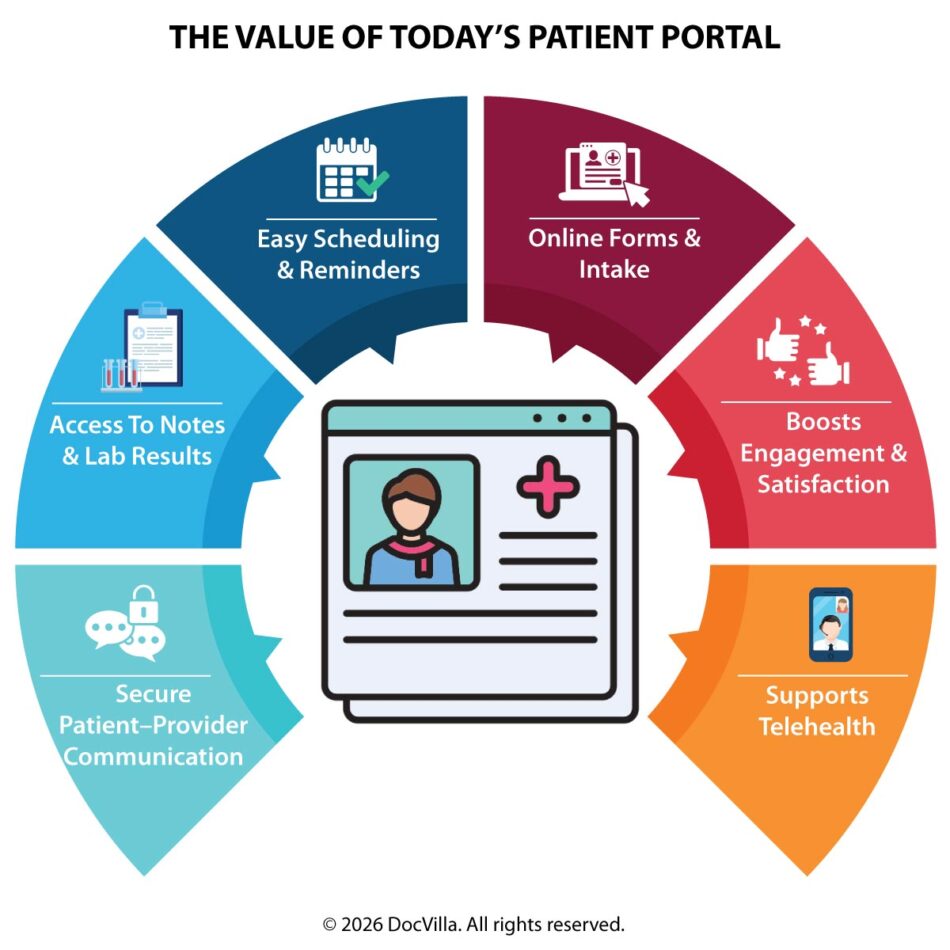
Healthcare has undergone a profound digital transformation over the past decade. Medical practices that once relied on phone calls, paper forms, and manual communication are now increasingly adopting digital systems that streamline operations and improve patient experiences. One of the most important innovations driving this transformation is the patient portal. A patient portal is a secure online platform connected to an Electronic Health Record (EHR) system that allows patients to access their medical information, communicate with providers, schedule appointments, request prescription refills, and manage various aspects of their healthcare digitally. In today’s healthcare environment, patient portals are no longer optional add-ons but essential components of modern EHR, EMR, and practice management software. They play a central role in improving patient engagement, enhancing care coordination, increasing operational efficiency, and supporting better health outcomes. As healthcare continues to move toward patient-centered care models, the value of patient portals continues to grow. Medical practices that adopt advanced patient portal technology not only meet patient expectations for convenient digital access but also improve clinical workflows and administrative efficiency. … Read More
Medical Billing
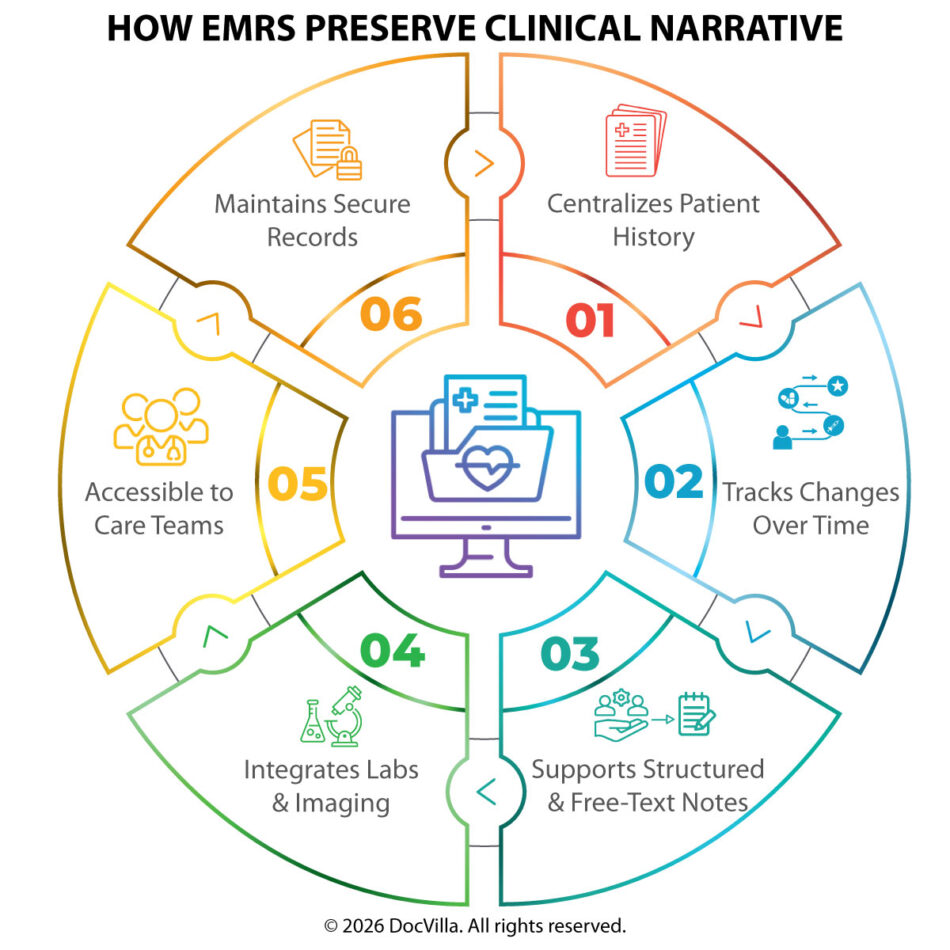
How EMRs Preserve the Clinical Narrative: Maintaining the Story of Patient Care in the Digital Age
Medicine has always been built upon stories. Every patient encounter begins with a narrative: symptoms that developed over time, lifestyle factors that influence health, family histories that shape risk, and clinical observations that guide diagnosis and treatment. Physicians historically documented these stories in handwritten charts, capturing the clinical narrative that explains how a patient’s health evolves. With the widespread adoption of Electronic Medical Records (EMRs) and Electronic Health Records (EHRs), the healthcare industry transitioned from paper-based documentation to digital systems. While this shift has dramatically improved data accessibility, care coordination, and operational efficiency, it has also raised an important question: can digital systems preserve the depth and meaning of the clinical narrative that has always been central to medical practice? The answer is yes—when EMRs are designed thoughtfully and used effectively, they not only preserve the clinical narrative but also enhance it by making patient stories more accessible, searchable, and shareable across healthcare teams. Modern EMR and EHR platforms allow providers to capture structured clinical data while maintaining narrative context, enabling better clinical decision-making, improved care continuity, and more effective communication among providers and patients. For medical practices evaluating EHR, EMR, and practice management software, understanding how digital systems preserve and enhance the clinical narrative is essential for selecting technology that supports high-quality patient care. … Read More
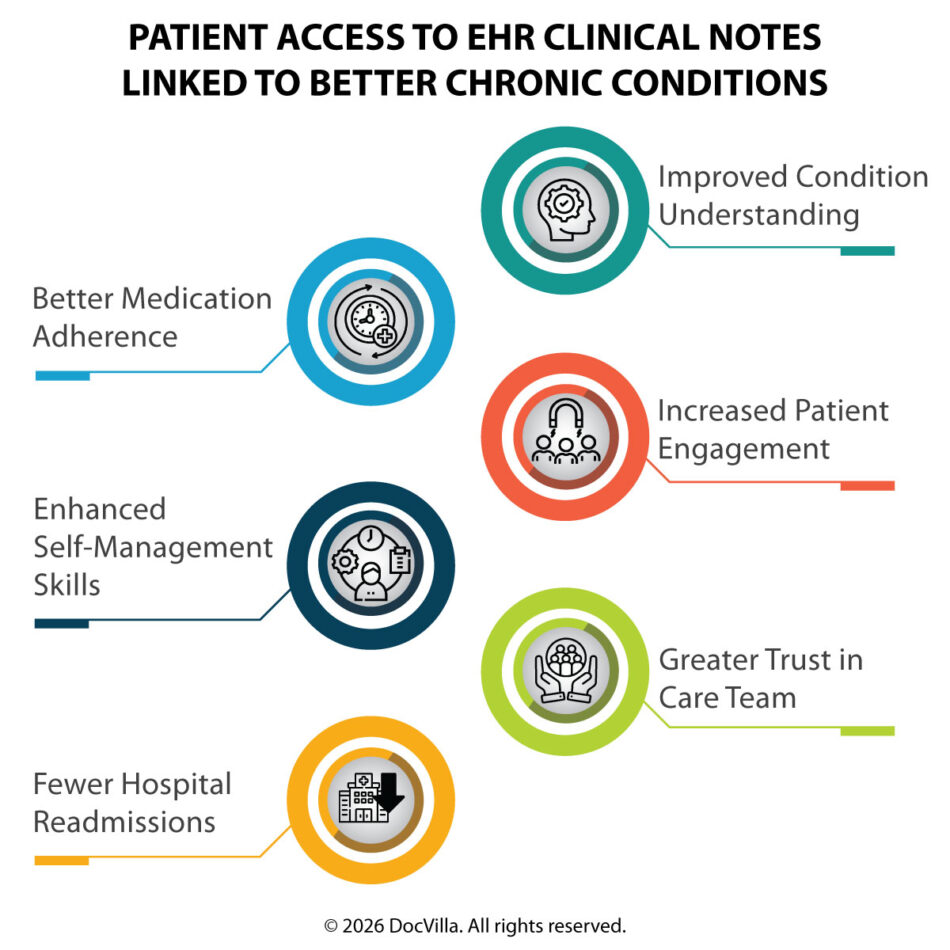
Patient Access to EHR Clinical Notes Linked to Better Chronic Condition Management: How Transparency and Technology Improve Healthcare Outcomes
Healthcare has been undergoing a major transformation as digital technologies reshape how information flows between providers and patients. One of the most impactful changes in recent years has been the expansion of patient access to Electronic Health Record (EHR) clinical notes. Traditionally, clinical notes were primarily used by physicians and healthcare staff as documentation of diagnoses, treatment decisions, and patient interactions. Patients rarely had direct access to these notes, and medical records were often difficult to obtain. However, modern healthcare policy, patient engagement initiatives, and advances in EHR technology have dramatically changed this landscape. Today, many healthcare systems provide patients with direct digital access to their clinical notes through patient portals and integrated healthcare platforms. This increased transparency has been linked to improved patient engagement, better chronic disease management, improved medication adherence, and stronger communication between patients and healthcare providers. As chronic conditions such as diabetes, hypertension, cardiovascular disease, and asthma continue to affect millions of people worldwide, patient access to clinical information has become a powerful tool for improving long-term health outcomes. For medical practices adopting modern EHR, EMR, and practice management software, enabling patient access to clinical notes is not only a regulatory expectation but also an opportunity to improve care coordination and strengthen the physician–patient relationship. … Read More

How Increased Interoperability in ePrescribing Can Elevate Patient Safety: The Role of Connected Healthcare Technology in Modern Medical Practices
The healthcare industry has undergone a major digital transformation over the past two decades, and electronic prescribing—commonly known as ePrescribing—has become one of the most impactful innovations in modern clinical practice. Historically, prescriptions were handwritten and delivered to pharmacies by patients. This process often resulted in illegible handwriting, transcription errors, lost prescriptions, and medication misunderstandings. These issues could lead to medication errors, adverse drug interactions, and delays in treatment. Today, electronic prescribing systems integrated within Electronic Health Records (EHR) have largely replaced handwritten prescriptions. However, the true potential of ePrescribing extends far beyond simply transmitting prescriptions electronically. Increased interoperability—the ability of healthcare systems to securely exchange and use data across different platforms—has the potential to significantly elevate patient safety by improving medication accuracy, reducing errors, enhancing care coordination, and providing clinicians with critical decision support information at the point of care. As medical practices adopt modern EHR, EMR, and practice management software, interoperability within ePrescribing systems is becoming an essential component of safe and efficient healthcare delivery. By connecting prescribers, pharmacies, insurers, and healthcare databases through interoperable networks, ePrescribing systems can provide physicians with a comprehensive view of a patient’s medication history, allergies, and potential drug interactions, ultimately reducing the risk of medication-related harm. … Read More
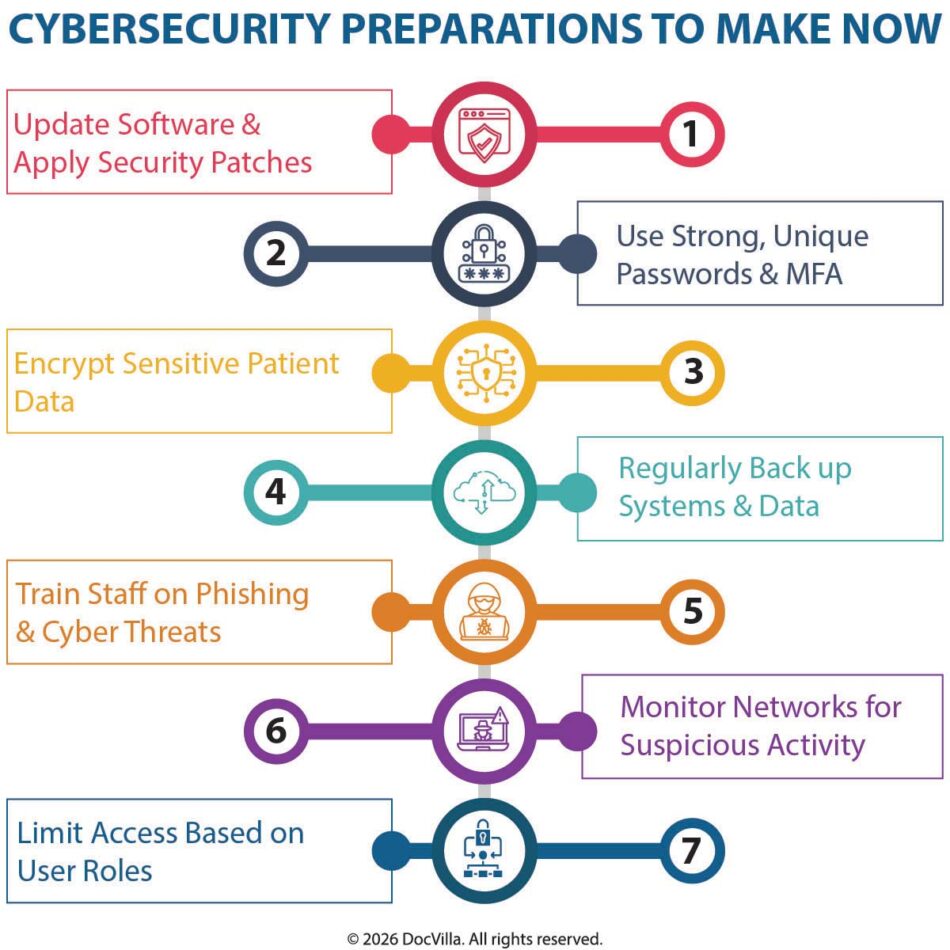
Cybersecurity Preparations to Make Now: Protecting Medical Practices in the Digital Healthcare Era
Cybersecurity has become one of the most critical concerns for modern healthcare organizations. As medical practices increasingly rely on Electronic Health Records (EHR), practice management software, telehealth platforms, and digital patient communication tools, the volume of sensitive healthcare data stored and transmitted electronically continues to grow. This digital transformation has improved efficiency, coordination of care, and patient engagement. However, it has also made healthcare organizations prime targets for cyberattacks. Medical records contain valuable personal, financial, and clinical information that can be exploited for identity theft, insurance fraud, and financial gain. For this reason, healthcare data is often considered more valuable on the black market than financial information alone. In 2026, cybersecurity preparation is no longer optional for medical practices—it is an operational necessity. Independent clinics, specialty practices, urgent care centers, and multispecialty groups must take proactive steps to secure their digital infrastructure, protect patient information, and maintain regulatory compliance. Cybersecurity readiness involves more than installing antivirus software; it requires a comprehensive strategy that includes secure EHR systems, staff training, data encryption, access controls, backup procedures, and ongoing risk monitoring. Medical practices that prioritize cybersecurity not only protect patient trust but also ensure operational continuity and financial stability in an increasingly digital healthcare environment. … Read More
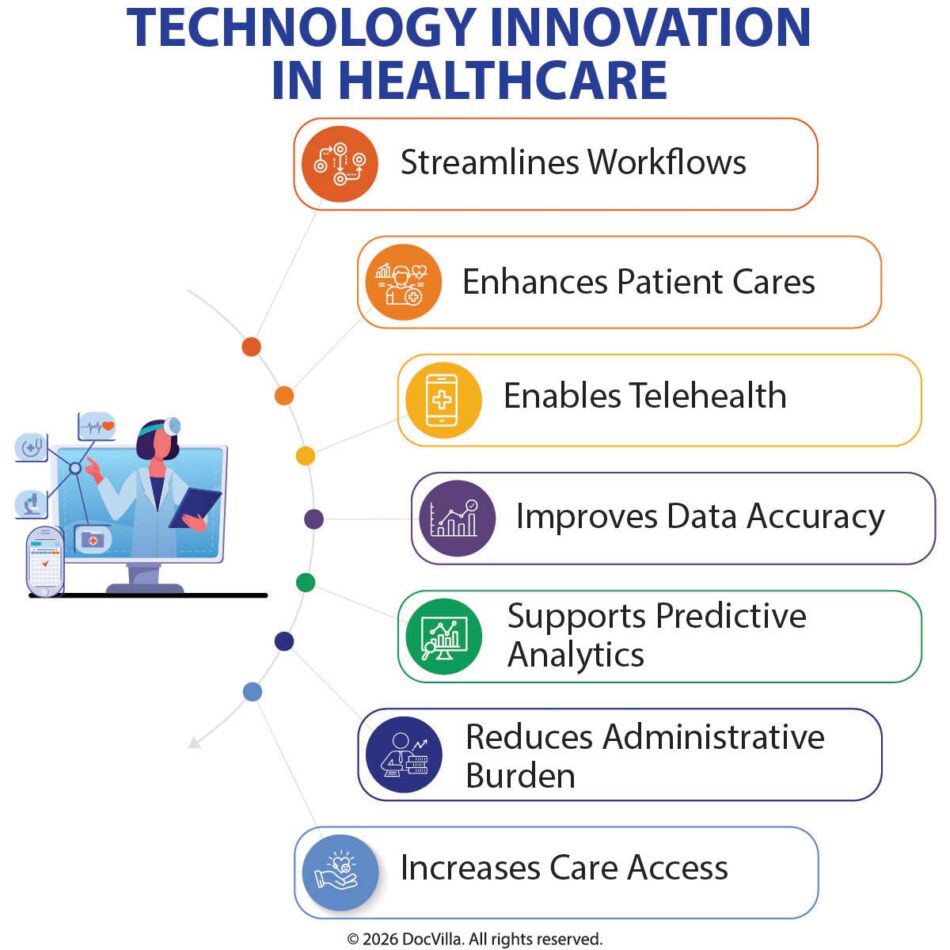
Technology Innovation Has the Potential to Improve the Future of Healthcare: How Digital Transformation Is Reshaping Medical Practices in 2026 and Beyond
Healthcare has always evolved alongside technological advancement. From the invention of the stethoscope to modern imaging systems, technology has continuously improved the ability of clinicians to diagnose, treat, and manage patient care. However, the pace of technological innovation in healthcare has accelerated dramatically over the past decade. Digital transformation is now reshaping how medical practices operate, how providers interact with patients, how healthcare data is analyzed, and how clinical decisions are supported. In 2026, healthcare technology innovation is not simply about introducing new tools; it is about transforming the entire healthcare delivery ecosystem. Electronic Health Records (EHR), practice management software, telehealth platforms, artificial intelligence, data analytics, remote patient monitoring, automation, and patient engagement technologies are all contributing to a more connected, efficient, and patient-centered healthcare system. For independent medical practices and healthcare organizations, understanding how technology innovation is shaping the future of healthcare is essential for staying competitive and delivering high-quality care. The practices that adopt modern digital solutions today will be better positioned to improve clinical outcomes, streamline operations, enhance patient engagement, and maintain financial sustainability in the evolving healthcare environment. … Read More
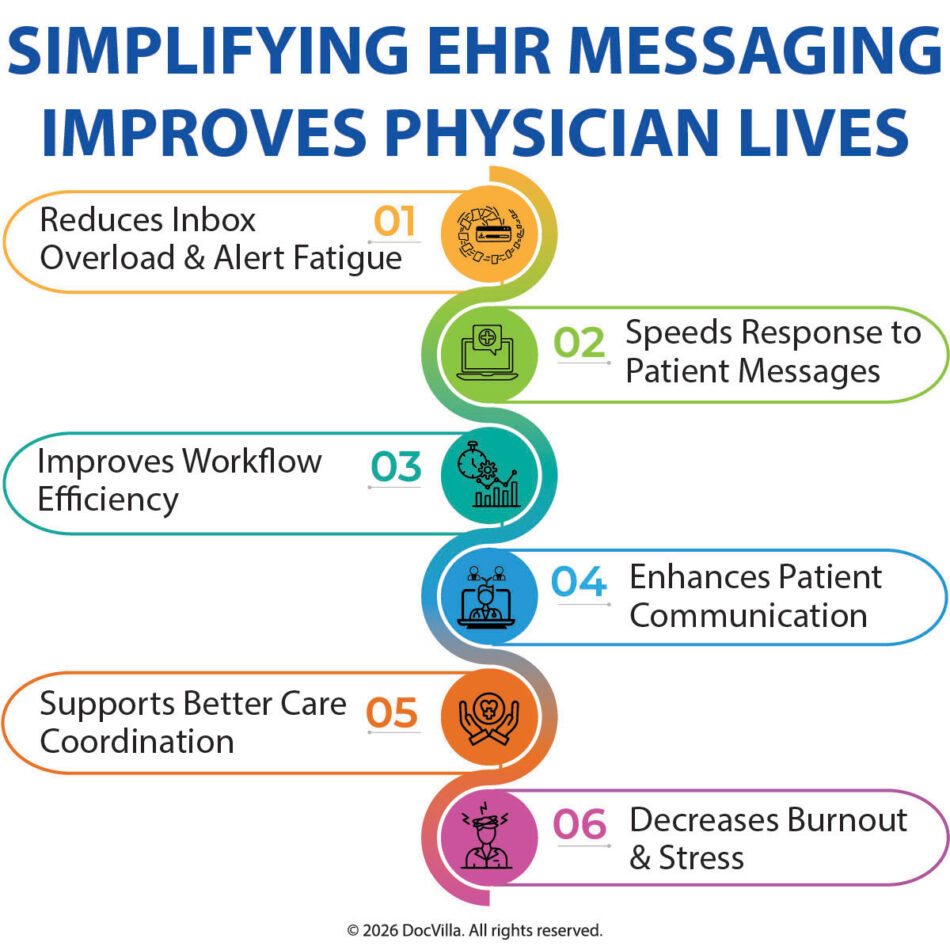
Simplifying EHR Messaging Improves Physician Lives: Reducing Administrative Burden and Enhancing Workflow Efficiency in Modern Medical Practices
Electronic Health Records have transformed healthcare delivery over the past two decades. They have improved documentation accuracy, enabled digital prescribing, facilitated patient data sharing, and strengthened regulatory compliance. However, one area where EHR systems have created unintended complexity is messaging. In modern medical practices, EHR messaging is used for internal communication between staff, patient portal communication, lab result notifications, prescription refill requests, billing coordination, referral tracking, and administrative alerts. While these tools are essential for coordinated care, poorly designed messaging systems can overwhelm physicians and clinical staff. In many practices, physicians receive dozens or even hundreds of messages daily. These messages range from clinical inquiries to administrative updates and patient requests. When messaging workflows are inefficient or poorly filtered, physicians experience notification fatigue, administrative overload, and reduced productivity. Simplifying EHR messaging has therefore become one of the most important strategies for improving physician work-life balance and clinic efficiency. By designing messaging systems that prioritize clinical relevance, automate routine tasks, and integrate seamlessly with practice management workflows, modern EHR platforms can significantly improve physician satisfaction while maintaining high-quality patient communication. For medical practices evaluating EHR, EMR, and practice management software, messaging efficiency has become a key factor in determining whether a system supports or hinders physician productivity. … Read More
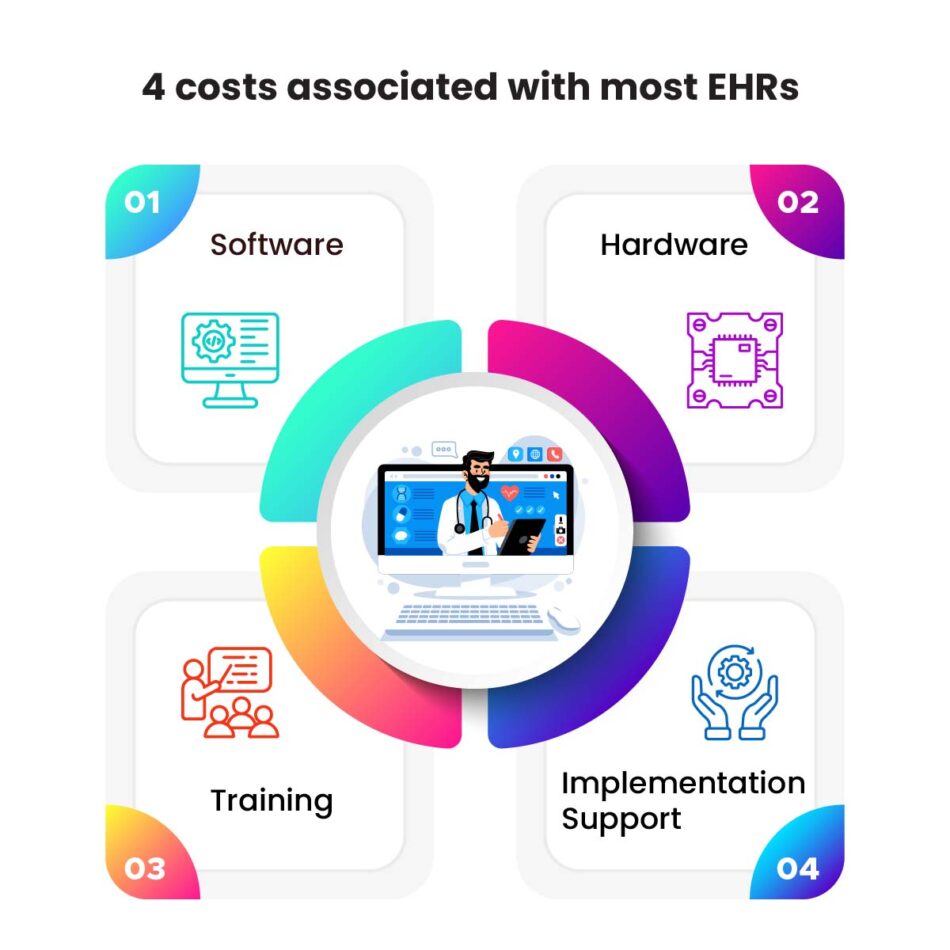
4 Costs Associated with Most EHRs and EMRs: What Medical Practices Must Understand Before Signing a Contract
Electronic Health Records (EHRs) and Electronic Medical Records (EMRs) are no longer optional in modern healthcare. In 2026, every medical practice—from solo primary care clinics to multispecialty groups—relies on digital systems for documentation, scheduling, billing, prescribing, reporting, and patient engagement. Yet despite widespread adoption, many providers underestimate the true cost structure of EHR and EMR systems. Vendors often advertise competitive monthly subscription pricing, but the visible fee is only one part of the financial equation. The real cost of an EHR includes direct expenses, indirect productivity impact, technology infrastructure requirements, integration fees, compliance considerations, and long-term scalability implications. For medical practices evaluating EHR, EMR, and practice management software, understanding the four major cost categories associated with most systems is essential to making a financially sound decision. These costs are: subscription and licensing fees, implementation and training expenses, productivity and workflow impact, and integration plus hidden add-on costs. Each of these influences total cost of ownership (TCO) and long-term return on investment. This guide breaks down each cost in detail and explains how integrated cloud-based platforms can reduce overall expense while improving operational performance. … Read More
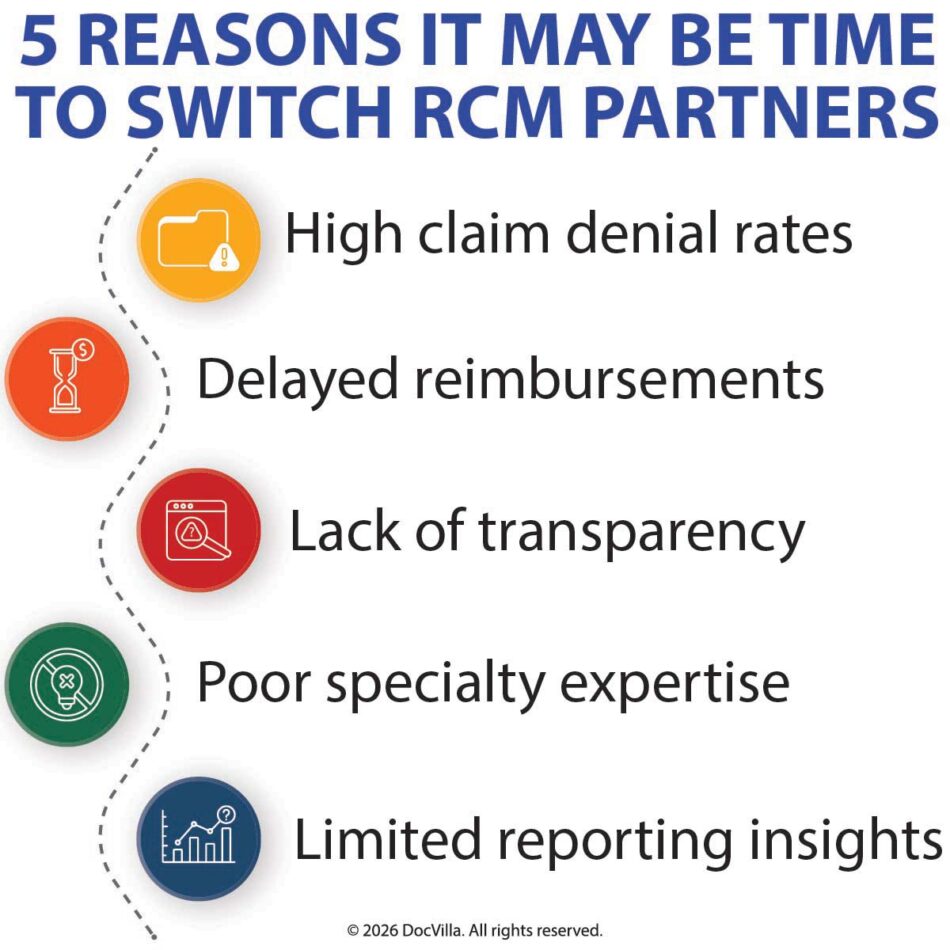
5 Reasons It May Be Time To Switch RCM Partners: A Strategic Guide for Medical Practices in 2026
Revenue Cycle Management (RCM) is the financial backbone of every medical practice. It encompasses the entire process of managing patient revenue—from appointment scheduling and insurance verification to claim submission, payment posting, denial management, and patient collections. In 2026, healthcare reimbursement has become increasingly complex due to evolving payer rules, telehealth billing requirements, prior authorization processes, regulatory compliance obligations, and rising patient financial responsibility. For many practices, RCM services are outsourced to third-party billing companies that specialize in managing these complex financial workflows. However, not all RCM partnerships deliver the performance medical practices expect. When billing inefficiencies occur, they can quietly erode profitability, disrupt cash flow, increase administrative burden, and damage patient satisfaction. Because the revenue cycle is intertwined with the EHR, EMR, and practice management system used by the clinic, an underperforming RCM partner can also create operational friction across the entire organization. Recognizing the signs that it may be time to switch RCM partners is therefore essential for medical practices seeking financial stability and growth. This article explores five major reasons why medical practices consider changing RCM vendors, how these issues impact operational performance, and how integrated EHR and practice management software can support a more efficient revenue cycle strategy. … Read More
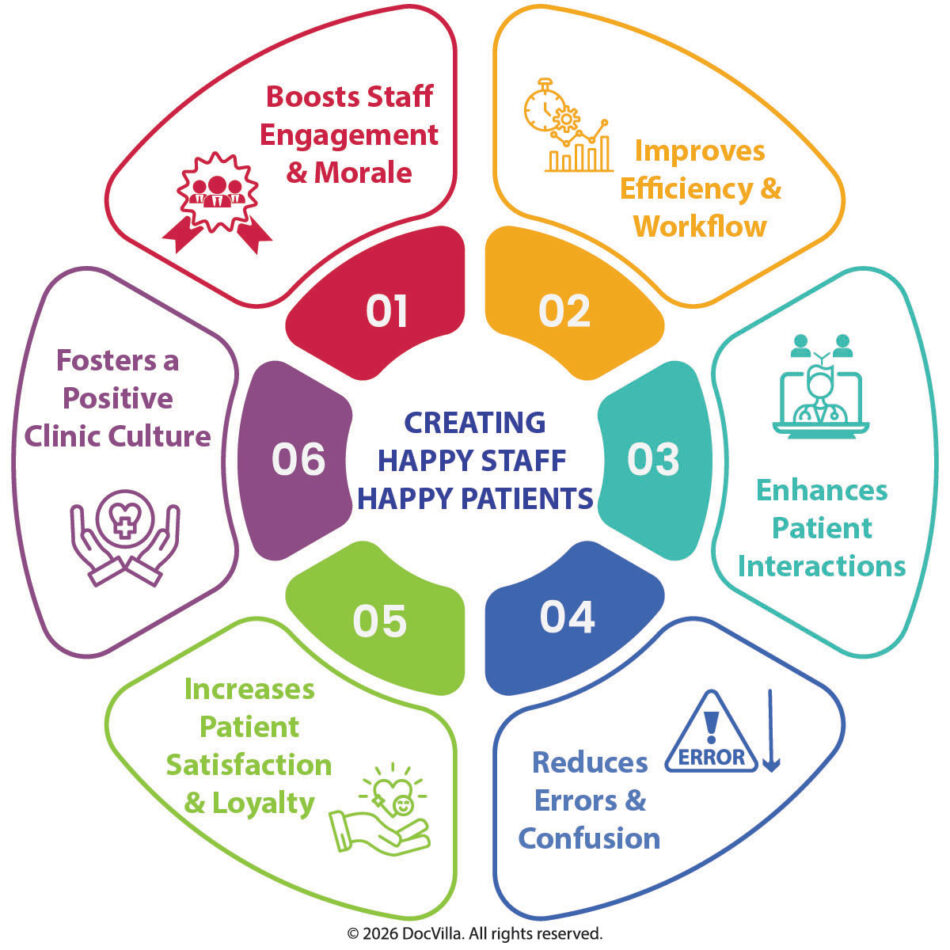
How Creating Happy Staff Members Results in Happy Patients: The Operational Link Between Workplace Culture and Patient Satisfaction in Modern Medical Practices
Healthcare organizations have long focused on patient satisfaction as a key measure of success. In 2026, patient experience scores, online reviews, retention rates, and referral patterns all influence the growth and reputation of medical practices. However, one factor that is sometimes overlooked in the pursuit of patient satisfaction is staff happiness. The truth is that the patient experience is inseparable from the employee experience. The nurses, medical assistants, front desk staff, billers, and administrative coordinators who interact with patients every day shape the atmosphere of a clinic. When staff members feel respected, supported, and empowered, they communicate more effectively, show more empathy, resolve problems more quickly, and contribute to a positive environment that patients notice immediately. When staff members feel overwhelmed, underappreciated, or burdened by inefficient workflows, the opposite occurs. Stress becomes visible, communication deteriorates, errors increase, and patient experiences suffer. For medical practices seeking sustainable growth, creating happy staff members is not merely a human resources objective—it is a strategic operational investment that improves patient satisfaction, clinical outcomes, and financial performance. This article explores the direct relationship between employee satisfaction and patient experiences, the operational factors that influence staff happiness, and how modern EHR, EMR, and practice management software can support a positive workplace culture. … Read More