Key Takeaways
- Online reviews significantly impact physician reputation management, shaping patient perceptions and influencing their decisions.
- Negative reviews often stem from operational issues, such as poor communication and wait times, rather than medical care quality.
- Responding professionally to criticism and addressing concerns can help physicians improve their online reputation and patient satisfaction.
- Encouraging positive reviews and fostering clear communication are effective strategies for managing overall patient experiences.
- Leveraging modern technology, like integrated EHR, EMR, Practice Management systems, enhances practice efficiency and can prevent negative reviews.
The healthcare landscape has changed dramatically over the past decade, not only in how care is delivered but also in how patients evaluate and select healthcare providers. In the past, word-of-mouth referrals and physician reputation within the community were the primary drivers of patient growth. Today, online reviews play a major role in shaping how patients perceive medical practices. Platforms such as Google, Healthgrades, Yelp, and other healthcare directories allow patients to publicly share their experiences with providers. While positive reviews can strengthen a practice’s reputation and attract new patients, negative reviews can have the opposite effect, influencing potential patients before they even step into the clinic. For physicians and medical practice owners, managing online reputation has therefore become an important component of modern practice management. However, dealing with negative reviews requires careful consideration, professionalism, and strategic communication. Healthcare providers must balance protecting their reputation with maintaining patient privacy and complying with healthcare regulations. The good news is that negative reviews can often be prevented through strong patient engagement, clear communication, and efficient practice workflows supported by modern Electronic Health Record (EHR), Electronic Medical Record (EMR), and practice management software. By understanding the causes of negative reviews and implementing proactive strategies to address patient concerns, physicians can not only manage their online reputation but also improve patient satisfaction and operational efficiency.
Why Online Reviews Matter in Healthcare
Online reviews have become a powerful influence in consumer decision-making across many industries, including healthcare. Patients frequently research physicians and clinics online before scheduling appointments. Reviews provide insight into patient experiences related to appointment scheduling, wait times, staff interactions, treatment quality, and overall satisfaction. For many patients, reading reviews helps them feel more confident about choosing a provider.
Studies have shown that patients often trust online reviews almost as much as personal recommendations. A practice with a strong reputation for positive patient experiences can attract new patients more easily, while a practice with numerous negative reviews may struggle to build trust. Even a single negative review can influence perception if it appears prominently in search results.
Because of this visibility, physicians must actively manage their online presence and understand how reviews affect their reputation.
Common Reasons Patients Leave Negative Reviews
Before addressing how to respond to negative reviews, it is important to understand why they occur. Many negative reviews are not related to the quality of medical care itself but rather to operational issues within the practice. Common causes include long wait times, difficulty scheduling appointments, poor communication, billing confusion, and perceived lack of empathy during patient interactions.
Patients may also feel frustrated if they do not fully understand their treatment plans or if follow-up communication is delayed. In some cases, negative reviews result from misunderstandings or unrealistic expectations rather than genuine service failures.
By identifying the root causes of dissatisfaction, practices can implement improvements that reduce the likelihood of negative reviews.
The Emotional Impact of Negative Reviews on Physicians
Receiving a negative online review can be emotionally challenging for physicians who dedicate their careers to caring for patients. Many physicians take pride in their work and may feel discouraged or frustrated when reading critical feedback. However, it is important to approach negative reviews objectively and recognize that they often represent isolated experiences rather than overall practice performance.
Instead of viewing negative reviews as personal attacks, physicians can use them as opportunities to identify areas for improvement. Constructive feedback can reveal operational inefficiencies or communication gaps that may otherwise go unnoticed.
Maintaining a professional and measured response helps protect both the physician’s reputation and the trust of current and future patients.
Responding to Negative Reviews Professionally
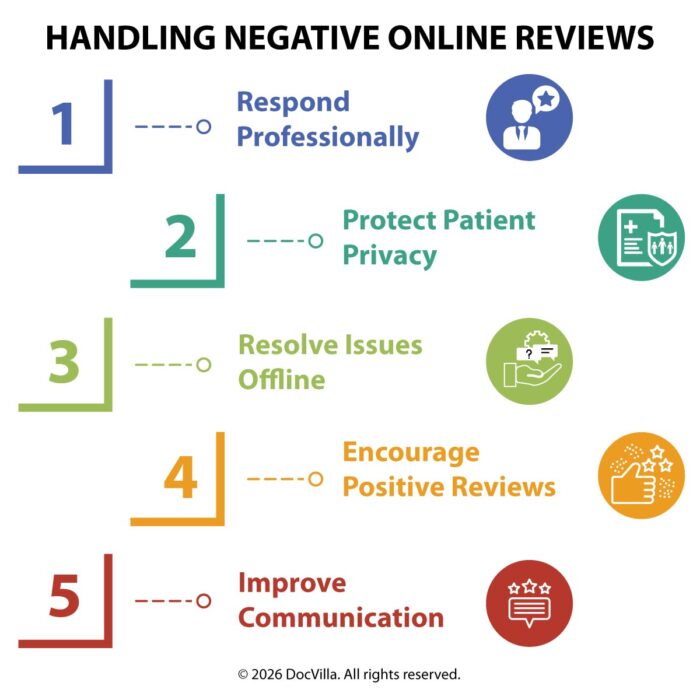
When responding to negative online reviews, professionalism and discretion are essential. Physicians must avoid discussing specific patient details in public responses because healthcare privacy regulations prohibit disclosing protected health information without patient consent. Even confirming that the reviewer was a patient can raise privacy concerns.
A thoughtful response typically acknowledges the patient’s concerns and expresses a willingness to address the issue. For example, a physician might respond by thanking the reviewer for feedback and inviting them to contact the practice directly to discuss the matter further.
This approach demonstrates that the practice values patient feedback while maintaining privacy compliance.
Avoiding Defensive or Confrontational Responses
One of the most common mistakes physicians make when responding to negative reviews is becoming defensive. It is natural to want to correct inaccuracies or defend clinical decisions, but public responses that appear argumentative can escalate the situation.
Potential patients reading the exchange may perceive the practice as unprofessional if responses become confrontational. Maintaining a calm and respectful tone reinforces the practice’s commitment to patient care and professionalism.
In many cases, addressing the issue privately with the patient can resolve misunderstandings and potentially lead to updated reviews.
Encouraging Positive Patient Reviews
The most effective way to balance negative reviews is by encouraging satisfied patients to share their experiences online. Many patients who have positive experiences do not think to leave reviews unless they are prompted.
Practices can encourage reviews by sending follow-up emails or patient portal messages thanking patients for their visit and inviting them to provide feedback. Some practices include review links in appointment confirmation emails or post-visit surveys.
A steady stream of positive reviews helps build a balanced online reputation and reduces the impact of occasional negative comments.
Improving Patient Communication
Clear communication is one of the most important factors influencing patient satisfaction. Patients who feel heard and understood are less likely to leave negative reviews. Physicians and staff should take time to explain diagnoses, treatment plans, and follow-up instructions clearly.
Encouraging patients to ask questions during appointments can also help prevent misunderstandings. When patients feel confident that their concerns are addressed, they are more likely to view their experience positively.
Secure messaging through patient portals can further enhance communication by allowing patients to ask follow-up questions after their visit.
Reducing Wait Times and Scheduling Issues
Operational inefficiencies such as long wait times are common sources of patient frustration. Even if the quality of care is excellent, excessive delays can lead to dissatisfaction.
Implementing efficient scheduling systems and automated appointment reminders can help reduce wait times and missed appointments. Online scheduling tools allow patients to select convenient appointment times without needing to call the clinic.
By improving scheduling workflows, practices can enhance the overall patient experience.
Addressing Billing Transparency
Billing confusion is another frequent cause of negative reviews. Patients may feel frustrated if they receive unexpected charges or if billing statements are difficult to understand. Clear communication about insurance coverage and financial responsibilities helps prevent misunderstandings.
Patient portals that allow patients to view billing statements and make online payments provide transparency and convenience. Staff members should also be trained to answer billing questions clearly and promptly.
Using Patient Feedback for Continuous Improvement
Negative reviews can provide valuable insights into areas where a practice can improve. Patterns in patient feedback may reveal systemic issues such as scheduling delays, communication gaps, or administrative inefficiencies.
By analyzing feedback trends, practices can implement targeted improvements that enhance patient satisfaction. Continuous improvement initiatives demonstrate that the practice values patient experiences and strives to deliver better care.
The Role of Staff Training in Patient Satisfaction
Staff members play a critical role in shaping the patient experience. Front desk staff, medical assistants, and billing specialists are often the first and last people patients interact with during visits. Professional, courteous interactions create positive impressions that influence patient perceptions.
Regular staff training on communication skills, patient empathy, and conflict resolution can significantly reduce negative patient experiences. When staff members feel supported and well-trained, they are more likely to deliver consistent service quality.
Leveraging Technology to Improve Patient Experience
Modern healthcare technology can play a significant role in reducing the likelihood of negative reviews. Integrated EHR and practice management systems provide tools that streamline patient communication, scheduling, billing, and documentation workflows.
Patient portals allow individuals to access medical records, schedule appointments, request prescription refills, and communicate securely with providers. These tools improve transparency and convenience, which are key factors in patient satisfaction.
Automated reminders reduce missed appointments, while digital intake forms simplify check-in processes. By reducing administrative friction, technology helps practices deliver smoother patient experiences.
Monitoring Online Reputation Proactively
Physicians should regularly monitor their online presence to stay informed about patient feedback. Setting up alerts for practice names or checking review platforms periodically helps practices respond quickly to concerns.
Reputation management tools can also aggregate reviews from multiple platforms into a single dashboard. This centralized monitoring makes it easier for practices to track trends and identify areas for improvement.
Proactive monitoring ensures that negative reviews are addressed promptly before they influence broader perceptions.
The Role of Transparency and Trust
Transparency and trust are essential components of a strong physician–patient relationship. When patients feel respected and valued, they are more likely to provide constructive feedback rather than public criticism.
Practices that maintain open communication channels and respond thoughtfully to concerns demonstrate their commitment to patient-centered care. Over time, this approach builds trust and strengthens the practice’s reputation.
How Integrated Healthcare Platforms Improve Patient Satisfaction
Integrated EHR and practice management platforms play an important role in supporting positive patient experiences. When scheduling, communication, billing, and documentation workflows are connected within a single system, staff members can perform tasks more efficiently.
This efficiency reduces delays and ensures that patients receive timely information about appointments, test results, and treatment plans. Integrated platforms also simplify communication between patients and providers through secure messaging tools.
How DocVilla Supports Reputation Management and Patient Satisfaction
DocVilla provides a cloud-based EHR and practice management platform designed to improve patient engagement and operational efficiency. The system includes a secure patient portal that allows patients to access medical records, schedule appointments, request prescription refills, and communicate with providers. Automated appointment reminders reduce missed visits and improve scheduling efficiency. Integrated billing tools provide financial transparency and simplify payment processes. By providing a unified technology platform that streamlines clinical and administrative workflows, DocVilla helps medical practices deliver smoother patient experiences that reduce the likelihood of negative reviews.
Preparing Medical Practices for the Digital Reputation Era
Online reputation management will continue to play an important role in healthcare as patients increasingly rely on digital information to choose providers. Medical practices must adapt by prioritizing patient engagement, operational efficiency, and transparent communication.
Adopting modern healthcare technology platforms that support efficient workflows and patient communication can significantly improve satisfaction levels. Practices that embrace digital tools and proactive reputation management strategies will be better positioned to build trust and attract new patients.
Final Thoughts: Turning Negative Reviews into Opportunities
Negative online reviews can be challenging for physicians, but they also provide opportunities for growth and improvement. By responding professionally, addressing patient concerns, and implementing proactive strategies to enhance patient experiences, medical practices can strengthen their reputation over time. Encouraging positive feedback, improving communication, and leveraging modern EHR and practice management technology all contribute to better patient satisfaction. Ultimately, practices that prioritize patient-centered care and operational excellence will build strong reputations that reflect the quality of their services.
To see how DocVilla can optimize your Medical Practice documentation and billing, schedule a free demo today.