Key Takeaways
- Patient engagement in healthcare emphasizes collaboration between providers and patients, improving health outcomes and satisfaction.
- Engaged patients actively participate in their care decisions, leading to better treatment adherence and chronic disease management.
- Technology, such as patient portals and telehealth, enhances patient engagement and supports preventive care and education.
- Effective patient engagement strengthens physician-patient relationships, promoting trust and continuity of care.
- Investing in patient engagement tools prepares healthcare practices for future innovations and improves operational efficiency.
Healthcare has undergone a major transformation in recent years as technology, patient expectations, and care delivery models continue to evolve. One of the most significant shifts in modern healthcare is the growing emphasis on patient engagement. Historically, healthcare was largely provider-driven, where physicians made most treatment decisions and patients followed instructions with limited involvement in the care process. Today, however, healthcare is increasingly centered around collaboration between providers and patients. Patient engagement refers to the active participation of patients in managing their own health, making informed decisions, communicating with healthcare providers, and following treatment plans effectively. When patients are engaged in their healthcare journey, outcomes improve, satisfaction increases, and healthcare systems operate more efficiently. For medical practices, investing in patient engagement is not just a clinical priority but also a strategic advantage. Engaged patients are more likely to follow treatment recommendations, attend follow-up visits, communicate effectively with providers, and remain loyal to their healthcare providers over time. Modern Electronic Health Records (EHR), Electronic Medical Records (EMR), and integrated practice management software provide powerful tools that support patient engagement through digital communication, patient portals, telehealth services, automated reminders, and accessible health records. Understanding the long-term benefits of patient engagement helps medical practices build stronger relationships with patients while improving operational efficiency and financial stability.
Understanding Patient Engagement in Modern Healthcare
Patient engagement refers to the process of involving patients actively in their healthcare decisions and treatment processes. Rather than being passive recipients of medical advice, engaged patients participate in discussions about their health conditions, ask questions about treatment options, monitor their progress, and communicate with healthcare providers about concerns or symptoms.
This collaborative approach recognizes that healthcare outcomes are influenced not only by clinical expertise but also by patient behavior. Patients who understand their health conditions and treatment plans are more likely to follow recommendations and adopt healthier lifestyles. Engagement encourages patients to take responsibility for their well-being while maintaining strong communication with healthcare providers.
In modern healthcare environments, technology plays a crucial role in supporting patient engagement. Digital tools such as patient portals, mobile health applications, and telehealth platforms allow patients to access their health information conveniently and stay connected with their care teams.
The Shift Toward Patient-Centered Care
Healthcare systems around the world are moving toward patient-centered care models. These models emphasize respect for patient preferences, clear communication, shared decision-making, and personalized treatment plans. Patient engagement is a central component of this approach.
Patient-centered care recognizes that every patient has unique needs, experiences, and health goals. Physicians who involve patients in treatment discussions create stronger partnerships that lead to better outcomes. Patients who feel heard and valued are more likely to trust their healthcare providers and remain committed to their care plans.
For medical practices, patient-centered care can lead to improved patient satisfaction, stronger loyalty, and more positive online reviews.
Improved Health Outcomes Through Engagement
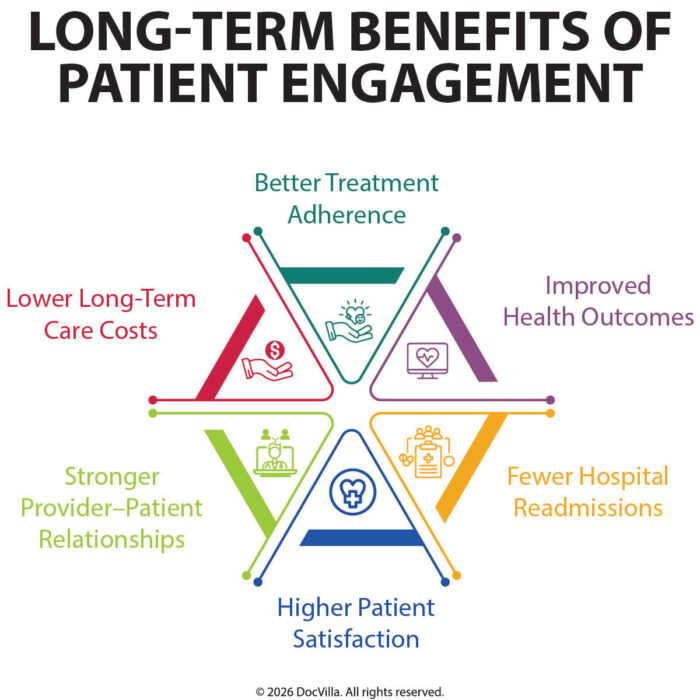
One of the most significant long-term benefits of patient engagement is improved health outcomes. Engaged patients tend to be more informed about their health conditions and are more likely to follow treatment recommendations consistently.
For example, patients managing chronic conditions such as diabetes, hypertension, or asthma often need to follow specific medication regimens and lifestyle adjustments. When patients understand why these actions are necessary and have access to tools that help them track progress, they are more likely to maintain healthy behaviors.
Engagement also encourages patients to seek medical advice earlier when symptoms arise, preventing minor health issues from becoming serious complications.
Better Chronic Disease Management
Chronic diseases represent a large portion of healthcare spending and require long-term management strategies. Conditions such as diabetes, heart disease, and arthritis often require continuous monitoring and patient participation.
Patient engagement tools allow individuals to track health metrics, access educational resources, and communicate with providers about treatment progress. When patients actively monitor their health data and understand the importance of lifestyle adjustments, they become more effective partners in managing chronic conditions.
Improved chronic disease management reduces hospitalizations, emergency visits, and long-term healthcare costs.
Increased Treatment Adherence
Medication adherence is a major challenge in healthcare. Many patients forget to take medications as prescribed or discontinue treatment prematurely because they do not fully understand its importance.
Engaged patients who receive clear explanations about their treatment plans are more likely to follow medication instructions carefully. Digital Communication tools integrated into EHR systems help patients stay on track with treatment schedules.
Improved adherence leads to better clinical outcomes and reduces the risk of complications.
Strengthening Physician–Patient Relationships
Patient engagement strengthens the relationship between physicians and patients by promoting open communication and trust. When patients feel comfortable discussing concerns and asking questions, providers gain deeper insight into their needs and preferences.
Strong relationships encourage patients to remain loyal to their healthcare providers and continue receiving care from the same practice. Continuity of care improves medical history tracking and supports more personalized treatment approaches.
Trust and communication also reduce the likelihood of misunderstandings that may lead to dissatisfaction or negative reviews.
Enhancing Preventive Care
Preventive care is an important component of long-term health management. Engaged patients are more likely to participate in preventive screenings, vaccinations, and routine health checkups. These preventive measures help detect health conditions early, when they are easier to treat.
Digital engagement tools allow medical practices to send reminders for preventive screenings and wellness visits. When patients receive timely reminders and educational resources, they are more likely to prioritize preventive healthcare.
Preventive care reduces healthcare costs while improving population health outcomes.
Improving Patient Satisfaction and Experience
Patient satisfaction is strongly influenced by how patients interact with healthcare providers and staff members. Engagement tools improve the overall patient experience by making healthcare more accessible and convenient.
Patient portals allow individuals to schedule appointments, review lab results, and communicate with providers without needing to call the clinic. Telehealth services offer flexible access to care for patients who cannot visit the office easily.
When patients feel that healthcare systems respect their time and provide convenient access to information, satisfaction levels increase.
Operational Efficiency for Medical Practices
Patient engagement benefits not only patients but also medical practices themselves. Digital communication tools reduce the administrative burden on staff by automating routine tasks such as appointment reminders, prescription refill requests, and patient inquiries.
Patient portals allow patients to complete intake forms online, update demographic information, and review billing statements. These capabilities reduce paperwork and streamline administrative workflows.
Improved efficiency allows staff members to focus on more complex tasks and enhances overall productivity within the practice.
Reducing Missed Appointments
Missed appointments can disrupt clinic schedules and reduce practice revenue. Patient engagement tools help reduce no-show rates by sending automated reminders through email, text messages, or mobile notifications.
Online scheduling systems also allow patients to reschedule appointments easily if conflicts arise. By giving patients more control over scheduling, practices can maintain more consistent appointment attendance.
Encouraging Patient Education
Education is a key component of patient engagement. When patients understand their health conditions and treatment options, they are better equipped to make informed decisions. Patient portals and digital platforms often include educational resources related to specific diagnoses or preventive health measures.
Providing reliable educational materials helps patients avoid misinformation from unreliable sources. Educated patients are more confident in managing their health and communicating with healthcare providers.
Supporting Remote Monitoring and Telehealth
Technological advancements have expanded the possibilities for remote patient monitoring and telehealth services. Wearable devices and mobile health applications allow patients to track vital signs such as blood pressure, heart rate, and glucose levels.
This data can be shared with healthcare providers through integrated EHR systems, enabling more proactive care management. Telehealth visits provide convenient access to follow-up consultations and routine care.
These technologies strengthen patient engagement by keeping individuals connected to their healthcare teams.
Data-Driven Healthcare and Patient Insights
Patient engagement platforms generate valuable data that helps practices understand patient behavior and preferences. By analyzing this data, practices can identify areas where engagement strategies may need improvement. Data-driven insights support continuous improvement in patient communication and care delivery.
The Role of Integrated Healthcare Technology
Integrated EHR and practice management systems provide the foundation for effective patient engagement. When clinical documentation, scheduling, billing, and communication tools operate within a unified platform, information flows more smoothly between providers and patients.
Integration ensures that patient records remain accurate and accessible while reducing administrative complexity. Healthcare teams can coordinate care more effectively when all relevant information is available within a single system.
How DocVilla Supports Patient Engagement
DocVilla offers a cloud-based EHR and practice management platform designed to enhance patient engagement and improve healthcare delivery. The platform includes a secure patient portal that allows patients to access medical records, view lab results, request prescription refills, and communicate with providers through secure messaging. Automated appointment reminders help reduce missed visits and improve scheduling efficiency. Telehealth integration supports virtual consultations and remote care delivery. Integrated reporting dashboards provide insights into patient engagement trends and operational performance. By combining clinical, administrative, and communication workflows within a unified system, DocVilla helps medical practices build stronger relationships with patients while improving operational efficiency.
Preparing for the Future of Engaged Healthcare
Healthcare will continue evolving as new technologies and patient expectations shape care delivery models. Artificial intelligence, predictive analytics, and personalized health tools will further expand opportunities for patient engagement.
Practices that invest in digital engagement tools today will be better prepared for future healthcare innovations. Encouraging patients to participate actively in their care creates a foundation for improved outcomes and sustainable practice growth.
Final Thoughts: The Long-Term Impact of Patient Engagement
Patient engagement represents one of the most important shifts in modern healthcare. By involving patients actively in their healthcare journey, providers can improve treatment adherence, enhance communication, and deliver more personalized care. Engaged patients experience better health outcomes, higher satisfaction levels, and stronger relationships with their healthcare providers. For medical practices, investing in patient engagement tools such as patient portals, telehealth services, and integrated EHR platforms improves operational efficiency and strengthens long-term practice sustainability. As healthcare continues to evolve toward patient-centered care models, practices that prioritize engagement will be better positioned to deliver high-quality care while maintaining strong patient relationships.
To see how DocVilla can optimize your Medical Practice documentation and billing, schedule a free demo today.