Patient Retention Strategies

How to Improve Patient Retention
Best Patient retention strategies
using All-in-One EHR

The Ultimate Guide to Patient Retention Strategies: How to Keep Patients Coming Back

Using All-in-One cloud based EHR to improve patient retention and increase revenue

Patient retention is a critical factor in the success of any medical practice. In a competitive healthcare landscape, the ability to retain existing patients is just as important—if not more so—than attracting new ones. Research shows that acquiring a new patient can cost five times more than retaining an existing one. Moreover, patient loyalty translates into long-term revenue and a stable practice.

This article will explore effective patient retention strategies that can be implemented in medical practices, the financial impact of losing a patient, and how an all-in-one EHR system like DocVilla can play a crucial role in retaining patients. By the end of this guide, you’ll understand the best methods for improving patient retention and how using the right EHR can drive practice growth and profitability.

Patient retention strategies How to improve patient retention Patient loyalty in healthcare Effective ways to retain patients Best EHR for patient retention EHR for improving patient loyalty Increase patient engagement All-in-one EHR benefits for practices Cloud-based EHR for patient retention Medical practice patient retention Patient retention software for doctors Patient communication tools in EHR EHR for enhancing patient experience Long-term patient retention in healthcare Improving patient satisfaction with EHR Why patient retention matters in healthcare Patient retention and medical practice profitability Cost of losing a patient in healthcare EHR solutions for patient retention All-in-one EHR software for patient engagement

Why Patient Retention Matters: Financial Impact

Patient retention strategies How to improve patient retention Patient loyalty in healthcare Effective ways to retain patients Best EHR for patient retention EHR for improving patient loyalty Increase patient engagement All-in-one EHR benefits for practices Cloud-based EHR for patient retention Medical practice patient retention Patient retention software for doctors Patient communication tools in EHR EHR for enhancing patient experience Long-term patient retention in healthcare Improving patient satisfaction with EHR Why patient retention matters in healthcare Patient retention and medical practice profitability Cost of losing a patient in healthcare EHR solutions for patient retention All-in-one EHR software for patient engagement

Before diving into strategies for retaining patients, it’s essential to understand why patient retention matters financially. Studies show that medical practices lose between $200,000 to $400,000 annually due to poor patient retention. Over a patient’s lifetime, the financial impact of losing just one patient can amount to tens of thousands of dollars.

Lifetime Value of a Patient

The lifetime value (LTV) of a patient refers to the total revenue a medical practice can expect to earn from a single patient over the course of their relationship. This includes routine visits, follow-up care, referrals, and any specialty services the patient may require.

Example: Calculating the Lifetime Value of a Patient

  • Average revenue per visit: $200
  • Average number of visits per year: 4
  • Average retention period: 10 years
  • Lifetime Value (LTV) = $200 x 4 visits/year x 10 years = $8,000

Losing just 50 patients can mean a potential loss of $400,000 in revenue over their lifetime, highlighting the importance of retention for a stable and profitable practice.

Impact of Patient Churn on Medical Practices

Patient churn—the percentage of patients who stop visiting a practice—can have devastating consequences for a healthcare provider. High churn rates not only result in lost revenue but also increased marketing costs as practices attempt to attract new patients to fill the gap.

Key Statistics:

  • 5% increase in retention can lead to a 25-95% increase in profits.
  • A 2% increase in retention can decrease costs by as much as 10%.
  • Practices with high retention rates often have higher patient satisfaction and are more likely to receive positive reviews and referrals.

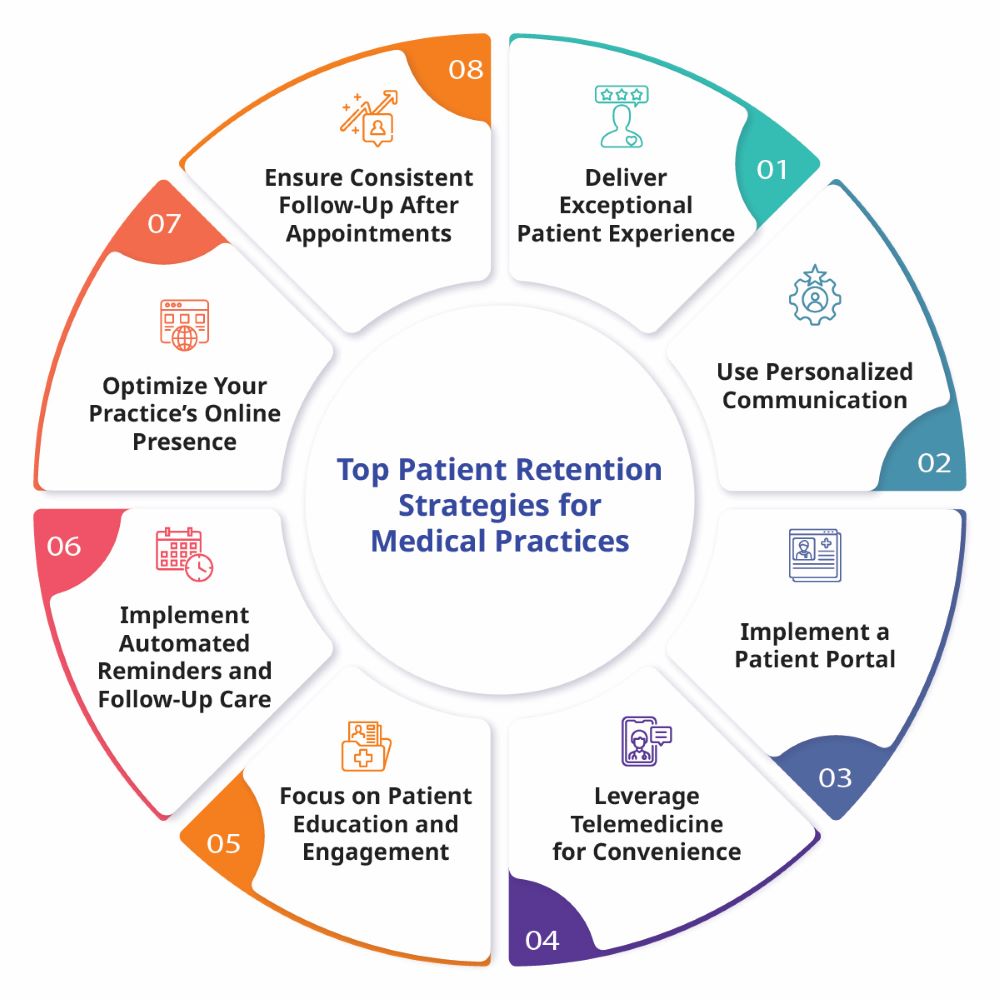
Top Patient Retention Strategies for Medical Practices

Improving patient retention requires a multifaceted approach, from enhancing patient communication to leveraging technology. Below are some of the most effective strategies for retaining patients and fostering loyalty.

1. Deliver Exceptional Patient Experience

Patient experience is the cornerstone of retention. A positive experience, from the moment a patient schedules an appointment to post-visit follow-up, plays a crucial role in patient loyalty.

Tips for Improving Patient Experience:

  • Streamline Scheduling: Offer easy online appointment booking and allow patients to reschedule or cancel appointments online.
  • Minimize Wait Times: Reduce in-office wait times with efficient scheduling and appointment management.
  • Provide a Comfortable Environment: Ensure that your waiting area is welcoming, clean, and comfortable for patients.
  • Use Follow-Up Surveys: Send out surveys after appointments to gather feedback and identify areas for improvement.

2. Use Personalized Communication

Patients appreciate personalized communication that addresses their specific needs. Sending relevant reminders, educational content, and personalized follow-ups can enhance the patient-provider relationship.

How to Personalize Communication:

  • Automated Reminders: Send appointment reminders, medication refill alerts, and follow-up care instructions.
  • Health Tips: Provide personalized health tips based on the patient’s medical history or recent visits.
  • Targeted Campaigns: Use the patient’s demographics and health information to create targeted educational campaigns.

3. Implement a Patient Portal

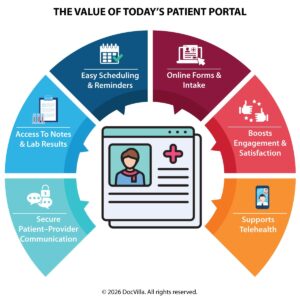
A patient portal is an online platform that allows patients to access their health information, schedule appointments, view lab results, pay bills, and communicate with their provider. A robust patient portal is a powerful tool for enhancing patient engagement and retention.

Benefits of a Patient Portal:

  • 24/7 Access to Health Information: Patients can view their medical records, prescriptions, and lab results anytime.
  • Easy Communication: Secure messaging enables patients to communicate with their healthcare provider, ask questions, and seek advice without an office visit.
  • Online Bill Payment: Simplified billing and payment options improve patient satisfaction and ensure timely payments.

4. Leverage Telemedicine for Convenience

Telemedicine offers patients the convenience of virtual visits, eliminating the need for in-person appointments for routine follow-ups or minor health concerns. This increases patient satisfaction, particularly for those with mobility issues or busy schedules.

How Telemedicine Boosts Retention:

  • Accessibility: Patients can consult their doctor from the comfort of their home, especially during inclement weather or emergencies.
  • Timely Care: Reduces appointment wait times and allows for more flexible scheduling.
  • Increased Engagement: Virtual consultations keep patients connected with their provider, even between in-person visits.

5. Focus on Patient Education and Engagement

Educated patients are more likely to be engaged in their care and follow treatment plans. Providing easy-to-understand educational resources can foster patient loyalty and encourage compliance.

Effective Patient Education Strategies:

  • Educational Videos: Create videos that explain medical conditions, procedures, and preventive care tips.
  • Handouts and Brochures: Provide educational materials during visits for patients to take home.
  • Webinars: Host online webinars on health topics of interest, such as managing chronic conditions or healthy living.

6. Implement Automated Reminders and Follow-Up Care

Automated reminders and follow-up care play a vital role in patient retention by ensuring that patients keep their appointments and follow treatment plans. These reminders can be sent via email, text, or phone.

Examples of Automated Reminders:

  • Appointment Reminders: Reduce no-shows by sending automated reminders a day or two before the scheduled visit.
  • Preventive Care Reminders: Encourage regular check-ups, screenings, and vaccinations by sending reminders.
  • Medication Adherence: Send reminders to refill or take medications, especially for chronic conditions.

7. Optimize Your Practice’s Online Presence

An active and positive online presence can attract new patients and retain existing ones. Patients often turn to online reviews and websites for information before scheduling an appointment, so it’s essential to maintain a professional digital footprint.

How to Optimize Your Online Presence:

  • Google My Business Profile: Ensure your Google My Business profile is accurate, complete, and regularly updated.
  • Positive Reviews: Encourage satisfied patients to leave positive reviews on Google, Yelp, and other review platforms.
  • Social Media: Use social media platforms like Facebook, Instagram, and LinkedIn to engage with your community, share health tips, and announce new services.

8. Ensure Consistent Follow-Up After Appointments

Following up with patients after appointments shows that you care about their well-being, which can enhance loyalty. Use phone calls, emails, or text messages to check in on patients’ recovery and provide additional guidance if needed.

Examples of Effective Follow-Ups:

  • Post-Procedure Check-Ins: Contact patients to ensure they are recovering well after a procedure or treatment.
  • Chronic Condition Management: Schedule regular follow-ups for chronic conditions to ensure proper management.
  • Survey Feedback: Send surveys to gather feedback about the patient’s experience and identify areas for improvement.

How DocVilla’s All-in-One EHR Can Improve Patient Retention

DocVilla’s all-in-one EHR solution is designed to improve patient retention by streamlining practice management, enhancing communication, and optimizing the patient experience. Here’s how DocVilla’s features can help medical practices keep patients engaged and loyal:

1. Integrated Patient Portal for Enhanced Communication

DocVilla’s EHR includes a comprehensive patient portal that allows patients to access their health records, schedule appointments, and communicate with their provider securely. This fosters better communication, transparency, and engagement, which are essential for retention.

2. Automated Reminders and Follow-Ups

DocVilla’s EHR system enables practices to send automated appointment reminders, medication reminders, and follow-up care instructions. This reduces no-shows and encourages patients to stay on top of their healthcare needs.

3. Customizable Templates for Personalized Care

DocVilla’s EHR offers customizable templates that allow providers to create personalized care plans for each patient. Personalized care fosters a stronger patient-provider relationship, leading to higher satisfaction and retention.

4. Telemedicine Integration for Convenient Access

DocVilla’s integrated telemedicine platform allows practices to offer virtual visits, making healthcare more accessible and convenient for patients. This flexibility can significantly improve patient satisfaction and retention.

5. Real-Time Reporting and Analytics

DocVilla’s EHR provides real-time reporting and analytics, allowing practices to monitor patient trends, track appointment history, and identify potential gaps in care. These insights help practices make data-driven decisions to improve patient retention.

6. Simplified Billing and Payment Process

DocVilla’s EHR includes an integrated billing system that simplifies the billing process, provides transparent statements, and offers secure online payment options. This improves the patient’s financial experience and reduces billing-related frustration.

7. HIPAA-Compliant Secure Messaging

DocVilla’s EHR supports secure, HIPAA-compliant messaging, allowing patients to communicate with their providers confidentially. Secure messaging is essential for maintaining trust and ensuring that patients feel comfortable sharing sensitive information.

8. Improved Scheduling and Workflow Management

DocVilla’s EHR optimizes appointment scheduling and workflow management, reducing wait times and improving the overall patient experience. Efficient scheduling leads to higher satisfaction and encourages patients to return.

Conclusion: Investing in Patient Retention for a Profitable Practice

Patient retention strategies How to improve patient retention Patient loyalty in healthcare Effective ways to retain patients Best EHR for patient retention EHR for improving patient loyalty Increase patient engagement All-in-one EHR benefits for practices Cloud-based EHR for patient retention Medical practice patient retention Patient retention software for doctors Patient communication tools in EHR EHR for enhancing patient experience Long-term patient retention in healthcare Improving patient satisfaction with EHR Why patient retention matters in healthcare Patient retention and medical practice profitability Cost of losing a patient in healthcare EHR solutions for patient retention All-in-one EHR software for patient engagement

Patient retention is a crucial aspect of building a successful and profitable medical practice. By implementing effective retention strategies and using the right tools, practices can enhance patient satisfaction, loyalty, and lifetime value.

DocVilla’s all-in-one EHR solution offers the comprehensive features and tools necessary to improve patient retention and streamline practice operations. From integrated patient portals to automated reminders, DocVilla’s EHR empowers practices to deliver exceptional care and maintain long-term patient relationships.

If you’re looking to boost patient retention and grow your practice, consider DocVilla as your partner in healthcare technology. Contact us today to learn more about how our EHR solution can transform your practice and keep your patients coming back.

Resources for Medical Billing

Read articles about Medical Billing that will help you to run your practice efficiently

NPP cosign requirements nonphysician practitioner cosign requirements cosign notes in EHR EHR cosign feature EHR cosigner workflow nurse practitioner cosign requirements physician assistant cosign requirements supervising physician cosign requirements cosignature in EMR cosign notes compliance midlevel provider cosign workflow do NPP notes require physician cosign EHR software with cosign capability how to set up cosign in EHR for NPs and PAs best EHR for NPP supervision workflow cosign workflow for collaborative practice agreement cosign notes audit compliance requirements EHR cosign feature for multi-provider clinics cosign documentation policy for clinics provider note review workflow in EHR NPP supervision documentation requirements physician cosign workflow for midlevel providers collaborative practice documentation in EHR

NPP (Nonphysician Practitioner) Co-Sign Requirements in 2026

Nonphysician Practitioners (NPPs)—primarily Nurse Practitioners (NPs) and Physician Assistants (PAs)—are essential to modern healthcare delivery. Across primary care, urgent care, internal medicine, pediatrics, women’s health, behavioral health, orthopedics, pain management, and multispecialty clinics, NPPs play a major role in improving patient access, reducing wait times, expanding service lines, and improving practice growth. As more medical practices depend on NPP-led visits, practices must also modernize their documentation and compliance workflows to ensure oversight, quality control, reimbursement accuracy, and audit readiness. One of the most important—and most frequently misunderstood—requirements in NPP-driven practices is co-signing. Co-signature workflows determine how and when an NPP’s notes, orders, or clinical documentation must be reviewed and signed by a supervising or collaborating physician, medical director, or credentialed provider. In 2026, co-sign requirements remain highly relevant because they impact payer compliance, incident-to billing rules, onboarding and clinical governance policies, hospital or facility credentialing guidelines, malpractice risk management protocols, and state-specific supervision frameworks. This guide explains NPP co-sign requirements, clarifies when co-signatures are legally or operationally required, outlines the difference between state law and payer policy, and shows how DocVilla EHR supports robust co-signer workflows for NPP-based medical practices. The goal of this article is to drive traffic from medical practices and providers researching EHR/EMR and practice management software—especially those looking for compliant, efficient co-signing capabilities in a modern cloud EHR. … Read More

Read More »
faster charting in EHR how to chart faster in EHR EHR charting tips EHR documentation workflow EHR templates for faster charting SOAP note templates in EHR EHR documentation best practices reduce EHR documentation time improve charting efficiency in EMR EHR workflow optimization EHR documentation automation best EHR for faster charting how to reduce charting time for doctors fastest EHR software for medical practices EHR templates for primary care EHR templates for urgent care faster charting for nurse practitioners in EMR how to complete notes faster in EHR reduce after-hours charting in medical practice EMR charting efficiency quick SOAP notes EHR charting shortcuts in EHR how to finish charts same day best EHR workflow for clinics

Faster Charting in EHR EMR: How Medical Practices Can Document Visits Quickly Without Sacrificing Quality

Charting is one of the biggest operational challenges in modern healthcare. For most outpatient medical practices, documentation consumes more provider time than any other non-clinical activity. Physicians, nurse practitioners, and clinical staff routinely spend hours each week completing charts after clinic hours. This creates burnout, reduces patient throughput, impacts work-life balance, and slows practice growth. In 2026, faster charting is not just a convenience—it is a competitive advantage. Medical practices that chart faster can see more patients without reducing quality, improve coding accuracy, improve patient communication, and reduce staff stress. The right EHR system can dramatically reduce documentation time by using automation, smart templates, structured data, reusable plan content, integrated orders, and efficient workflows. This guide explains what “faster charting in EHR” really means, why most practices struggle with documentation, how to chart faster without compromising compliance, and which EHR features and workflows have the highest impact. Whether you are opening a clinic, switching EHRs, or trying to optimize existing workflows, this article will help you create a faster, cleaner, and more scalable charting process. … Read More

Read More »
what are SOAP notes SOAP notes for medical practices SOAP note format SOAP note documentation SOAP notes in EHR SOAP note template how to write a SOAP note SOAP note examples SOAP notes in EMR SOAP note charting in EHR SOAP notes medical documentation how to write SOAP notes in EHR best EHR for SOAP notes SOAP note templates for doctors SOAP notes for clinics and private practice SOAP note documentation for billing SOAP notes for telehealth visits SOAP notes for urgent care SOAP notes for primary care SOAP charting in EMR structured clinical documentation format medical documentation SOAP method EHR SOAP note template customization SOAP notes documentation guidelines

What are SOAP notes for Medical Practices and EHR Users?

SOAP notes are one of the most widely used and most important documentation formats in modern healthcare. Whether you run a primary care clinic, urgent care center, specialty practice, behavioral health clinic, or multi-location medical group, SOAP notes serve as a structured method to document patient encounters clearly, consistently, and in a way that supports clinical decision-making, continuity of care, and reimbursement. In 2026, SOAP notes are more relevant than ever because documentation requirements are increasing, audits are more common, coding standards are stricter, and providers are under pressure to document efficiently without spending hours after clinic completing charts. SOAP notes also play an essential role in EHR/EMR workflows because most EHR systems are built around structured clinical documentation. … Read More

Read More »
benefits of practice management software practice management software for clinics medical practice management software practice management system for medical practices clinic management software practice management software with EHR EHR practice management software EMR practice management system medical billing and practice management software cloud-based practice management software patient scheduling software for clinics best practice management software for small clinics practice management software for private practice doctors affordable practice management software with billing practice management software with patient portal practice management software with scheduling and billing practice management software to reduce no-shows practice management software for multi-location clinics healthcare practice management software outpatient clinic management software physician practice management software integrated EHR and practice management software practice management software for medical billing and claims

Benefits of Practice Management EHR EMR Software for Clinics

Running a clinic in 2026 is more complex than ever. Medical practices are expected to deliver excellent patient care while also operating like efficient businesses—balancing staffing shortages, rising costs, payer requirements, patient expectations, compliance demands, and constant pressure to improve collections. For many clinics, the biggest operational challenge is not clinical decision-making. It is workflow management: scheduling, intake, communication, billing, eligibility checks, claim follow-ups, patient payments, reporting, and coordination between the front office and clinical teams. … Read More

Read More »
healthcare technology trends 2026 emerging healthcare technology 2026 healthcare software trends 2026 medical practice technology trends EHR trends 2026 EMR trends 2026 practice management software trends 2026 best EHR software for medical practices cloud-based EHR software EHR with practice management EHR and billing software medical practice management system patient portal trends telemedicine trends 2026 AI in healthcare for medical practices how to choose EHR software for medical practice best EHR for small medical practice 2026 best cloud EHR for doctors EHR software with patient portal and telehealth EHR software with integrated billing and claims affordable EHR practice management software EHR for multi-location medical practices EHR for telehealth and in-person hybrid practices EHR for clinics EMR for private practice healthcare automation for medical practices medical billing technology for clinics secure HIPAA compliant EHR software

Emerging Healthcare Technology EHR EMR 2026 trends

Healthcare technology is evolving faster than most medical practices can comfortably keep up with. In 2026, technology is no longer simply a “support system” for clinical documentation—it is becoming the backbone of how medical practices operate, communicate with patients, manage revenue, stay compliant, and compete in a market where patients expect retail-like convenience. For independent clinics and growing multi-provider practices, the decisions made in 2026 regarding software and digital tools will directly impact patient retention, operational efficiency, profitability, and long-term scalability. … Read More

Read More »
therapy notes vs progress notes difference between therapy notes and progress notes therapy notes vs medical record behavioral health EHR progress notes psychotherapy notes vs progress notes progress note templates for mental health (SOAP, DAP, BIRP) psychotherapy private notes EHR behavioral health documentation standards risk assessment in mental health notes medical necessity documentation behavioral health mental health EHR with therapy notes privacy how to keep therapy notes private in an EHR examples of progress notes in CBT/DBT/EMDR teletherapy documentation requirements for progress notes behavioral health EHR that separates therapy and progress notes best EHR for psychotherapy notes privacy progress notes that support payer audits behavioral health

Therapy Notes vs. Progress Notes: What Mental Health Practices Need to Document—and How DocVilla Makes It Easier

Mental health clinicians document care in different note types—most commonly therapy notes (also called psychotherapy notes in some contexts) and progress notes. The distinction matters for clinical quality, legal defensibility, privacy, and billing. This guide explains the practical differences, shows what goes in each note, and outlines a documentation workflow that protects patient privacy while streamlining care and reimbursement—all inside DocVilla’s cloud-based EHR/EMR for behavioral health. … Read More

Read More »
ransomware in healthcare cloud-based EHR security EHR ransomware protection HIPAA compliant EHR secure medical practice software healthcare data breaches EHR data security secure cloud EHR ransomware protection for doctors medical practice management software cloud EHR for small practices patient data encryption healthcare EHR system with cybersecurity

The Increased Risk of Ransomware in Healthcare

Artificial intelligence is fundamentally reshaping healthcare by improving how data is interpreted, decisions are made, and care is delivered. The integration of AI with cloud-based EHR and practice management systems like DocVilla enhances care quality while improving efficiency, accuracy, and patient satisfaction. … Read More

Read More »
ICD‑10 for pharmacies Pharmacy ICD 10 codes PBM ICD 10 integration EHR ICD 10 eRx ICD‑10 based prior authorization DocVilla pharmacy management EHR Medication therapy management ICD 10 Pharma EHR integration ICD 10 Indication-based prescribing Affordable EHR for pharmacies PBM compliance software Cloud pharmacy EHR ICD 10 ICD 10 benefits for pharmacists Automated PA pharmacy software EPCS eRx with diagnosis code

Why Pharmacies PBMs need ICD-10 codes

Pharmacies and Pharmacy Benefit Managers (PBMs) play a central role in the healthcare ecosystem, serving as gatekeepers for medications and medication-related services. While ICD‑10 codes are most commonly associated with physician billing, pharmaceutic and PBM operations derive tremendous value from these classification systems. This document explores why pharmacies and PBMs need ICD‑10 codes—and how seamless integration with EHR/EMR software like DocVilla enhances operational efficiency, clinical accuracy, regulatory compliance, and patient outcomes.
This exhaustive guide explores the value of affordable, cost effective, cloud‑based practice management systems, compares common features, and demonstrates why DocVilla stands out as an ideal choice for health professionals looking to enhance clinical and operational workflows without breaking the bank. … Read More

Read More »
Affordable cost effective practice management software Cheap medical practice management system Best low-cost PMS for clinics Cloud-based practice management software Budget-friendly medical EMR Practice management software for small clinic Affordable EHR with billing DocVilla practice management software All-in-one medical PMS Clinic management system cost-effective PMS for doctors cheap Practice scheduling billing software Cloud PMS for physician practice Medical PMS subscription Low-cost telemedicine EHR

Affordable Practice Management Software

In today’s evolving healthcare landscape, medical practices require reliable, efficient, and cost‑effective practice management software. Whether you’re a solo physician, a group practice, or a multi‑site clinic, the right solution can streamline scheduling, billing, documentation, reporting, and patient engagement—all while adhering to regulatory standards.

This exhaustive guide explores the value of affordable, cost effective, cloud‑based practice management systems, compares common features, and demonstrates why DocVilla stands out as an ideal choice for health professionals looking to enhance clinical and operational workflows without breaking the bank. … Read More

Read More »
ICD‑10 codes for alcohol use disorder Alcohol dependence ICD-10 Alcoholic liver disease ICD-10 codes Alcohol withdrawal ICD-10 Alcohol intoxication codes Alcoholic neuropathy ICD-10 DocVilla EHR for addiction medicine Best EMR for substance use disorders Cloud-based EHR for behavioral health Alcohol screening ICD-10 Z72.0 Alcohol counseling billing codes Alcohol use disorder documentation templates ICD-10 alcohol-related disease list EHR coding support for alcoholism Telehealth for alcohol withdrawal management

Common ICD 10 Codes For Alcohol Related Disease

Alcohol-related disorders encompass a wide spectrum of conditions influenced by alcohol use, including acute intoxication, dependence, withdrawal syndromes, organ injury (especially liver disease), psychiatric comorbidities, and long-term health complications. Clinicians in primary care, emergency medicine, psychiatry, gastroenterology, and hepatology frequently encounter these conditions and rely on precise ICD‑10 coding for care coordination, billing, and compliance.

Below is a categorized list of the most common ICD‑10 codes used in diagnosing and managing alcohol-related disease and Alcohol dependence. … Read More

Read More »
ICD-10 codes for obstetrics and gynecology Common OB/GYN diagnosis codes Pregnancy ICD-10 codes Gynecological disorder ICD-10 codes OB/GYN billing codes DocVilla OB/GYN EHR EHR software for obstetricians and gynecologists Women's health ICD-10 codes Prenatal care ICD-10 codes Postpartum ICD-10 codes OB/GYN practice management software Cloud-based EMR for OB/GYN Automated coding for women's health OB/GYN documentation templates

Common ICD 10 Codes For Obstetrics & Gynecology

Obstetrics and gynecology encompass a wide range of conditions and procedures related to women’s reproductive health. Accurate ICD-10 coding is essential for effective patient management, billing, and compliance. Below is a comprehensive list of commonly used ICD-10 codes in obstetrics and gynecology, categorized by condition. … Read More

Read More »
ICD-10 codes for endocrinology Common endocrine diagnosis codes Diabetes mellitus ICD-10 codes Thyroid disorder ICD-10 codes Endocrinology billing codes DocVilla endocrinology EHR EHR software for endocrinologists Endocrine disorder coding Hyperlipidemia ICD-10 codes Obesity ICD-10 classification Electrolyte imbalance ICD-10 Endocrinology practice management software Cloud-based EMR for endocrinology Automated coding for endocrine disorders Endocrinology documentation templates

Common ICD 10 Codes For Endocrinology

Endocrinology encompasses a broad spectrum of disorders affecting hormonal balance and metabolism. Accurate ICD-10 coding is essential for effective patient management, billing, and compliance. Below is a comprehensive list of commonly used ICD-10 codes in endocrinology, categorized by condition. … Read More

Read More »
ICD 10 codes for podiatry Common podiatry diagnosis codes Foot pain ICD 10 codes Diabetic foot ulcer ICD 10 DocVilla podiatry EHR EHR software for podiatrists Nail disorder ICD 10 podiatry Heel pain ICD 10 codes Ingrown toenail ICD 10 Best EMR for foot and ankle clinics Podiatry billing diagnosis codes Plantar fasciitis ICD 10 Cloud based EMR podiatry Foot infection ICD 10 SOAP templates for podiatry

Common ICD 10 Codes For Podiatry

Whether your practice focuses on surgical podiatry, diabetic foot care, sports podiatry, or routine nail and skin care, precise ICD-10 coding for podiatry (podiatrists) is essential for compliant documentation, proper treatment planning, and accurate billing. These codes support everything from Medicare billing and private insurance claims to clinical documentation in electronic health records. … Read More

Read More »
ICD 10 codes for occupational therapy Common ICD 10 OT codes Pediatric OT diagnosis codes ICD 10 stroke rehab occupational therapy OT billing diagnosis codes EMR for occupational therapy practice DocVilla EHR for OT clinics Functional ICD 10 codes for rehab Hand therapy ICD 10 codes Mental health ICD 10 OT Cloud EHR for occupational therapy OT SOAP note documentation Adaptive equipment ICD 10 Physical and occupational therapy EMR Best EHR for rehab clinics

Common ICD 10 Codes For Chiropractor (Chiropractic)

Chiropractic care is a vital component of non-invasive, holistic treatment for musculoskeletal and nervous system disorders. Chiropractors diagnose and manage spinal subluxations, vertebral misalignments, joint dysfunction, postural imbalances, soft tissue injuries, and chronic pain syndromes using manual manipulation and therapeutic modalities. As chiropractic care expands in both clinical and insurance-based settings, the need for precise ICD-10 coding becomes even more critical. … Read More

Read More »
DocVilla is Available for Download