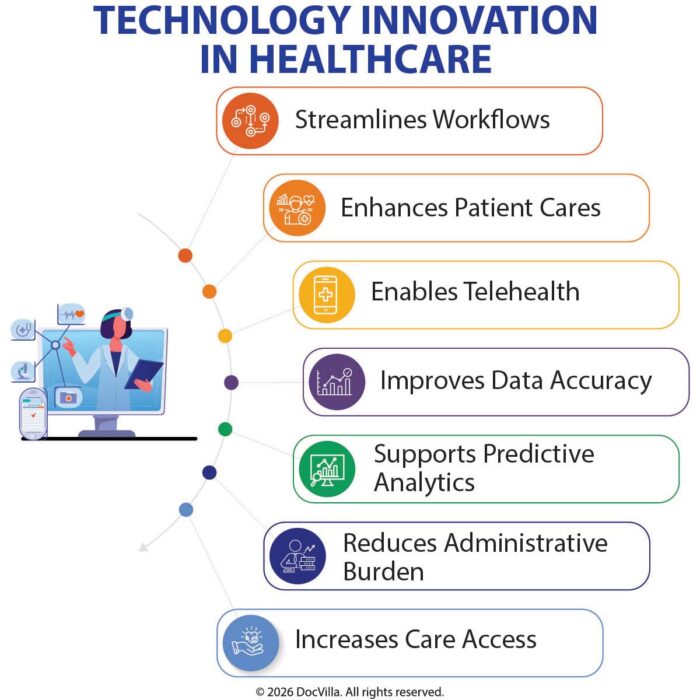
Healthcare has always evolved alongside technological advancement. From the invention of the stethoscope to modern imaging systems, technology has continuously improved the ability of clinicians to diagnose, treat, and manage patient care. However, the pace of technological innovation in healthcare has accelerated dramatically over the past decade. Digital transformation is now reshaping how medical practices operate, how providers interact with patients, how healthcare data is analyzed, and how clinical decisions are supported. In 2026, healthcare technology innovation is not simply about introducing new tools; it is about transforming the entire healthcare delivery ecosystem. Electronic Health Records (EHR), practice management software, telehealth platforms, artificial intelligence, data analytics, remote patient monitoring, automation, and patient engagement technologies are all contributing to a more connected, efficient, and patient-centered healthcare system. For independent medical practices and healthcare organizations, understanding how technology innovation is shaping the future of healthcare is essential for staying competitive and delivering high-quality care. The practices that adopt modern digital solutions today will be better positioned to improve clinical outcomes, streamline operations, enhance patient engagement, and maintain financial sustainability in the evolving healthcare environment.
The Digital Transformation of Healthcare
Digital transformation refers to the integration of advanced technology into every aspect of healthcare operations and clinical care. Historically, many medical practices relied heavily on paper charts, manual scheduling, handwritten prescriptions, and fragmented communication processes. These methods were time-consuming and prone to errors. The adoption of Electronic Health Records represented one of the first major steps toward digital healthcare infrastructure. Today, EHR systems serve as the central hub for patient information, clinical documentation, scheduling, billing, and communication. Modern EHR and practice management systems integrate numerous operational workflows into a unified digital platform. This integration allows providers to access patient data instantly, coordinate care across multiple locations, and automate administrative tasks that previously required manual effort. Digital transformation has therefore become a critical driver of efficiency and patient care quality.
The Evolution of Electronic Health Records
Electronic Health Records have evolved significantly since their early implementation. Early systems were primarily digital versions of paper charts, designed mainly for documentation storage. Modern EHR platforms now support a wide range of functionalities that extend far beyond documentation. They include integrated scheduling, electronic prescribing, lab ordering, referral management, billing workflows, reporting dashboards, and patient engagement tools. These capabilities allow medical practices to manage both clinical and operational functions within a single system. Cloud-based EHR platforms have further expanded accessibility by allowing providers to access patient data securely from multiple devices and locations. This flexibility is particularly valuable for practices with multiple providers or locations, as well as those offering telehealth services.
Artificial Intelligence and Clinical Decision Support
Artificial intelligence is emerging as one of the most transformative technologies in healthcare. AI-powered systems can analyze vast amounts of medical data to identify patterns that may assist clinicians in diagnosis and treatment planning. Clinical decision support tools integrated within EHR systems can provide alerts for potential drug interactions, suggest diagnostic tests based on symptoms, and identify preventive care opportunities. AI-driven analytics can also help medical practices identify population health trends and predict patient risk factors. While AI does not replace clinical expertise, it provides valuable insights that enhance decision-making. As AI technologies continue to evolve, they will play an increasingly important role in supporting physicians and improving patient outcomes.
Telehealth and Virtual Care Expansion
Telehealth adoption accelerated rapidly in recent years, particularly during periods when in-person visits were limited. Today, telehealth has become a permanent component of healthcare delivery. Virtual visits allow patients to consult with providers from the comfort of their homes, reducing travel time and increasing accessibility for individuals in rural or underserved areas. Telehealth also improves care continuity by enabling follow-up consultations and chronic disease management without requiring in-person visits. Integrated telehealth functionality within EHR systems allows providers to schedule virtual appointments, document visits, and process billing within the same platform. This integration ensures that telehealth workflows remain efficient and compliant with regulatory requirements.
Remote Patient Monitoring and Connected Devices
Another significant innovation shaping the future of healthcare is remote patient monitoring (RPM). Wearable devices and connected medical equipment allow providers to monitor patient health data outside of traditional clinical settings. Devices that track heart rate, blood pressure, glucose levels, and activity patterns provide continuous insights into patient health. These technologies are particularly valuable for managing chronic conditions such as diabetes, hypertension, and cardiovascular disease. Remote monitoring allows clinicians to detect potential health issues earlier and intervene before conditions worsen. Integrating remote monitoring data into EHR systems ensures that clinicians have a comprehensive view of patient health trends over time.
Automation and Workflow Optimization
Administrative workload has long been a source of frustration for healthcare providers. Documentation requirements, billing processes, insurance verification, and appointment management consume significant staff time. Automation technologies help streamline these workflows by reducing manual tasks. Automated appointment reminders reduce no-show rates. Eligibility verification tools check insurance coverage in real time. Automated billing processes generate claims directly from clinical documentation. Task management systems route responsibilities to appropriate staff members. These automation capabilities improve efficiency and allow providers and staff to focus more on patient care rather than administrative work.
Data Analytics and Population Health Management
Healthcare generates enormous amounts of data, and analyzing this data effectively can lead to significant improvements in care quality and operational performance. Advanced analytics tools integrated with EHR systems allow practices to track patient outcomes, identify population health trends, and monitor performance metrics. For example, analytics can reveal patterns in chronic disease management, preventive screening compliance, and treatment outcomes. These insights help providers develop targeted care strategies that improve overall patient health. Data-driven decision-making also allows medical practices to optimize scheduling patterns, staffing levels, and financial performance.
Patient Engagement Through Digital Platforms
Modern healthcare increasingly emphasizes patient engagement and participation in care decisions. Technology plays a key role in empowering patients to take an active role in managing their health. Patient portals allow individuals to access medical records, view lab results, schedule appointments, request prescription refills, and communicate with providers. Mobile health applications provide educational resources and reminders that support treatment adherence. Digital communication tools strengthen the relationship between patients and providers by enabling continuous interaction beyond the clinic visit. When patients feel informed and involved in their care, they are more likely to follow treatment plans and maintain healthy behaviors.
Interoperability and Health Information Exchange
Interoperability refers to the ability of different healthcare systems to exchange information seamlessly. In the past, patient data often remained confined within individual healthcare organizations, making it difficult to coordinate care across providers. Modern interoperability standards allow EHR systems to share information securely with other healthcare organizations, laboratories, pharmacies, and insurance companies. Health Information Exchanges (HIEs) facilitate the transfer of patient records between institutions. Improved interoperability ensures that providers have access to comprehensive patient histories, reducing redundant testing and improving clinical decision-making.
Cybersecurity and Data Protection
As healthcare becomes increasingly digital, protecting patient data has become a top priority. Cybersecurity threats targeting healthcare organizations have grown in sophistication. Secure cloud-based EHR platforms incorporate advanced encryption, access controls, and monitoring systems to protect sensitive information. Multi-factor authentication and audit trails help prevent unauthorized access. Investing in secure healthcare technology not only protects patient privacy but also safeguards the reputation and financial stability of medical practices.
The Financial Impact of Healthcare Technology
Technology innovation also has significant financial implications for medical practices. Efficient digital systems reduce administrative overhead, improve billing accuracy, and accelerate revenue cycle management. Automated claim submission and denial management tools reduce billing errors and improve reimbursement rates. Reporting dashboards provide visibility into financial performance metrics such as collections, payer mix, and accounts receivable. Practices that adopt integrated technology platforms often experience improved operational efficiency and stronger financial outcomes.
Enhancing Physician Work-Life Balance
Technology innovation can also improve physician well-being. Streamlined EHR workflows reduce documentation time and administrative burden. Messaging systems and task management tools distribute responsibilities among care team members, reducing the workload on individual physicians. Telehealth options allow providers to offer flexible care delivery models. When technology is designed with usability in mind, it supports a healthier work-life balance for clinicians.
Technology as a Competitive Advantage for Medical Practices
In an increasingly competitive healthcare marketplace, technology adoption can differentiate medical practices. Patients increasingly expect convenient scheduling, digital communication, and timely access to health information. Practices that leverage modern technology platforms provide a more efficient and responsive patient experience. This improves patient satisfaction, retention, and referral rates. Technology also enables practices to scale operations, expand services, and manage multiple locations more effectively.
The Role of Integrated Platforms in Healthcare Innovation
One of the most important trends in healthcare technology is the movement toward integrated platforms that combine multiple functions within a single system. Instead of using separate software tools for scheduling, documentation, billing, telehealth, and communication, integrated EHR and practice management platforms consolidate these workflows. This integration reduces data silos and improves operational efficiency. Staff members can complete tasks more quickly, and providers have a unified view of patient information. Integrated systems also simplify reporting and analytics, making it easier for practice leaders to monitor performance and make strategic decisions.
How DocVilla Supports Healthcare Technology Innovation
DocVilla provides a cloud-based EHR and practice management platform designed to support the evolving needs of modern medical practices. The system integrates clinical documentation, scheduling, billing, telehealth, patient portal communication, and reporting within a single platform. Customizable templates allow providers to streamline charting workflows. Automated reminders and scheduling tools reduce administrative workload. Secure patient portals enhance patient engagement and communication. Reporting dashboards provide actionable insights into practice performance and financial metrics. By consolidating multiple operational functions into one system, DocVilla enables practices to leverage technology innovation while maintaining workflow simplicity and efficiency.
Preparing Medical Practices for the Future of Healthcare
As technology continues to advance, medical practices must remain adaptable. Future innovations may include expanded AI capabilities, predictive analytics for disease prevention, advanced remote monitoring technologies, and greater integration of digital therapeutics. Practices that invest in flexible and scalable technology platforms will be better positioned to adopt these innovations as they emerge. Continuous staff training and workflow optimization will also play a key role in ensuring successful technology adoption.
Final Thoughts: Technology Innovation Is Shaping the Future of Healthcare
Technology innovation has the potential to transform healthcare delivery in profound ways. From advanced EHR systems and telehealth platforms to artificial intelligence and remote monitoring, digital tools are enabling more efficient, connected, and patient-centered care. For medical practices, adopting modern technology is not merely about keeping up with industry trends—it is about improving clinical outcomes, enhancing operational efficiency, and meeting the evolving expectations of patients. Integrated EHR and practice management systems serve as the foundation for this transformation, providing the infrastructure needed to support innovation across the healthcare ecosystem. As the healthcare industry continues to evolve, practices that embrace technology innovation will be better equipped to deliver high-quality care and thrive in the digital age.
To see how DocVilla can optimize your Medical Practice documentation and billing, schedule a free demo today.