Healthcare has undergone a profound digital transformation over the past decade. Medical practices that once relied on phone calls, paper forms, and manual communication are now increasingly adopting digital systems that streamline operations and improve patient experiences. One of the most important innovations driving this transformation is the patient portal. A patient portal is a secure online platform connected to an Electronic Health Record (EHR) system that allows patients to access their medical information, communicate with providers, schedule appointments, request prescription refills, and manage various aspects of their healthcare digitally. In today’s healthcare environment, patient portals are no longer optional add-ons but essential components of modern EHR, EMR, and practice management software. They play a central role in improving patient engagement, enhancing care coordination, increasing operational efficiency, and supporting better health outcomes. As healthcare continues to move toward patient-centered care models, the value of patient portals continues to grow. Medical practices that adopt advanced patient portal technology not only meet patient expectations for convenient digital access but also improve clinical workflows and administrative efficiency.
The Evolution of Patient Communication in Healthcare
Historically, communication between patients and healthcare providers was limited primarily to in-person visits and telephone conversations. Patients seeking information about their medical records, lab results, or appointment schedules often had to call the clinic and wait for staff to respond. Medical records were stored in paper files that required manual retrieval, making it difficult for patients to access their health information quickly. These traditional processes were time-consuming for both patients and clinic staff.
The introduction of electronic health records created an opportunity to improve communication by digitizing patient information. Patient portals emerged as secure interfaces that allow patients to interact with their healthcare providers through the internet. Instead of relying solely on phone calls or office visits, patients can now access information and communicate with their care team at any time.
What Is a Patient Portal?
A patient portal is a secure digital platform that connects patients with their healthcare providers through the practice’s EHR system. Through this platform, patients can view portions of their medical records and perform various healthcare-related tasks online. Patient portals typically require secure login credentials to ensure that sensitive health information remains protected.
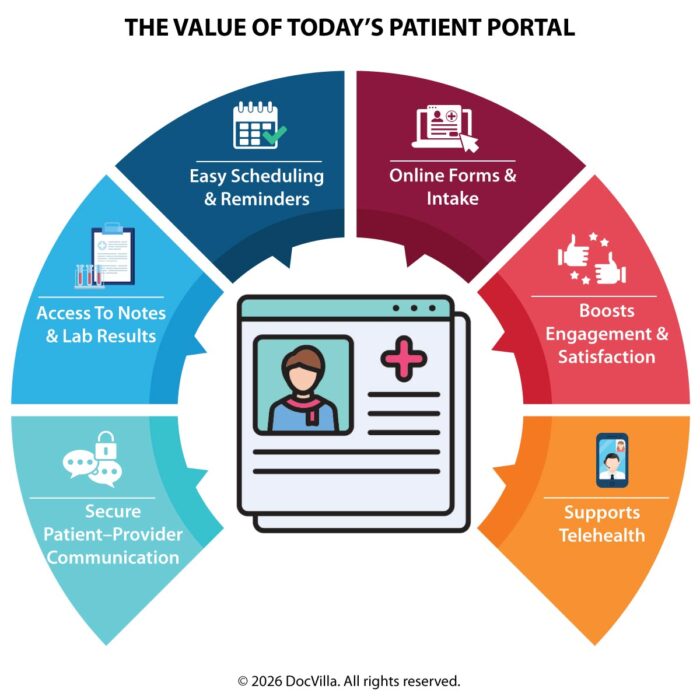
Modern patient portals provide a wide range of capabilities, including viewing lab results, reviewing clinical notes, requesting prescription refills, sending secure messages to providers, scheduling appointments, updating personal information, and accessing educational resources. These capabilities transform the patient experience by making healthcare information more accessible and interactive.
Improving Patient Engagement Through Digital Access
One of the most significant benefits of patient portals is improved patient engagement. When patients have easy access to their medical information, they become more active participants in their healthcare journey. Patients can review their diagnoses, treatment plans, and medication instructions, helping them better understand their health conditions.
Engaged patients are more likely to follow treatment recommendations, attend follow-up appointments, and adopt healthier behaviors. This increased engagement is particularly important for managing chronic conditions such as diabetes, hypertension, and cardiovascular disease. Patient portals provide ongoing access to health information that reinforces the guidance provided during medical visits.
Enhancing Communication Between Patients and Providers
Effective communication is essential for delivering high-quality healthcare. Patient portals facilitate communication by allowing patients to send secure messages to their healthcare providers. These messages may include questions about medications, follow-up instructions, or symptoms that arise after an appointment.
Secure messaging reduces the need for phone calls and allows providers to respond when convenient. This asynchronous communication method improves efficiency while ensuring that patients receive timely responses. For many patients, the ability to communicate digitally with their healthcare team enhances their overall satisfaction with the practice.
Access to Lab Results and Medical Records
Patient portals allow individuals to view their lab results and medical records directly through the online platform. Instead of waiting for phone calls or mailed reports, patients can access results as soon as they become available in the EHR system. This immediate access empowers patients to stay informed about their health status.
When patients review lab results through the portal, they can better understand how their treatment plans are progressing. Some portals also include explanatory information that helps patients interpret common laboratory values. This transparency fosters trust and encourages patients to ask informed questions during future appointments.
Appointment Scheduling and Workflow Efficiency
Scheduling appointments is another key function of modern patient portals. Patients can view available appointment times and book visits directly through the portal without calling the clinic. This convenience improves patient satisfaction while reducing the administrative burden on front desk staff.
Automated appointment reminders sent through the portal also help reduce missed appointments. When patients receive reminders via email or mobile notifications, they are more likely to remember upcoming visits and confirm attendance. Reduced no-show rates improve scheduling efficiency and practice revenue.
Prescription Refill Requests
Prescription refill management can be time-consuming when handled through phone calls and manual processes. Patient portals simplify this process by allowing patients to submit refill requests online. These requests are transmitted directly to the provider or appropriate staff member within the EHR system.
Once approved, prescriptions can be sent electronically to the patient’s preferred pharmacy. This streamlined workflow reduces administrative workload while ensuring that patients receive medications promptly.
Supporting Chronic Disease Management
Chronic disease management requires continuous monitoring and patient participation. Patient portals support this process by providing access to health information, treatment plans, and communication tools. Patients managing conditions such as diabetes or hypertension can review medication instructions, monitor lab results, and communicate with their care team about symptoms or concerns.
Some patient portals integrate with wearable devices and remote monitoring tools that allow patients to upload health data such as blood glucose readings or blood pressure measurements. Providers can review this information and adjust treatment plans accordingly.
Improving Administrative Efficiency
Patient portals also improve administrative efficiency within medical practices. By shifting routine tasks such as appointment scheduling, prescription refill requests, and patient information updates to the portal, staff members can focus on more complex responsibilities. This reduction in manual workload improves overall productivity.
For example, patient intake forms can be completed through the portal before the appointment. When patients update their demographic and insurance information online, front desk staff spend less time entering data during check-in.
Financial Transparency and Online Payments
Many patient portals include financial management features that allow patients to view billing statements and make payments online. This transparency helps patients understand their financial responsibilities and reduces confusion regarding healthcare costs.
Online payment capabilities also improve collection rates for medical practices. Patients can conveniently pay balances using credit cards or electronic payment methods through the portal. Automated payment reminders encourage timely payments and reduce administrative follow-up efforts.
Patient Education and Health Resources
Patient portals often provide educational resources that help patients better understand their health conditions and treatment options. These resources may include articles, videos, and guidelines related to specific diagnoses or preventive care measures.
Providing reliable educational materials through the portal helps patients make informed decisions about their health. It also reduces the likelihood that patients will rely on inaccurate information from external sources.
Privacy and Security Considerations
Because patient portals handle sensitive health information, security is a critical consideration. Modern patient portals incorporate strong security measures such as encrypted communication, secure login protocols, and multi-factor authentication. These features ensure that patient data remains protected from unauthorized access.
Healthcare providers must also educate patients about best practices for protecting their portal accounts, such as using strong passwords and avoiding sharing login credentials.
Meeting Regulatory and Compliance Requirements
Healthcare regulations increasingly emphasize the importance of providing patients with access to their health information. Many policies encourage interoperability and patient engagement through digital tools such as patient portals. By implementing robust patient portal functionality, medical practices can meet these regulatory expectations while improving patient satisfaction.
Compliance with privacy regulations also requires healthcare organizations to maintain secure systems that protect patient data. Modern EHR platforms are designed to support these requirements.
The Role of Integration with EHR Systems
The full value of a patient portal is realized when it is integrated seamlessly with the practice’s EHR and practice management software. Integration ensures that patient information displayed in the portal reflects real-time data from the medical record.
For example, when a provider updates a patient’s medication list or documents lab results, this information automatically becomes available through the portal. Integrated systems eliminate duplicate data entry and maintain consistency across clinical and administrative workflows.
Telehealth and Digital Healthcare Integration
Patient portals also play an important role in supporting telehealth services. Patients can use the portal to schedule virtual appointments, receive telehealth visit links, and access follow-up instructions after virtual consultations. This integration creates a seamless digital healthcare experience.
As telehealth continues to expand, patient portals will become even more important for facilitating remote care and communication.
How DocVilla Enhances the Patient Portal Experience
DocVilla provides a cloud-based EHR and practice management platform that includes a robust patient portal designed to improve communication and engagement. Through the DocVilla portal, patients can access clinical notes, view lab results, request prescription refills, schedule appointments, and communicate securely with their healthcare providers. The portal integrates seamlessly with the EHR system, ensuring that patient information remains accurate and up to date. Automated reminders, digital forms, and online payment capabilities streamline administrative processes while improving patient convenience. By offering a comprehensive patient portal solution, DocVilla helps medical practices enhance patient engagement and operational efficiency.
Preparing Medical Practices for the Digital Future
The healthcare industry continues to move toward digital, patient-centered care models. Patients increasingly expect convenient access to their health information and communication tools that allow them to interact with providers online. Medical practices that adopt modern patient portal technology will be better positioned to meet these expectations.
Future innovations may include artificial intelligence tools that personalize patient education, predictive analytics that identify health risks, and expanded integration with wearable health devices. Patient portals will remain a central component of these digital healthcare ecosystems.
Final Thoughts: The Growing Importance of Patient Portals
Patient portals have become essential tools for improving healthcare delivery in modern medical practices. By providing secure access to medical information, communication tools, appointment scheduling, and financial management features, patient portals empower patients to take an active role in their healthcare. At the same time, these platforms improve operational efficiency by reducing administrative workload and streamlining communication workflows. Integrated EHR and practice management systems that include advanced patient portal functionality provide the foundation for patient-centered care in the digital age. As healthcare continues to evolve, the value of patient portals will only continue to grow, helping medical practices deliver more efficient, transparent, and collaborative care.
To see how DocVilla can optimize your Medical Practice documentation and billing, schedule a free demo today.