Key Takeaways
- Healthcare organizations face pressure to balance patient care and financial sustainability.
- Reducing healthcare costs through improved operational efficiency enhances patient experiences and outcomes.
- Integrated technology solutions streamline workflows and eliminate administrative waste, allowing physicians to focus on patient care.
- DocVilla’s cloud-based platform helps practices reduce costs while improving care quality through automation and integration.
- Embracing efficiency and innovation prepares medical practices for future challenges in healthcare.
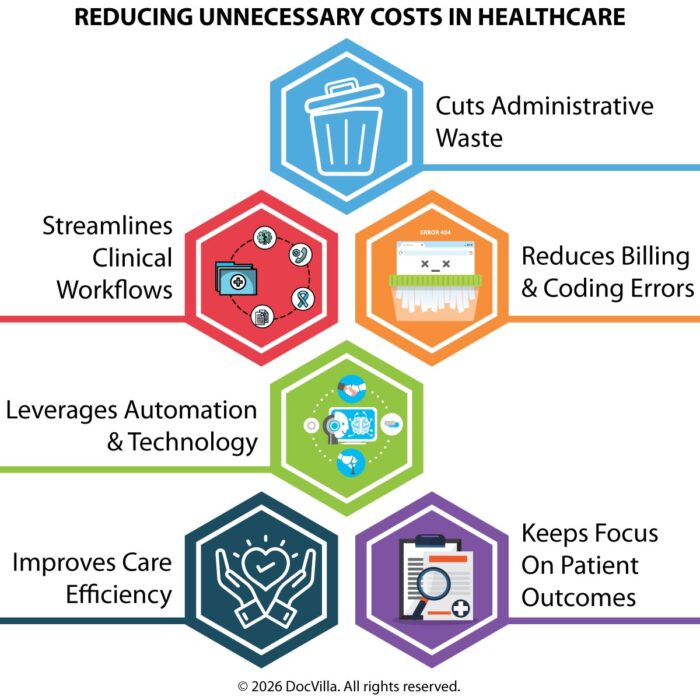
Healthcare organizations today face increasing pressure to balance high-quality patient care with financial sustainability. Medical practices must manage staffing costs, administrative workloads, regulatory compliance, and technology investments while still delivering excellent clinical outcomes. Many physicians feel caught between the desire to provide the best possible care and the reality of rising operational expenses. However, reducing unnecessary costs in healthcare does not mean compromising patient care. In fact, many cost-saving strategies actually improve patient experiences and outcomes. By eliminating inefficiencies, modernizing workflows, and adopting integrated healthcare technology, medical practices can reduce administrative overhead while allowing physicians and staff to focus more attention on patients. The most effective approach to cost reduction is not simply cutting expenses but improving operational efficiency through smarter systems and processes. Electronic Health Records (EHR), Electronic Medical Records (EMR), and integrated practice management software play a critical role in achieving this balance. These technologies streamline workflows, automate administrative tasks, improve communication, and support better financial management. When practices operate efficiently, physicians can spend less time dealing with administrative burdens and more time delivering patient-centered care. Ultimately, reducing unnecessary costs strengthens both the financial health of the practice and the quality of care patients receive.
The Rising Cost Pressures Facing Medical Practices
Healthcare costs have been rising steadily for years, creating significant challenges for medical practices. Independent physicians and small clinics often face increasing expenses related to staffing, technology infrastructure, regulatory compliance, and insurance billing requirements. At the same time, reimbursement models continue to evolve, placing additional pressure on practices to maintain financial stability.
Administrative complexity is one of the largest drivers of healthcare costs. Managing insurance claims, verifying patient eligibility, submitting prior authorizations, and processing payments require significant administrative resources. Practices that rely heavily on manual processes often struggle to keep up with these tasks efficiently.
Technology can help address these challenges, but implementing the wrong systems or maintaining outdated infrastructure can create additional costs rather than reducing them. Therefore, practices must evaluate how their workflows and technology platforms contribute to overall efficiency.
Why Cost Reduction Should Focus on Efficiency, Not Care Quality
When healthcare organizations discuss reducing costs, some providers worry that patient care may be compromised. However, the most effective cost reduction strategies focus on eliminating waste and inefficiency rather than cutting clinical services. In many cases, improving operational efficiency actually enhances patient care.
For example, reducing administrative tasks allows physicians to spend more time interacting with patients. Automating appointment scheduling can reduce wait times and improve patient satisfaction. Streamlining billing processes ensures that practices receive payments more quickly, allowing them to invest more resources in clinical services.
Focusing on efficiency allows practices to maintain high standards of care while operating more sustainably.
Administrative Waste in Healthcare
Administrative waste represents a significant portion of healthcare spending. Many practices rely on outdated processes that require extensive manual effort. Staff members may spend hours each day managing paperwork, entering duplicate information into multiple systems, or resolving billing errors.
Examples of administrative inefficiencies include manual appointment scheduling, paper-based intake forms, repetitive data entry, and fragmented billing systems. These tasks consume valuable staff time that could otherwise be spent supporting patient care.
Implementing integrated EHR and practice management software helps eliminate many of these inefficiencies by automating routine tasks and consolidating workflows.
Streamlining Appointment Scheduling
Appointment scheduling is one of the most common operational challenges for medical practices. Manual scheduling processes often lead to appointment conflicts, long wait times, and missed opportunities to fill available time slots.
Online scheduling systems allow patients to book appointments directly through secure portals, reducing the workload on front desk staff. Automated appointment reminders sent through email or text messages help reduce no-show rates, which can significantly impact practice revenue.
Efficient scheduling systems improve both patient satisfaction and practice productivity.
Reducing Documentation Burden for Physicians
Physicians frequently report that documentation requirements consume a large portion of their workday. Completing patient charts, updating records, and meeting regulatory documentation standards can take hours each week.
Modern EHR systems help reduce this burden through customizable templates, voice dictation tools, and automated data entry features. These tools allow physicians to document patient encounters more efficiently while maintaining accurate clinical records.
Reducing documentation time allows physicians to focus more on patient interactions rather than administrative tasks.
Improving Revenue Cycle Management
Revenue cycle management plays a critical role in the financial health of medical practices. Inefficient billing processes can lead to delayed payments, claim denials, and lost revenue. Many practices experience financial strain because they do not have clear visibility into their billing workflows.
Integrated practice management systems streamline revenue cycle processes by automating insurance verification, claim submission, and payment tracking. Real-time reporting dashboards provide insights into financial performance and highlight areas where improvements are needed.
Efficient billing workflows reduce administrative costs and improve cash flow.
Eliminating Redundant Technology Systems
Some medical practices rely on multiple disconnected software systems to manage different aspects of operations. For example, one system may handle scheduling while another manages billing and a separate platform stores patient records. Maintaining multiple systems can increase costs and create inefficiencies.
Integrated healthcare platforms consolidate these functions into a single system, reducing the need for duplicate data entry and minimizing software licensing expenses. Staff members can access all necessary tools through one interface, improving productivity.
Consolidating systems also simplifies IT management and reduces technical support requirements.
Improving Patient Communication
Poor communication between patients and healthcare providers can lead to missed appointments, misunderstandings, and unnecessary follow-up visits. These issues not only affect patient satisfaction but also increase operational costs.
Patient portals integrated with EHR systems allow patients to access medical records, review treatment plans, and communicate with providers securely. Secure messaging tools reduce the need for phone calls and allow patients to ask questions conveniently.
Improved communication helps prevent misunderstandings and reduces administrative workload.
Reducing Paper-Based Processes
Paper-based workflows remain common in many medical practices despite the availability of digital alternatives. Paper forms require manual data entry, physical storage, and additional staff time to manage.
Digital intake forms allow patients to complete paperwork online before their appointments. Information entered by patients flows directly into the EHR system, eliminating duplicate data entry and reducing administrative workload.
Moving toward paperless workflows not only reduces costs but also improves accuracy and efficiency.
Leveraging Data Analytics for Operational Improvements
Data analytics tools within modern EHR systems provide valuable insights into practice performance. These tools allow practices to track metrics such as appointment volumes, claim denial rates, patient wait times, and revenue trends.
By analyzing these metrics, practice leaders can identify inefficiencies and implement targeted improvements. For example, analytics may reveal that certain appointment types consistently run longer than scheduled, prompting adjustments to scheduling templates.
Data-driven decision-making helps practices operate more efficiently while maintaining high-quality care.
Preventing Burnout Through Operational Efficiency
Physician burnout has become a significant concern in healthcare. Administrative burdens, long working hours, and complex documentation requirements contribute to stress among healthcare providers.
Reducing unnecessary administrative tasks can improve physician satisfaction and reduce burnout. Efficient workflows supported by modern technology allow providers to spend more time engaging with patients and less time dealing with paperwork.
Supporting physician well-being ultimately improves patient care and practice sustainability.
Enhancing Patient-Centered Care
When practices reduce operational inefficiencies, they create more opportunities to focus on patient-centered care. Patients benefit from shorter wait times, clearer communication, and more attentive interactions with healthcare providers.
Patient-centered care also encourages stronger relationships between providers and patients. When patients feel valued and understood, they are more likely to follow treatment recommendations and remain loyal to the practice.
How Technology Supports Cost Reduction
Healthcare technology plays a central role in reducing unnecessary costs. Integrated EHR and practice management platforms automate many routine tasks and streamline workflows across the organization. Features such as electronic prescribing, automated billing processes, patient portals, and real-time reporting dashboards improve efficiency and reduce administrative overhead.
Cloud-based platforms also reduce infrastructure costs by eliminating the need for on-site servers and complex IT maintenance. Automatic software updates ensure that systems remain secure and up to date without requiring manual intervention.
How DocVilla Helps Practices Reduce Costs While Improving Care
DocVilla provides a cloud-based EHR and practice management platform designed to help medical practices operate efficiently while maintaining a strong focus on patient care. The system integrates clinical documentation, scheduling, billing, telehealth, and patient communication within a single platform. Automated appointment reminders reduce missed visits, while secure patient portals improve communication between providers and patients. Integrated billing tools streamline revenue cycle management and provide clear financial reporting. Customizable templates simplify documentation workflows, reducing the administrative burden on physicians. By consolidating multiple operational functions into a unified system, DocVilla helps practices reduce unnecessary costs while allowing providers to focus on delivering high-quality care.
Preparing Medical Practices for the Future of Healthcare
Healthcare will continue evolving as new technologies and care delivery models emerge. Practices that embrace efficiency and innovation will be better positioned to navigate future challenges. Investing in integrated digital platforms, improving workflows, and prioritizing patient engagement are essential strategies for long-term success.
Reducing unnecessary costs does not mean reducing care quality. Instead, it means identifying inefficiencies and implementing smarter systems that allow healthcare professionals to focus on what matters most: caring for patients.
Final Thoughts: Putting Patients First
Reducing unnecessary costs in healthcare is not about cutting corners or limiting patient care. It is about eliminating inefficiencies that prevent medical practices from operating at their full potential. By streamlining workflows, improving communication, and adopting modern EHR and practice management technology, practices can reduce administrative burdens and operate more sustainably. When operational challenges are minimized, physicians and staff can devote more attention to patient needs. Ultimately, focusing on efficiency allows healthcare organizations to achieve the best possible balance between financial sustainability and high-quality patient care.
To see how DocVilla can optimize your Medical Practice documentation and billing, schedule a free demo today.