Digital Transformation and Automation in Healthcare

Digital Transformation in Healthcare
Automation in Medical Practice
Streamlining healthcare workflow

Digital Transformation and Automation in Healthcare: A Comprehensive Guide for Medical Practices

Digital transformation in healthcare is not just about adopting new technology—it's about revolutionizing the way medical practices operate.
Digital transformation in healthcare Automation in medical practice Streamlining healthcare workflow Best EHR for digital transformation Cloud-based EHR benefits Healthcare automation tools Improving practice efficiency with EHR All-in-one EHR software EHR automation solutions Automating patient workflow Cloud-based EHR for doctors Digital healthcare solutions EHR for streamlining medical practice Benefits of automation in healthcare Medical practice management automation Digital health solutions for doctors EHR for healthcare automation Transforming healthcare with cloud EHR Practice management software for doctors EHR features for medical practices

The healthcare industry is undergoing a significant transformation. As digital tools become more advanced, medical practices are increasingly turning to automation and digital transformation to streamline workflows, enhance patient care, and improve operational efficiency. One of the key drivers of this transformation is the adoption of all-in-one cloud-based EHR (Electronic Health Record) systems.

Digital transformation in healthcare is not just about adopting new technology—it’s about revolutionizing the way medical practices operate. This comprehensive guide explores how digital transformation and automation can optimize workflows, the benefits for medical practices, and how cloud-based EHR systems like DocVilla are at the forefront of this change.

What is Digital Transformation in Healthcare?

Digital transformation in healthcare refers to the integration of advanced digital technologies to improve patient care, optimize operational efficiency, and streamline healthcare workflows. It involves adopting tools such as cloud-based EHR systems, telemedicine, AI-powered diagnostics, and automation to create a more effective and efficient healthcare ecosystem.

The goal of digital transformation is to replace outdated, manual processes with automated and data-driven solutions. This shift enables healthcare providers to make better decisions, improve communication, reduce administrative burdens, and enhance the overall patient experience.

Key Components of Digital Transformation in Healthcare

  1. Cloud-Based EHR Systems: Moving from traditional, on-premise EHR systems to cloud-based solutions offers enhanced flexibility, scalability, and security.
  2. Automation of Administrative Tasks: Automating appointment scheduling, billing, coding, and other administrative tasks to reduce manual work.
  3. Telemedicine: Offering virtual consultations to provide convenient care and expand access to patients in remote areas.
  4. Data Analytics and Reporting: Leveraging analytics tools to gain insights into patient outcomes, revenue cycles, and practice performance.
  5. Patient Portals: Implementing secure portals for patient communication, scheduling, and access to health records.
  6. Artificial Intelligence (AI): Using AI for predictive analytics, diagnostics, and personalized treatment plans.
  7. Interoperability and Data Sharing: Enabling seamless data exchange between healthcare systems to improve care coordination.

The Role of Automation in Healthcare

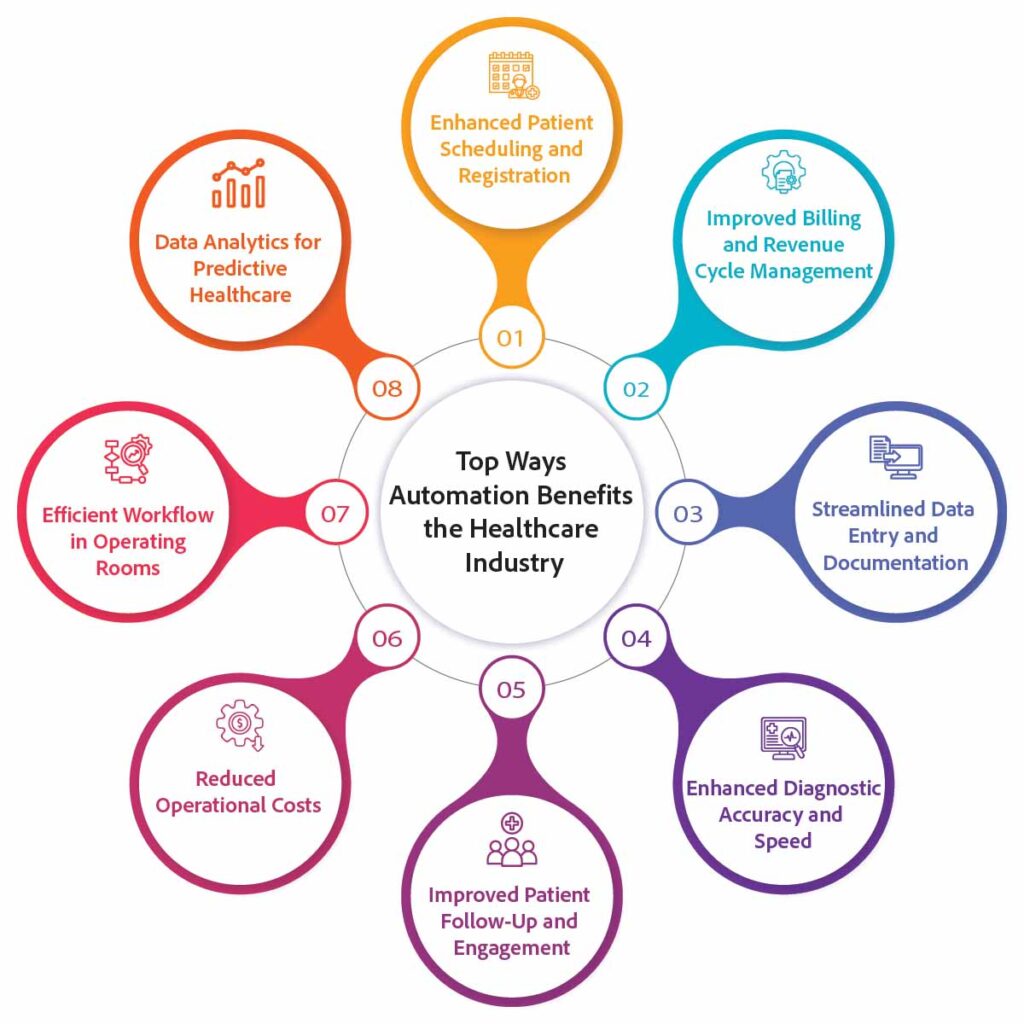
Automation is at the heart of digital transformation in healthcare. It involves using technology to perform repetitive tasks with minimal human intervention, allowing healthcare providers to focus on patient care. The benefits of automation go beyond efficiency—it also reduces errors, minimizes costs, and enhances the patient experience.

Benefits of Automation in Healthcare

1. Reduced Administrative Burden

Administrative tasks, such as appointment scheduling, billing, and insurance verification, can be time-consuming and prone to errors. Automating these processes saves time and reduces the administrative workload on staff.

2. Improved Patient Engagement

Automation tools, such as automated appointment reminders, follow-up care instructions, and personalized health tips, can improve patient engagement. Automated communication helps keep patients informed and involved in their care.

3. Enhanced Accuracy and Reduced Errors

Manual data entry is prone to human errors, leading to inaccurate patient records, billing mistakes, and claim denials. Automation minimizes the risk of errors by standardizing processes and reducing manual interventions.

4. Faster Billing and Reimbursement

Automated billing and coding tools speed up the revenue cycle by ensuring accurate claims submission, reducing claim denials, and facilitating faster reimbursements. This improves cash flow for medical practices.

5. Better Data Management and Access

Automation allows for seamless data integration and management. Medical practices can access real-time patient data, treatment history, lab results, and more, leading to improved decision-making and care coordination.

6. Cost Savings

By reducing manual labor, minimizing errors, and streamlining workflows, automation leads to significant cost savings for healthcare practices. It eliminates the need for additional staff to handle administrative tasks.

Key Areas for Automation in Medical Practices

  • Appointment Scheduling: Automating appointment booking, reminders, cancellations, and rescheduling.
  • Medical Billing and Coding: Streamlining the billing process, insurance verification, and coding accuracy.
  • Patient Communication: Sending automated follow-up emails, reminders, and health education content.
  • Document Management: Digitizing patient records, consent forms, and medical documents.
  • Inventory Management: Automating the tracking and management of medical supplies and inventory.

Cloud-Based EHR: A Cornerstone of Digital Transformation

A cloud-based EHR system is a critical component of digital transformation in healthcare. Unlike traditional on-premise EHR systems, cloud-based solutions offer flexibility, scalability, and remote access, making them ideal for modern medical practices.

Advantages of Cloud-Based EHR Systems

1. Accessibility and Flexibility

Cloud-based EHR systems provide healthcare providers with the ability to access patient data from anywhere, at any time. This flexibility is essential for practices that operate across multiple locations or offer telemedicine services.

2. Enhanced Security and Compliance

Data security is a top priority in healthcare. Cloud-based EHRs offer advanced encryption, regular security updates, and built-in compliance with regulations like HIPAA, ensuring that patient data is protected.

3. Cost-Effectiveness

Cloud-based EHR systems eliminate the need for expensive hardware, maintenance, and IT infrastructure. They operate on a subscription model, which allows practices to pay for what they need without investing in costly installations.

4. Seamless Data Integration and Interoperability

Interoperability is a significant advantage of cloud-based EHRs. These systems can easily integrate with other healthcare tools, such as telemedicine platforms, billing software, and laboratory systems, enabling seamless data exchange.

5. Automatic Updates and Upgrades

Unlike traditional systems that require manual updates, cloud-based EHRs offer automatic updates, ensuring that practices always have access to the latest features and security enhancements without disruption.

6. Scalability to Meet Practice Needs

Cloud-based EHR systems are highly scalable, making them suitable for practices of all sizes—from solo practitioners to large healthcare facilities. As a practice grows, the EHR system can scale accordingly.

DocVilla’s Cloud-Based EHR: A Game-Changer for Medical Practices

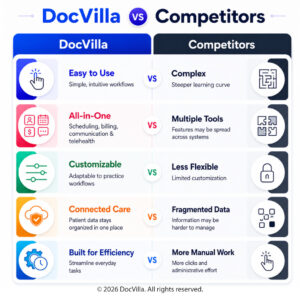
DocVilla’s all-in-one cloud-based EHR is designed to meet the needs of modern healthcare practices. With a comprehensive suite of features, including appointment scheduling, billing, telemedicine, and patient portals, DocVilla offers the tools needed to streamline operations and improve patient care.

How Digital Transformation Improves Practice Workflow

Digital transformation in healthcare significantly enhances practice workflow by automating time-consuming tasks, reducing errors, and enabling better communication. Below are some of the ways digital transformation can improve workflow efficiency:

1. Streamlined Appointment Scheduling

Automating the appointment scheduling process eliminates the back-and-forth communication between patients and staff. Patients can book appointments online, receive automated reminders, and reschedule if needed—all without manual intervention.

2. Efficient Billing and Payment Process

Automation tools for billing and payment streamline the entire revenue cycle, from verifying insurance eligibility to generating accurate bills and tracking payments. This reduces the risk of errors and ensures faster reimbursements.

3. Real-Time Access to Patient Data

Cloud-based EHRs enable real-time access to patient data, lab results, and treatment history. Providers can make informed decisions quickly, leading to better patient outcomes and improved care coordination.

4. Enhanced Communication and Collaboration

Digital communication tools, such as secure messaging and telemedicine platforms, facilitate better communication between providers and patients. This improves care coordination, especially for patients with chronic conditions.

5. Automated Patient Follow-Ups and Reminders

Automated reminders for follow-up appointments, medication adherence, and preventive care help ensure that patients stay engaged with their healthcare. This leads to better patient compliance and reduced no-show rates.

6. Centralized Document Management

Digital document management allows practices to store, retrieve, and share medical records securely. Automation tools can also generate reports, track documents, and ensure compliance with healthcare regulations.

7. Data-Driven Decision Making

Digital transformation enables practices to collect and analyze data, identify trends, and make data-driven decisions. Advanced analytics tools in EHR systems provide insights into practice performance, patient outcomes, and revenue cycles.

Overcoming Challenges in Digital Transformation

While digital transformation offers significant benefits, it’s not without challenges. Here are some common obstacles and how practices can overcome them:

1. Resistance to Change

Implementing new technology can be met with resistance from staff who are accustomed to traditional workflows. Training and education are essential to help staff adapt to new systems and understand their benefits.

Solution: Provide comprehensive training, offer ongoing support, and emphasize the long-term benefits of automation.

2. Integration with Existing Systems

Integrating new digital tools with existing EHR and practice management software can be challenging. Practices need to ensure compatibility and seamless data exchange.

Solution: Choose an EHR system that offers interoperability with other healthcare tools and partners, like **

DocVilla**.

3. Data Security Concerns

With the rise of digital transformation, data security is a top concern for healthcare providers. Protecting patient information is crucial to maintaining trust and compliance.

Solution: Use a cloud-based EHR with advanced encryption, regular security updates, and HIPAA compliance to protect patient data.

4. High Implementation Costs

While digital transformation can lead to cost savings in the long run, the initial investment can be high. Practices may be hesitant to invest in new technology due to budget constraints.

Solution: Opt for cost-effective, scalable solutions like cloud-based EHRs, which offer subscription-based pricing models.

5. Training and Adaptation

Implementing digital tools requires training staff to use them effectively. Practices must allocate time and resources for training sessions.

Solution: Choose an EHR provider that offers comprehensive onboarding and ongoing training, like DocVilla, to ensure a smooth transition.

How DocVilla’s All-In-One Cloud-Based EHR Supports Digital Transformation

DocVilla’s all-in-one cloud-based EHR solution is designed to support the digital transformation of healthcare practices by providing a comprehensive set of tools for automation, data management, and patient engagement.

Key Features of DocVilla’s Cloud-Based EHR:

1. Automated Appointment Scheduling

DocVilla’s EHR allows patients to book, reschedule, and cancel appointments online. Automated reminders are sent to patients, reducing no-shows and saving time for staff.

2. Integrated Billing and Payment Tools

DocVilla’s billing module streamlines the revenue cycle by automating claims submission, insurance verification, and payment tracking. This reduces errors and speeds up reimbursement.

3. Telemedicine Integration for Virtual Care

With DocVilla’s integrated telemedicine platform, practices can offer virtual consultations, expanding access to care while maintaining continuity. Telemedicine allows providers to connect with patients remotely, enhancing the patient experience.

4. Secure Patient Communication and Messaging

DocVilla supports secure messaging and communication through its HIPAA-compliant patient portal. This enables providers to engage with patients, send follow-up instructions, and answer non-urgent questions.

5. Advanced Reporting and Analytics

DocVilla’s EHR provides real-time reporting and analytics, giving practices insights into performance metrics, patient trends, and financial health. Data-driven decision-making helps practices optimize their workflow.

6. Customizable Templates and Workflow

DocVilla offers customizable templates and workflows that adapt to the unique needs of different specialties. This flexibility allows practices to deliver personalized care efficiently.

7. Comprehensive Document Management

DocVilla’s EHR offers a centralized document management system that digitizes patient records, consent forms, lab results, and medical documents. This reduces paperwork and enhances data security.

The Benefits of Choosing DocVilla for Digital Transformation

  • All-In-One Solution: DocVilla’s EHR integrates patient scheduling, billing, telemedicine, and document management in a single platform.
  • Cloud-Based Flexibility: Access patient data anytime, anywhere, with secure cloud storage.
  • Patient Engagement: Improve patient engagement with automated reminders, secure messaging, and patient portals.
  • Scalable: DocVilla’s EHR is suitable for practices of all sizes, offering scalability as your practice grows.
  • Cost-Effective: Choose a subscription model that fits your practice’s budget, with no need for expensive hardware.

Conclusion: Embracing Digital Transformation in Healthcare

 

Digital transformation is reshaping the healthcare industry, offering opportunities to improve patient care, streamline workflows, and reduce costs. Automation and cloud-based EHR systems like DocVilla are at the forefront of this transformation, providing the tools and support needed to optimize medical practice operations.

By embracing digital transformation, healthcare providers can stay ahead of the curve, enhance patient satisfaction, and focus on what matters most—delivering quality care. If you’re looking to transform your practice with a reliable and comprehensive EHR system, DocVilla is here to help.

Resources for Web and Cloud based EHR EMR systems

Read articles about web and cloud based Electronic Health Records (EHR) that will help you to run your Private Practice efficiently


cloud EHR vs client server EHR cloud based EHR software EHR EMR practice management software cloud EHR for medical practices client server EHR system benefits of cloud EHR systems EHR infrastructure comparison healthcare cloud computing EHR EHR software for clinics integrated EHR practice management system cloud based EHR vs client server EHR comparison best cloud EHR for small medical practices advantages of cloud EHR systems healthcare cloud EHR practice management software for doctors secure cloud based EMR system for clinics integrated cloud EHR and billing software healthcare cloud EHR implementation guide healthcare digital transformation cloud EHR EHR system hosting options healthcare cloud healthcare technology platforms clinic management cloud software cloud based patient record systems

Cloud EHR vs Client-Server EHR: Which Is the Better Choice for Modern Medical Practices?

The healthcare industry has undergone a dramatic technological transformation over the past two decades. Medical records that were once stored in paper charts have largely been replaced by Electronic Health Records (EHR) and Electronic Medical Records (EMR) systems that allow providers to store, access, and manage patient data digitally. As healthcare practices adopt digital systems, one of the most important technology decisions they must make is choosing the type of infrastructure that will host their EHR system. Two primary models dominate the healthcare technology landscape: cloud-based EHR systems and traditional client-server EHR systems. Each approach has its own architecture, benefits, limitations, and cost considerations. For medical practices evaluating EHR, EMR, and practice management software, understanding the differences between these two models is essential for making an informed decision. The infrastructure that supports an EHR system affects accessibility, scalability, maintenance requirements, data security, and long-term operational costs. As healthcare organizations continue to embrace digital transformation, cloud-based systems are increasingly becoming the preferred option for many practices. However, some organizations still rely on client-server systems due to specific operational or regulatory considerations. By understanding how these systems function and evaluating their advantages and disadvantages, medical practices can determine which approach best aligns with their operational goals and technological capabilities. … Read More

Read More »
choosing the right EHR system best EHR for medical practices EHR selection guide healthcare EHR EMR practice management software EHR for small medical practice EHR implementation for clinics how to choose EHR software cloud based EHR system for doctors integrated EHR practice management system healthcare EHR software comparison how to choose the best EHR for medical practice EHR software features checklist for clinics best EHR and practice management software for doctors cloud based EHR for small medical practices EHR system selection guide healthcare providers integrated EHR and billing software for clinics EHR platform for independent physicians healthcare digital transformation software patient portal EHR system features medical practice workflow software physician productivity EHR tools clinic management system software

Picking the Right EHR the First Time: A Complete Guide for Medical Practices

Choosing an Electronic Health Record (EHR) system is one of the most important technology decisions a medical practice will make. The EHR platform becomes the digital foundation for nearly every aspect of clinical and administrative operations, including patient documentation, appointment scheduling, billing, prescription management, patient communication, and regulatory reporting. A well-chosen EHR system can streamline workflows, improve patient care, and support practice growth for many years. However, selecting the wrong EHR system can lead to operational inefficiencies, increased administrative workload, staff frustration, and costly system migrations in the future. Many healthcare organizations discover that switching EHR systems after implementation is far more complicated than expected because of data migration challenges, staff retraining, workflow disruptions, and financial costs. For this reason, medical practices must take a strategic approach when selecting an EHR platform. The goal should be to choose a system that aligns with the practice’s clinical workflows, supports long-term scalability, and integrates seamlessly with practice management tools. By carefully evaluating system features, usability, integration capabilities, security standards, and vendor support, medical practices can avoid common pitfalls and select the right EHR solution from the beginning. Making the right choice the first time allows healthcare providers to focus on delivering high-quality patient care rather than struggling with inefficient technology. … Read More

Read More »
clinical documentation strategies EHR clinical documentation efficiency quick clinical documentation EHR accurate medical documentation EHR documentation workflows improve clinical documentation healthcare physician documentation efficiency EHR templates for clinical notes medical practice documentation tools healthcare documentation software how to improve clinical documentation in EHR strategies for faster medical documentation best EHR software for clinical documentation reduce physician documentation time healthcare workflow optimization with EHR integrated EHR documentation tools for clinics cloud based EHR documentation system healthcare documentation automation physician productivity tools EHR clinical workflow optimization healthcare medical practice automation software digital healthcare documentation systems

Strategies for Quick and Accurate Clinical Documentation in Modern Medical Practices

Clinical documentation is one of the most important responsibilities in healthcare. Every patient encounter generates critical information that must be recorded accurately to ensure continuity of care, support medical decision-making, and comply with regulatory requirements. Documentation also plays a central role in billing, coding, quality reporting, and legal protection for healthcare providers. However, many physicians and healthcare staff feel overwhelmed by the amount of time required to complete clinical documentation. Providers often report spending hours each day updating electronic charts, reviewing patient records, and completing administrative tasks related to documentation. In some cases, the documentation burden can interfere with patient interactions and contribute to physician burnout. The challenge for modern healthcare organizations is finding ways to document patient encounters quickly without sacrificing accuracy or quality. Effective documentation strategies combine efficient workflows, standardized templates, digital tools, and integrated Electronic Health Record (EHR) systems that streamline data entry and reduce redundant tasks. When documentation processes are optimized, providers can spend less time navigating complex systems and more time focusing on patient care. Modern EHR, EMR, and practice management platforms play a key role in enabling fast and accurate clinical documentation by automating routine tasks, organizing patient data effectively, and supporting intuitive workflows. For medical practices seeking to improve productivity and reduce administrative burdens, adopting strategic documentation practices can significantly enhance operational efficiency while maintaining high standards of care. … Read More

Read More »
EHR workflow efficiency reduce EHR clicks EHR usability healthcare EHR workflow optimization practice management software for clinics improving EHR documentation workflow EHR efficiency for physicians healthcare workflow automation EMR usability improvements integrated EHR practice management system how to reduce clicks in EHR systems best EHR workflow for medical practices improve physician efficiency with EHR software EHR documentation optimization tools cloud based EHR workflow solutions integrated EHR and practice management software healthcare technology to reduce physician burnout healthcare digital workflow optimization clinical documentation efficiency tools physician productivity EHR software medical practice automation systems EHR usability for clinics

EHR Clicks, Workflows, and Efficiency: Optimizing Digital Healthcare for Modern Medical Practices

Electronic Health Records (EHR) have become the backbone of modern healthcare delivery. Medical practices across the world rely on digital systems to document patient encounters, manage clinical data, coordinate care, process billing, and communicate with patients. While EHR systems have improved accessibility of patient information and enabled more connected healthcare ecosystems, many physicians and healthcare staff still struggle with inefficient workflows and excessive documentation requirements. One of the most common complaints about EHR systems is the number of “clicks” required to complete routine tasks. Physicians often feel that they spend more time interacting with computer screens than with patients. When poorly designed systems require excessive navigation, redundant data entry, or complex interfaces, clinical productivity declines and provider burnout increases. However, the issue is not necessarily the concept of EHR systems themselves but rather how those systems are designed and implemented within practice workflows. When optimized correctly, EHR systems can significantly improve efficiency, reduce administrative burdens, and enhance patient care. Modern EHR, EMR, and practice management platforms are increasingly designed with usability and workflow optimization in mind. By reducing unnecessary clicks, streamlining navigation, and automating repetitive tasks, healthcare technology can help physicians focus more on patient care and less on administrative processes. Understanding how EHR clicks, workflows, and efficiency are interconnected allows medical practices to evaluate their current systems and identify opportunities for improvement. … Read More

Read More »
patient engagement healthcare benefits of patient engagement patient engagement EHR software patient engagement medical practices healthcare patient engagement tools patient portal engagement healthcare improve patient engagement clinics EHR patient communication tools patient engagement strategies healthcare healthcare patient engagement platforms how patient engagement improves healthcare outcomes patient engagement tools for medical practices best EHR software for patient engagement patient portal benefits for clinics improve patient satisfaction with EHR software digital patient engagement healthcare technology integrated EHR patient engagement system patient centered healthcare technology digital patient communication systems healthcare engagement platforms patient engagement software for clinics cloud based EHR patient portal system

The Long-Term Benefits of Patient Engagement: Why Modern Medical Practices Must Prioritize Connected Care

Healthcare has undergone a major transformation in recent years as technology, patient expectations, and care delivery models continue to evolve. One of the most significant shifts in modern healthcare is the growing emphasis on patient engagement. Historically, healthcare was largely provider-driven, where physicians made most treatment decisions and patients followed instructions with limited involvement in the care process. Today, however, healthcare is increasingly centered around collaboration between providers and patients. Patient engagement refers to the active participation of patients in managing their own health, making informed decisions, communicating with healthcare providers, and following treatment plans effectively. When patients are engaged in their healthcare journey, outcomes improve, satisfaction increases, and healthcare systems operate more efficiently. For medical practices, investing in patient engagement is not just a clinical priority but also a strategic advantage. Engaged patients are more likely to follow treatment recommendations, attend follow-up visits, communicate effectively with providers, and remain loyal to their healthcare providers over time. Modern Electronic Health Records (EHR), Electronic Medical Records (EMR), and integrated practice management software provide powerful tools that support patient engagement through digital communication, patient portals, telehealth services, automated reminders, and accessible health records. Understanding the long-term benefits of patient engagement helps medical practices build stronger relationships with patients while improving operational efficiency and financial stability. … Read More

Read More »
reducing healthcare costs medical practice healthcare operational efficiency EHR practice management software reduce medical practice expenses healthcare workflow efficiency practice management software for clinics EHR systems for medical practices healthcare administrative cost reduction clinic operational efficiency tools medical practice automation software how medical practices can reduce operational costs improve clinic efficiency with EHR software best EHR practice management system for clinics healthcare workflow automation for medical practices reduce administrative burden in healthcare integrated EHR practice management platform healthcare technology to reduce costs healthcare digital transformation patient engagement software for clinics cloud based EHR practice management system healthcare workflow optimization tools medical practice efficiency solutions

Reducing Unnecessary Costs in Healthcare: Focus on Patients, Not the Bottom Line

Healthcare organizations today face increasing pressure to balance high-quality patient care with financial sustainability. Medical practices must manage staffing costs, administrative workloads, regulatory compliance, and technology investments while still delivering excellent clinical outcomes. Many physicians feel caught between the desire to provide the best possible care and the reality of rising operational expenses. However, reducing unnecessary costs in healthcare does not mean compromising patient care. In fact, many cost-saving strategies actually improve patient experiences and outcomes. By eliminating inefficiencies, modernizing workflows, and adopting integrated healthcare technology, medical practices can reduce administrative overhead while allowing physicians and staff to focus more attention on patients. The most effective approach to cost reduction is not simply cutting expenses but improving operational efficiency through smarter systems and processes. Electronic Health Records (EHR), Electronic Medical Records (EMR), and integrated practice management software play a critical role in achieving this balance. These technologies streamline workflows, automate administrative tasks, improve communication, and support better financial management. When practices operate efficiently, physicians can spend less time dealing with administrative burdens and more time delivering patient-centered care. Ultimately, reducing unnecessary costs strengthens both the financial health of the practice and the quality of care patients receive. … Read More

Read More »
negative online reviews physicians physician reputation management managing online reviews healthcare patient reviews medical practice online reputation for doctors healthcare patient satisfaction strategies improve patient experience medical practice patient engagement healthcare software EHR patient communication tools practice management software for clinics how doctors should respond to negative reviews strategies to reduce negative patient reviews reputation management for medical practices improve patient satisfaction with EHR software healthcare online reputation management tools patient portal communication improve reviews best practice management software for clinics patient experience improvement healthcare digital patient communication systems healthcare reputation monitoring tools physician patient engagement technology integrated EHR patient satisfaction tools

How Physicians Can Deal With and Avoid Negative Online Reviews: A Practical Guide for Modern Medical Practices

The healthcare landscape has changed dramatically over the past decade, not only in how care is delivered but also in how patients evaluate and select healthcare providers. In the past, word-of-mouth referrals and physician reputation within the community were the primary drivers of patient growth. Today, online reviews play a major role in shaping how patients perceive medical practices. Platforms such as Google, Healthgrades, Yelp, and other healthcare directories allow patients to publicly share their experiences with providers. While positive reviews can strengthen a practice’s reputation and attract new patients, negative reviews can have the opposite effect, influencing potential patients before they even step into the clinic. For physicians and medical practice owners, managing online reputation has therefore become an important component of modern practice management. However, dealing with negative reviews requires careful consideration, professionalism, and strategic communication. Healthcare providers must balance protecting their reputation with maintaining patient privacy and complying with healthcare regulations. The good news is that negative reviews can often be prevented through strong patient engagement, clear communication, and efficient practice workflows supported by modern Electronic Health Record (EHR), Electronic Medical Record (EMR), and practice management software. By understanding the causes of negative reviews and implementing proactive strategies to address patient concerns, physicians can not only manage their online reputation but also improve patient satisfaction and operational efficiency. … Read More

Read More »
healthcare phishing scams cybersecurity for medical practices phishing attacks healthcare industry protect EHR from phishing healthcare cybersecurity protection medical practice cybersecurity threats EHR security features healthcare email phishing prevention healthcare data breach prevention secure EHR practice management software how to prevent phishing attacks in healthcare cybersecurity strategies for medical practices best EHR software with strong security features protect patient data from phishing scams healthcare cybersecurity training for staff cloud based EHR cybersecurity protection integrated EHR security solutions for clinics healthcare IT security best practices phishing awareness training healthcare medical practice data protection secure patient data management systems healthcare cybersecurity compliance tools

Protecting the Healthcare Industry from Advancements in Phishing Scams: A Critical Guide for Modern Medical Practices

Cybersecurity threats have grown dramatically in recent years, and one of the most persistent and dangerous forms of attack targeting healthcare organizations is phishing. Phishing scams have evolved far beyond simple deceptive emails and now represent sophisticated, targeted cyberattacks designed to infiltrate healthcare networks and steal sensitive patient data. As medical practices increasingly rely on Electronic Health Records (EHR), Electronic Medical Records (EMR), telehealth platforms, and digital communication systems, the amount of valuable healthcare data stored online has grown significantly. This digital transformation has improved efficiency and patient care, but it has also created new opportunities for cybercriminals. Healthcare data is particularly attractive to attackers because it contains detailed personal information, insurance details, and financial records that can be used for identity theft and fraud. Small and mid-sized medical practices are often especially vulnerable because they may not have dedicated cybersecurity teams or sophisticated security infrastructure. As phishing scams continue to evolve in complexity, healthcare organizations must adopt proactive strategies to protect their systems, staff, and patients. Understanding how phishing attacks work, recognizing the vulnerabilities they exploit, and implementing strong cybersecurity defenses are essential steps in protecting modern medical practices. For organizations evaluating EHR, EMR, and practice management software, selecting platforms with strong security features can significantly reduce the risk of phishing-related breaches while maintaining efficient healthcare operations. … Read More

Read More »
medical practice self assessment healthcare practice performance evaluation EHR practice management software medical practice efficiency improvement healthcare workflow optimization evaluate medical practice operations practice management software for clinics EHR system for small medical practice healthcare operational efficiency tools clinic workflow management software how to evaluate medical practice performance self assessment checklist for medical practices best EHR software for medical practice management improve clinic efficiency with EHR software healthcare practice management system features medical practice workflow optimization tools integrated EHR and practice management software digital transformation in healthcare practices patient engagement tools for clinics medical practice performance metrics healthcare technology for clinics cloud based EHR practice management system

How Does Your Practice Measure Up? A Self-Assessment for Modern Medical Practices

Healthcare is undergoing rapid transformation driven by technological innovation, evolving patient expectations, regulatory requirements, and increasing operational complexity. Independent medical practices, specialty clinics, urgent care centers, and multi-provider organizations must continually evaluate how well their operations align with modern healthcare standards. Many practices focus primarily on clinical care quality, but the reality is that successful medical practices must balance multiple dimensions including operational efficiency, financial performance, patient engagement, technology adoption, and regulatory compliance. Conducting a structured self-assessment allows healthcare organizations to identify strengths, uncover inefficiencies, and determine whether their practice infrastructure supports long-term growth. For medical practices evaluating Electronic Health Records (EHR), Electronic Medical Records (EMR), and practice management software, a comprehensive self-assessment provides valuable insights into how current systems and workflows measure up to industry best practices. By examining clinical workflows, revenue cycle performance, patient communication tools, staff productivity, and data security practices, healthcare organizations can determine where improvements are needed and which technology solutions can help them operate more efficiently. In the evolving healthcare environment of 2026, practices that regularly evaluate their performance and adopt modern digital solutions will be better positioned to deliver high-quality patient care while maintaining financial sustainability. … Read More

Read More »
healthcare IT vulnerabilities cybersecurity for medical practices healthcare data security risks EHR cybersecurity protection medical practice IT security protect patient data healthcare healthcare cyber threats medical practice cybersecurity strategies cloud-based EHR security healthcare data breach prevention common cybersecurity threats in healthcare how to secure EHR systems for clinics IT security checklist for medical practices healthcare cybersecurity best practices protecting patient data with EHR software cloud-based healthcare cybersecurity solutions medical practice cybersecurity risk management healthcare IT risk management cybersecurity training for healthcare staff secure EHR and practice management systems healthcare network security medical data protection technology

Most Common IT Vulnerabilities for Medical Practices: Protecting Healthcare Data in the Digital Age

Healthcare organizations have become increasingly dependent on digital technology to manage patient care, clinical documentation, billing operations, scheduling, and communication. Electronic Health Records (EHR), Electronic Medical Records (EMR), telehealth platforms, patient portals, billing systems, and connected medical devices now form the backbone of modern medical practices. While these technologies have improved efficiency and care coordination, they have also introduced new cybersecurity risks. Medical practices store and process vast amounts of sensitive patient data including personal identifiers, insurance details, payment information, medical histories, and prescription records. This data is extremely valuable to cybercriminals and therefore makes healthcare organizations attractive targets for cyberattacks. In recent years, healthcare has consistently ranked among the most targeted industries for data breaches and ransomware attacks. For independent medical practices, urgent care centers, specialty clinics, and multispecialty groups, understanding the most common IT vulnerabilities is essential to protecting patient information and maintaining operational continuity. Addressing these vulnerabilities requires a proactive strategy that includes secure EHR systems, strong cybersecurity policies, staff training, access controls, and continuous monitoring. Medical practices that invest in modern, secure healthcare technology platforms significantly reduce their exposure to cyber threats while strengthening trust with patients. … Read More

Read More »
patient portal healthcare EHR patient portal benefits of patient portals patient engagement software healthcare EHR patient communication tools patient portal for medical practices secure patient portal EHR digital patient communication healthcare patient portal scheduling appointments cloud-based patient portal system best EHR patient portal for clinics benefits of patient portals for medical practices patient portal features for healthcare providers improve patient engagement with EHR portal integrated patient portal and practice management software secure messaging patient portal healthcare online appointment scheduling patient portal healthcare patient communication software patient access medical records portal digital healthcare engagement tools medical practice patient portal system integrated EHR patient portal technology

The Value of Today’s Patient Portal: Transforming Patient Engagement and Efficiency in Modern Medical Practices

Healthcare has undergone a profound digital transformation over the past decade. Medical practices that once relied on phone calls, paper forms, and manual communication are now increasingly adopting digital systems that streamline operations and improve patient experiences. One of the most important innovations driving this transformation is the patient portal. A patient portal is a secure online platform connected to an Electronic Health Record (EHR) system that allows patients to access their medical information, communicate with providers, schedule appointments, request prescription refills, and manage various aspects of their healthcare digitally. In today’s healthcare environment, patient portals are no longer optional add-ons but essential components of modern EHR, EMR, and practice management software. They play a central role in improving patient engagement, enhancing care coordination, increasing operational efficiency, and supporting better health outcomes. As healthcare continues to move toward patient-centered care models, the value of patient portals continues to grow. Medical practices that adopt advanced patient portal technology not only meet patient expectations for convenient digital access but also improve clinical workflows and administrative efficiency. … Read More

Read More »
EMR clinical documentation preserving clinical narrative in EMR electronic medical records documentation EMR clinical notes digital medical records narrative EHR SOAP notes documentation clinical documentation software EMR patient history management digital healthcare documentation tools medical practice EMR software how EMR improves clinical documentation benefits of EMR for medical practices EMR systems for clinical notes management EHR documentation best practices for clinics cloud-based EMR software for physicians digital clinical narrative healthcare integrated EMR and practice management software healthcare documentation technology patient record management software electronic charting systems for clinics physician documentation tools healthcare digital narrative systems

How EMRs Preserve the Clinical Narrative: Maintaining the Story of Patient Care in the Digital Age

Medicine has always been built upon stories. Every patient encounter begins with a narrative: symptoms that developed over time, lifestyle factors that influence health, family histories that shape risk, and clinical observations that guide diagnosis and treatment. Physicians historically documented these stories in handwritten charts, capturing the clinical narrative that explains how a patient’s health evolves. With the widespread adoption of Electronic Medical Records (EMRs) and Electronic Health Records (EHRs), the healthcare industry transitioned from paper-based documentation to digital systems. While this shift has dramatically improved data accessibility, care coordination, and operational efficiency, it has also raised an important question: can digital systems preserve the depth and meaning of the clinical narrative that has always been central to medical practice? The answer is yes—when EMRs are designed thoughtfully and used effectively, they not only preserve the clinical narrative but also enhance it by making patient stories more accessible, searchable, and shareable across healthcare teams. Modern EMR and EHR platforms allow providers to capture structured clinical data while maintaining narrative context, enabling better clinical decision-making, improved care continuity, and more effective communication among providers and patients. For medical practices evaluating EHR, EMR, and practice management software, understanding how digital systems preserve and enhance the clinical narrative is essential for selecting technology that supports high-quality patient care. … Read More

Read More »
patient access to EHR notes open clinical notes healthcare EHR patient portal access patient engagement healthcare technology EHR transparency patient care chronic disease management EHR patient portal clinical notes digital health records access EHR patient communication tools healthcare patient engagement software benefits of patient access to clinical notes how EHR patient portals improve chronic disease management best EHR with patient portal for clinics improve patient engagement with EHR software healthcare technology for chronic condition management secure patient portal for medical practices integrated EHR patient engagement tools open notes healthcare benefits digital patient access medical records chronic disease management technology patient-centered healthcare EHR EHR systems improving patient outcomes

Patient Access to EHR Clinical Notes Linked to Better Chronic Condition Management: How Transparency and Technology Improve Healthcare Outcomes

Healthcare has been undergoing a major transformation as digital technologies reshape how information flows between providers and patients. One of the most impactful changes in recent years has been the expansion of patient access to Electronic Health Record (EHR) clinical notes. Traditionally, clinical notes were primarily used by physicians and healthcare staff as documentation of diagnoses, treatment decisions, and patient interactions. Patients rarely had direct access to these notes, and medical records were often difficult to obtain. However, modern healthcare policy, patient engagement initiatives, and advances in EHR technology have dramatically changed this landscape. Today, many healthcare systems provide patients with direct digital access to their clinical notes through patient portals and integrated healthcare platforms. This increased transparency has been linked to improved patient engagement, better chronic disease management, improved medication adherence, and stronger communication between patients and healthcare providers. As chronic conditions such as diabetes, hypertension, cardiovascular disease, and asthma continue to affect millions of people worldwide, patient access to clinical information has become a powerful tool for improving long-term health outcomes. For medical practices adopting modern EHR, EMR, and practice management software, enabling patient access to clinical notes is not only a regulatory expectation but also an opportunity to improve care coordination and strengthen the physician–patient relationship. … Read More

Read More »
ePrescribing interoperability electronic prescribing safety interoperable ePrescribing systems EHR ePrescribing integration improve patient safety with ePrescribing electronic prescribing software EHR medication management systems prescription interoperability healthcare pharmacy integration EHR clinical decision support prescribing how ePrescribing improves patient safety benefits of interoperable EHR prescribing electronic prescribing systems for medical practices reduce medication errors with EHR software integrated ePrescribing and practice management software EHR with controlled substance prescribing EPCS cloud-based EHR electronic prescribing digital prescription software healthcare medication management EHR tools healthcare interoperability prescribing prescription safety technology integrated EHR medication workflow

How Increased Interoperability in ePrescribing Can Elevate Patient Safety: The Role of Connected Healthcare Technology in Modern Medical Practices

The healthcare industry has undergone a major digital transformation over the past two decades, and electronic prescribing—commonly known as ePrescribing—has become one of the most impactful innovations in modern clinical practice. Historically, prescriptions were handwritten and delivered to pharmacies by patients. This process often resulted in illegible handwriting, transcription errors, lost prescriptions, and medication misunderstandings. These issues could lead to medication errors, adverse drug interactions, and delays in treatment. Today, electronic prescribing systems integrated within Electronic Health Records (EHR) have largely replaced handwritten prescriptions. However, the true potential of ePrescribing extends far beyond simply transmitting prescriptions electronically. Increased interoperability—the ability of healthcare systems to securely exchange and use data across different platforms—has the potential to significantly elevate patient safety by improving medication accuracy, reducing errors, enhancing care coordination, and providing clinicians with critical decision support information at the point of care. As medical practices adopt modern EHR, EMR, and practice management software, interoperability within ePrescribing systems is becoming an essential component of safe and efficient healthcare delivery. By connecting prescribers, pharmacies, insurers, and healthcare databases through interoperable networks, ePrescribing systems can provide physicians with a comprehensive view of a patient’s medication history, allergies, and potential drug interactions, ultimately reducing the risk of medication-related harm. … Read More

Read More »
healthcare cybersecurity cybersecurity for medical practices EHR cybersecurity security protect patient data healthcare medical practice cybersecurity strategies secure EHR systems healthcare data protection cybersecurity compliance healthcare cloud-based EHR security healthcare data breach prevention how to protect patient data in medical practice cybersecurity checklist for healthcare clinics best EHR security features for medical practices healthcare ransomware protection strategies medical practice cybersecurity risk management secure patient portal communication systems cloud-based healthcare cybersecurity solutions healthcare IT security strategies medical data protection software healthcare cyber threat prevention secure EHR and practice management systems cybersecurity planning for clinics

Cybersecurity Preparations to Make Now: Protecting Medical Practices in the Digital Healthcare Era

Cybersecurity has become one of the most critical concerns for modern healthcare organizations. As medical practices increasingly rely on Electronic Health Records (EHR), practice management software, telehealth platforms, and digital patient communication tools, the volume of sensitive healthcare data stored and transmitted electronically continues to grow. This digital transformation has improved efficiency, coordination of care, and patient engagement. However, it has also made healthcare organizations prime targets for cyberattacks. Medical records contain valuable personal, financial, and clinical information that can be exploited for identity theft, insurance fraud, and financial gain. For this reason, healthcare data is often considered more valuable on the black market than financial information alone. In 2026, cybersecurity preparation is no longer optional for medical practices—it is an operational necessity. Independent clinics, specialty practices, urgent care centers, and multispecialty groups must take proactive steps to secure their digital infrastructure, protect patient information, and maintain regulatory compliance. Cybersecurity readiness involves more than installing antivirus software; it requires a comprehensive strategy that includes secure EHR systems, staff training, data encryption, access controls, backup procedures, and ongoing risk monitoring. Medical practices that prioritize cybersecurity not only protect patient trust but also ensure operational continuity and financial stability in an increasingly digital healthcare environment. … Read More

Read More »
healthcare technology innovation future of healthcare technology EHR innovation healthcare digital transformation in healthcare healthcare technology trends cloud-based EHR systems telehealth technology healthcare AI in healthcare systems practice management software for clinics healthcare automation tools how technology improves healthcare delivery benefits of EHR systems for medical practices digital transformation for healthcare clinics future trends in healthcare technology integrated EHR and practice management software healthcare innovation for medical practices cloud-based healthcare software solutions healthcare IT innovations medical practice technology tools patient engagement technology healthcare remote patient monitoring systems healthcare data analytics software

Technology Innovation Has the Potential to Improve the Future of Healthcare: How Digital Transformation Is Reshaping Medical Practices in 2026 and Beyond

Healthcare has always evolved alongside technological advancement. From the invention of the stethoscope to modern imaging systems, technology has continuously improved the ability of clinicians to diagnose, treat, and manage patient care. However, the pace of technological innovation in healthcare has accelerated dramatically over the past decade. Digital transformation is now reshaping how medical practices operate, how providers interact with patients, how healthcare data is analyzed, and how clinical decisions are supported. In 2026, healthcare technology innovation is not simply about introducing new tools; it is about transforming the entire healthcare delivery ecosystem. Electronic Health Records (EHR), practice management software, telehealth platforms, artificial intelligence, data analytics, remote patient monitoring, automation, and patient engagement technologies are all contributing to a more connected, efficient, and patient-centered healthcare system. For independent medical practices and healthcare organizations, understanding how technology innovation is shaping the future of healthcare is essential for staying competitive and delivering high-quality care. The practices that adopt modern digital solutions today will be better positioned to improve clinical outcomes, streamline operations, enhance patient engagement, and maintain financial sustainability in the evolving healthcare environment. … Read More

Read More »
EHR messaging system simplify EHR messaging physician inbox management EHR communication tools reduce physician burnout EHR patient portal messaging workflow EHR task management healthcare physician workflow optimization EHR automation messaging practice management communication tools how to reduce EHR inbox overload best EHR messaging system for clinics improve physician workflow with EHR messaging patient portal messaging best practices reduce administrative burden for physicians EHR communication workflow optimization integrated EHR messaging for medical practices healthcare communication software EHR collaboration tools physician inbox management strategies clinic messaging automation tools integrated EHR and patient communication systems

Simplifying EHR Messaging Improves Physician Lives: Reducing Administrative Burden and Enhancing Workflow Efficiency in Modern Medical Practices

Electronic Health Records have transformed healthcare delivery over the past two decades. They have improved documentation accuracy, enabled digital prescribing, facilitated patient data sharing, and strengthened regulatory compliance. However, one area where EHR systems have created unintended complexity is messaging. In modern medical practices, EHR messaging is used for internal communication between staff, patient portal communication, lab result notifications, prescription refill requests, billing coordination, referral tracking, and administrative alerts. While these tools are essential for coordinated care, poorly designed messaging systems can overwhelm physicians and clinical staff. In many practices, physicians receive dozens or even hundreds of messages daily. These messages range from clinical inquiries to administrative updates and patient requests. When messaging workflows are inefficient or poorly filtered, physicians experience notification fatigue, administrative overload, and reduced productivity. Simplifying EHR messaging has therefore become one of the most important strategies for improving physician work-life balance and clinic efficiency. By designing messaging systems that prioritize clinical relevance, automate routine tasks, and integrate seamlessly with practice management workflows, modern EHR platforms can significantly improve physician satisfaction while maintaining high-quality patient communication. For medical practices evaluating EHR, EMR, and practice management software, messaging efficiency has become a key factor in determining whether a system supports or hinders physician productivity. … Read More

Read More »
EHR cost breakdown EMR pricing comparison cost of EHR system for medical practice total cost of ownership EHR EHR software pricing guide hidden costs of EHR EHR implementation cost EHR integration fees cloud-based EHR pricing practice management software cost how much does EHR cost per provider EHR subscription vs total cost hidden fees in EMR software EHR cost comparison for small practices affordable EHR with billing integration best value EHR for medical clinic EHR pricing and implementation guide EMR system cost analysis medical practice software expenses EHR scalability cost considerations integrated EHR and billing software pricing healthcare technology cost planning

4 Costs Associated with Most EHRs and EMRs: What Medical Practices Must Understand Before Signing a Contract

Electronic Health Records (EHRs) and Electronic Medical Records (EMRs) are no longer optional in modern healthcare. In 2026, every medical practice—from solo primary care clinics to multispecialty groups—relies on digital systems for documentation, scheduling, billing, prescribing, reporting, and patient engagement. Yet despite widespread adoption, many providers underestimate the true cost structure of EHR and EMR systems. Vendors often advertise competitive monthly subscription pricing, but the visible fee is only one part of the financial equation. The real cost of an EHR includes direct expenses, indirect productivity impact, technology infrastructure requirements, integration fees, compliance considerations, and long-term scalability implications. For medical practices evaluating EHR, EMR, and practice management software, understanding the four major cost categories associated with most systems is essential to making a financially sound decision. These costs are: subscription and licensing fees, implementation and training expenses, productivity and workflow impact, and integration plus hidden add-on costs. Each of these influences total cost of ownership (TCO) and long-term return on investment. This guide breaks down each cost in detail and explains how integrated cloud-based platforms can reduce overall expense while improving operational performance. … Read More

Read More »
switch RCM partner revenue cycle management for medical practices RCM services healthcare medical billing partner comparison RCM outsourcing for clinics medical billing services for small practices improve revenue cycle performance healthcare claim denial reduction practice management software with billing EHR integrated billing system signs you should switch RCM company how to choose a medical billing partner best revenue cycle management services for clinics reduce claim denials in medical billing improve healthcare collections with RCM software integrated EHR and revenue cycle management medical practice billing optimization strategies healthcare RCM software medical billing outsourcing guide clinic revenue cycle automation healthcare billing workflow optimization integrated EHR and practice management billing systems

5 Reasons It May Be Time To Switch RCM Partners: A Strategic Guide for Medical Practices in 2026

Revenue Cycle Management (RCM) is the financial backbone of every medical practice. It encompasses the entire process of managing patient revenue—from appointment scheduling and insurance verification to claim submission, payment posting, denial management, and patient collections. In 2026, healthcare reimbursement has become increasingly complex due to evolving payer rules, telehealth billing requirements, prior authorization processes, regulatory compliance obligations, and rising patient financial responsibility. For many practices, RCM services are outsourced to third-party billing companies that specialize in managing these complex financial workflows. However, not all RCM partnerships deliver the performance medical practices expect. When billing inefficiencies occur, they can quietly erode profitability, disrupt cash flow, increase administrative burden, and damage patient satisfaction. Because the revenue cycle is intertwined with the EHR, EMR, and practice management system used by the clinic, an underperforming RCM partner can also create operational friction across the entire organization. Recognizing the signs that it may be time to switch RCM partners is therefore essential for medical practices seeking financial stability and growth. This article explores five major reasons why medical practices consider changing RCM vendors, how these issues impact operational performance, and how integrated EHR and practice management software can support a more efficient revenue cycle strategy. … Read More

Read More »
happy staff happy patients healthcare employee satisfaction in medical practice patient satisfaction improvement strategies staff morale in healthcare clinics healthcare workplace culture EHR improving staff productivity practice management software efficiency reduce staff burnout in medical practice improve clinic workflow with EHR healthcare employee engagement strategies how staff happiness improves patient experience best EHR for improving clinic workflow improve staff productivity with EHR software reduce burnout in medical practices practice management tools for staff efficiency improve patient satisfaction through staff engagement healthcare technology for workflow automation medical office staff training strategies healthcare team collaboration best practices clinic workflow improvement software integrated EHR and practice management benefits improving patient retention in clinics

How Creating Happy Staff Members Results in Happy Patients: The Operational Link Between Workplace Culture and Patient Satisfaction in Modern Medical Practices

Healthcare organizations have long focused on patient satisfaction as a key measure of success. In 2026, patient experience scores, online reviews, retention rates, and referral patterns all influence the growth and reputation of medical practices. However, one factor that is sometimes overlooked in the pursuit of patient satisfaction is staff happiness. The truth is that the patient experience is inseparable from the employee experience. The nurses, medical assistants, front desk staff, billers, and administrative coordinators who interact with patients every day shape the atmosphere of a clinic. When staff members feel respected, supported, and empowered, they communicate more effectively, show more empathy, resolve problems more quickly, and contribute to a positive environment that patients notice immediately. When staff members feel overwhelmed, underappreciated, or burdened by inefficient workflows, the opposite occurs. Stress becomes visible, communication deteriorates, errors increase, and patient experiences suffer. For medical practices seeking sustainable growth, creating happy staff members is not merely a human resources objective—it is a strategic operational investment that improves patient satisfaction, clinical outcomes, and financial performance. This article explores the direct relationship between employee satisfaction and patient experiences, the operational factors that influence staff happiness, and how modern EHR, EMR, and practice management software can support a positive workplace culture. … Read More

Read More »
fax in healthcare why fax is still used in medical communication medical fax communication eFax for medical practices HIPAA compliant fax electronic fax in EHR fax for medical billing healthcare interoperability challenges secure fax for medical office cloud-based EHR with fax integration why do doctors still use fax medical billing fax requirements best EHR with integrated fax replace fax machine with electronic fax secure fax solution for small medical practice fax vs secure messaging healthcare electronic fax for HIPAA compliance healthcare fax modernization integrated EHR and fax system medical office electronic fax solution secure document transmission in healthcare practice management software with eFax

Why Fax Is Still Used for Medical Communication and Medical Billing in 2026: Understanding the Reality Behind Healthcare Workflows

In an era defined by cloud computing, secure messaging platforms, telemedicine, artificial intelligence, and fully integrated Electronic Health Records (EHR), one might assume that fax machines would be obsolete in healthcare. Yet in 2026, fax remains deeply embedded in medical communication and medical billing workflows across the United States. From independent primary care clinics to large multispecialty groups, fax continues to play a central role in transmitting referrals, authorizations, medical records, lab orders, billing documentation, and insurance correspondence. For many healthcare professionals, fax is viewed as outdated and inefficient. However, its continued use is rooted in regulatory realities, interoperability gaps, payer requirements, and workflow habits that have evolved over decades. Understanding why fax persists—and how modern EHR and practice management software integrate electronic fax solutions—is critical for medical practices seeking operational efficiency without disrupting essential communication channels. This comprehensive guide explains why fax remains prevalent, the risks and limitations of traditional faxing, how electronic fax (eFax) modernizes legacy workflows, and why integrated EHR systems must support secure fax communication to ensure seamless operations. … Read More

Read More »
outsourced billing vs in-house billing medical billing outsourcing cost in-house medical billing costs revenue cycle management for medical practice practice management billing software EHR billing integration medical billing services comparison cost of outsourced RCM in-house vs outsourced revenue cycle cloud-based EHR with billing should medical practice outsource billing cost comparison outsourced vs in-house billing best EHR for integrated billing reduce medical billing costs in small practice medical billing services for independent clinics practice management software with revenue cycle tools how to calculate billing cost percentage medical billing cost breakdown healthcare revenue cycle cost analysis outsourced RCM services pricing integrated EHR and billing system benefits medical practice financial management software

Outsourced Billing vs In-House Billing: Understanding the Costs for Modern Medical Practices in 2026

Medical billing is the financial engine of every healthcare practice. No matter how skilled the providers are, no matter how strong patient satisfaction may be, and no matter how advanced clinical workflows appear, revenue ultimately depends on accurate documentation, proper coding, timely claim submission, and effective follow-up. In 2026, billing complexity has increased due to evolving payer rules, telehealth modifiers, value-based care programs, prior authorization requirements, high-deductible health plans, and regulatory oversight. For independent medical practices, one of the most important financial decisions is whether to manage billing in-house or outsource revenue cycle management to a third-party billing company. This decision affects cash flow, overhead costs, operational control, scalability, compliance exposure, and long-term profitability. Many practices underestimate the true cost structure of each option. Some assume outsourcing is automatically more expensive. Others assume in-house billing is more affordable without calculating hidden labor and infrastructure expenses. The reality is more nuanced. This comprehensive guide explores outsourced billing versus in-house billing in depth, explains direct and indirect cost considerations, evaluates operational trade-offs, and highlights how integrated EHR, EMR, and practice management software influences the financial outcome of both models. … Read More

Read More »
patient experience in medical practice improve patient satisfaction in clinic doctor patient etiquette healthcare professionalism and outcomes patient-centered care in medical practice EHR and patient experience improve patient communication with EHR practice management software for patient satisfaction reduce patient complaints in clinic digital patient engagement tools how etiquette improves patient outcomes improve doctor patient relationship in medical practice best EHR for improving patient experience streamline patient communication in clinic reduce wait times with practice management software improve patient retention with EHR patient engagement strategies for medical practices medical office professionalism training healthcare communication best practices patient satisfaction improvement strategies clinic workflow and patient experience integrated EHR and patient engagement software

Proper Etiquette Influences Patient Experiences and Outcomes: Why Professional Conduct Matters More Than Ever in Modern Medical Practices

In 2026, healthcare is more technologically advanced, more data-driven, and more efficiency-focused than ever before. Electronic Health Records (EHR), telemedicine platforms, automated scheduling systems, artificial intelligence tools, and integrated practice management software have transformed the operational side of medicine. Yet despite these technological advancements, one factor continues to have an outsized impact on patient experiences and clinical outcomes: proper etiquette. Professional etiquette in healthcare is not simply about politeness or bedside manners. It encompasses communication style, tone, body language, timeliness, respect, confidentiality awareness, cultural sensitivity, digital conduct, and administrative professionalism. Proper etiquette influences patient trust, treatment adherence, satisfaction scores, online reputation, retention rates, malpractice risk, and overall health outcomes. In competitive healthcare markets, especially for independent medical practices, etiquette has become a strategic advantage. When supported by efficient EHR and practice management systems, proper etiquette amplifies operational performance and strengthens patient loyalty. This comprehensive guide explores how etiquette influences patient experiences and outcomes, how it intersects with workflow efficiency, and why medical practices must align professional conduct with modern healthcare technology to achieve sustainable growth. … Read More

Read More »
switching EHR systems cost of switching EHR EHR usability and cost best EHR for medical practice EHR migration guide total cost of ownership EHR EHR usability comparison cloud-based EHR cost analysis EHR implementation checklist practice management software cost how much does it cost to switch EHR EHR switching checklist for medical practices best user-friendly EHR for small practice reduce EHR documentation time EHR cost vs usability comparison integrated EHR and billing software benefits switching from legacy EMR to cloud EHR EMR migration costs EHR usability and provider burnout medical practice EHR evaluation guide EHR total cost breakdown cloud EHR vs on-premise cost comparison

Switching Your EHR? Make Sure You Remember Two Things – Cost and Usability (2026 Guide for Medical Practices)

Switching your Electronic Health Record system is one of the most disruptive yet strategically important decisions a medical practice can make. In 2026, EHR platforms are no longer simple digital charting tools. They are integrated ecosystems that control documentation, scheduling, billing, telehealth, patient engagement, reporting, compliance workflows, and revenue cycle management. When practices outgrow their current EHR or become frustrated with inefficiencies, the instinct is often to search for a “better” system. However, many clinics make the mistake of focusing on feature lists or vendor marketing without fully evaluating two critical variables: cost and usability. Cost determines long-term financial sustainability. Usability determines daily operational efficiency, provider satisfaction, and revenue performance. Together, these two factors shape the true return on investment of an EHR switch. This comprehensive guide explores why practices switch EHR systems, the hidden costs of migration, how usability directly impacts performance, and how medical practices can make a financially sound, usability-driven decision when selecting new EHR, EMR, and practice management software. … Read More

Read More »
EHR usability and performance EHR user experience healthcare impact of EHR usability on practice performance best usable EHR software EHR efficiency for medical practices improve EHR user experience EHR workflow optimization EHR usability and provider burnout integrated EHR and practice management cloud-based EHR performance benefits how EHR usability affects revenue cycle best EHR for physician efficiency reduce documentation time with EHR improve medical practice performance with EHR EHR software that reduces burnout user-friendly EHR for small medical practice integrated EHR and billing system benefits EMR usability in clinics EHR workflow improvement strategies healthcare technology performance metrics practice management software usability improve charting speed in EHR

The Relationship Between EHR Usability, Experience, and Performance: Why It Matters for Modern Medical Practices in 2026

Electronic Health Records are no longer optional tools; they are the operational backbone of every modern medical practice. In 2026, the conversation has shifted from whether a clinic should use an EHR to how well that EHR performs in real-world workflows. Increasingly, medical practices are discovering that EHR usability directly impacts clinical efficiency, provider experience, staff productivity, patient satisfaction, revenue cycle performance, and long-term business growth. The relationship between EHR usability, user experience, and practice performance is not theoretical—it is measurable and financially significant. When an EHR is intuitive, fast, and aligned with clinical workflows, providers complete charts faster, billing accuracy improves, no-shows decrease, and staff morale rises. When usability is poor, documentation time increases, burnout accelerates, errors multiply, and revenue suffers. This article explores in depth how EHR usability influences the experience of physicians, nurse practitioners, physician assistants, billing teams, and administrative staff—and how that experience translates into operational performance. For medical practices evaluating EHR, EMR, and practice management software, understanding this relationship is critical to making a strategic technology investment. … Read More

Read More »
psychology billing services behavioral health billing services psychology billing software mental health billing services psychology practice management software EHR for psychology practice EMR for behavioral health integrated billing for therapists telehealth billing for psychologists psychology revenue cycle management mental health practice management software best EHR for psychology billing psychology billing services for small practice streamline cash flow for therapy practice mental health billing and EHR integration reduce claim denials in psychology practice psychology billing software with telehealth behavioral health practice management and billing therapist billing software mental health EHR with billing psychology claims management system psychiatric billing services behavioral health revenue cycle optimization

Psychology Billing Services for Streamlined Cash Flow: A 2026 Guide for Behavioral Health Practices

Behavioral health practices face unique financial challenges compared to many other medical specialties. Psychologists, psychiatrists, licensed therapists, and multi-provider behavioral health groups operate in a reimbursement environment that includes complex CPT coding structures, time-based billing, authorization requirements, varying payer rules, and increasingly strict documentation audits. At the same time, many psychology practices operate as small or mid-sized independent clinics, where administrative overhead must be carefully controlled to maintain profitability. In 2026, psychology billing services have become more than just claim submission tools—they are strategic systems that determine cash flow stability, claim approval rates, patient payment collections, and long-term financial sustainability. For behavioral health practices looking to improve revenue cycle performance, understanding how psychology billing services integrate with EHR, EMR, and practice management software is essential. This comprehensive guide explores how psychology billing works, the most common revenue challenges behavioral health practices face, how streamlined billing improves cash flow, and how integrated EHR and practice management platforms support financial success. … Read More

Read More »
patient data privacy healthcare healthcare data privacy concerns is patient data safe in EHR medical data security HIPAA compliant EHR software secure EHR for medical practices cloud-based EHR security patient portal security telehealth data privacy healthcare cybersecurity for clinics secure practice management software should patients worry about medical data privacy how EHR protects patient information best secure EHR software for medical practice HIPAA compliant practice management software cloud EHR vs on-premise security comparison protecting patient data in small medical practice healthcare ransomware prevention strategies medical practice data protection secure EMR software for clinics patient information security in healthcare HIPAA compliance for primary care clinics healthcare cybersecurity best practices

Should Patients Be Concerned About Their Data and Privacy? A 2026 Guide for Modern Medical Practices

Healthcare has become increasingly digital. Medical records are stored electronically. Prescriptions are transmitted electronically. Lab results move through digital interfaces. Telemedicine visits occur over encrypted video platforms. Patients message their doctors through portals. Bills are paid online. In 2026, almost every interaction between a patient and a medical practice leaves a digital footprint. With the rise of cyberattacks, data breaches, ransomware incidents, and identity theft, it is natural for patients to ask an important question: should they be concerned about their healthcare data and privacy? The short answer is that healthcare data is highly sensitive and therefore valuable, which makes it a target. However, the more important answer is that patients should not panic—but they should expect medical practices to use secure, compliant, modern systems to protect their information. For medical practices, this topic is no longer optional. Patient trust is directly tied to data protection practices. Choosing the right EHR, EMR, and practice management software is one of the most critical decisions a clinic can make to safeguard patient privacy while delivering efficient care. This article explores the realities of healthcare data privacy in 2026, the risks patients should understand, the safeguards practices must implement, and how modern cloud-based EHR systems help protect sensitive information. … Read More

Read More »
primary care EHR best EHR for primary care EHR for independent primary care physician primary care EMR software primary care practice management software cloud-based EHR for primary care integrated EHR and practice management for primary care EHR with patient portal for primary care EHR with billing for primary care practice EHR templates for primary care SOAP notes primary care scheduling and reminders software best EHR for small primary care practice 2026 primary care EHR for independent physician practice affordable primary care EMR with billing and scheduling EHR for primary care with telehealth and patient portal how to choose an EHR for primary care clinic primary care EHR implementation checklist best cloud EHR for primary care physicians family medicine EHR software internal medicine EHR for private practice EHR for concierge primary care EHR for direct primary care clinic primary care clinic software with billing and scheduling

Primary Care EHR EMR: Finding the Right Tools for an Independent Primary Care Physician (2026 Guide)

Independent primary care physicians face a very specific reality in 2026: you are expected to deliver high-quality, relationship-based care while also operating a lean business in a market dominated by large health systems, urgent care chains, retail clinics, and telehealth platforms. Patients want convenience, digital access, and fast communication. Payers want clean documentation, accurate coding, and compliance-ready workflows. Staff is expensive and hard to retain. Meanwhile, physicians want to spend less time clicking and typing and more time caring for patients. In this environment, your EHR is not just “software for charting.” It is the operating system of your practice. It determines how you schedule, document, prescribe, order labs, communicate with patients, collect payments, submit claims, manage follow-ups, and track performance. … Read More

Read More »
primary care business plan how to start a primary care practice primary care clinic business plan primary care startup guide primary care practice management software EHR for primary care clinic EMR for primary care practice primary care practice management system business plan for medical practice starting a family medicine practice how to open a primary care clinic in 2026 primary care business plan template best EHR for primary care startup primary care financial projections example practice management software for primary care primary care billing and revenue cycle strategy integrated EHR and practice management for primary care family medicine business plan primary care clinic startup costs primary care EHR and billing software medical practice startup planning guide cloud-based EHR for primary care clinics

How to Draw Up a Primary Care Business Plan in 2026: Complete Guide for Starting and Scaling a Modern Primary Care Practice

Launching or expanding a primary care practice in 2026 requires more than clinical expertise. It requires strategic planning, financial forecasting, operational design, compliance readiness, marketing execution, and technology selection. Primary care remains the backbone of the healthcare system, but the economics, patient expectations, and regulatory environment have evolved significantly. Independent practices compete with large healthcare systems, retail clinics, urgent care chains, telehealth platforms, and direct primary care models. At the same time, demand for accessible, relationship-based primary care continues to grow. Drawing up a comprehensive primary care business plan is not just a requirement for lenders or investors—it is a roadmap for long-term sustainability … Read More

Read More »
improve doctor patient relationship ways to improve doctor patient communication doctor patient relationship strategies patient engagement in medical practice improve patient satisfaction in clinic patient communication in healthcare medical practice patient retention how EHR improves patient experience patient portal benefits for clinics improve patient trust in healthcare how to improve doctor patient relationship in medical practice EHR software to improve patient communication practice management software for patient engagement improve patient satisfaction using EHR digital tools to improve doctor patient communication best EHR for patient engagement and retention reduce patient complaints in medical clinic healthcare patient relationship management patient experience improvement strategies clinic workflow improvement for patient satisfaction EHR communication tools for doctors medical practice reputation management

Ways to Improve Doctor-Patient Relationship in 2026: A Complete Guide for Modern Medical Practices

The doctor-patient relationship remains the foundation of healthcare. No matter how advanced technology becomes, no matter how sophisticated diagnostics grow, and no matter how streamlined practice management software evolves, patient trust and communication remain the central drivers of clinical outcomes and long-term practice success. In 2026, however, the dynamics of the doctor-patient relationship have changed dramatically. Patients expect transparency, digital convenience, faster communication, and personalized care. Providers face increasing administrative burden, tighter schedules, compliance pressure, and burnout. The intersection of these realities makes strengthening the doctor-patient relationship both more challenging and more critical than ever. For medical practices looking to grow, retain patients, and improve financial performance, improving the doctor-patient relationship is not simply a soft skill initiative. … Read More

Read More »
NPP cosign requirements nonphysician practitioner cosign requirements cosign notes in EHR EHR cosign feature EHR cosigner workflow nurse practitioner cosign requirements physician assistant cosign requirements supervising physician cosign requirements cosignature in EMR cosign notes compliance midlevel provider cosign workflow do NPP notes require physician cosign EHR software with cosign capability how to set up cosign in EHR for NPs and PAs best EHR for NPP supervision workflow cosign workflow for collaborative practice agreement cosign notes audit compliance requirements EHR cosign feature for multi-provider clinics cosign documentation policy for clinics provider note review workflow in EHR NPP supervision documentation requirements physician cosign workflow for midlevel providers collaborative practice documentation in EHR

NPP (Nonphysician Practitioner) Co-Sign Requirements in 2026

Nonphysician Practitioners (NPPs)—primarily Nurse Practitioners (NPs) and Physician Assistants (PAs)—are essential to modern healthcare delivery. Across primary care, urgent care, internal medicine, pediatrics, women’s health, behavioral health, orthopedics, pain management, and multispecialty clinics, NPPs play a major role in improving patient access, reducing wait times, expanding service lines, and improving practice growth. As more medical practices depend on NPP-led visits, practices must also modernize their documentation and compliance workflows to ensure oversight, quality control, reimbursement accuracy, and audit readiness. One of the most important—and most frequently misunderstood—requirements in NPP-driven practices is co-signing. Co-signature workflows determine how and when an NPP’s notes, orders, or clinical documentation must be reviewed and signed by a supervising or collaborating physician, medical director, or credentialed provider. In 2026, co-sign requirements remain highly relevant because they impact payer compliance, incident-to billing rules, onboarding and clinical governance policies, hospital or facility credentialing guidelines, malpractice risk management protocols, and state-specific supervision frameworks. This guide explains NPP co-sign requirements, clarifies when co-signatures are legally or operationally required, outlines the difference between state law and payer policy, and shows how DocVilla EHR supports robust co-signer workflows for NPP-based medical practices. The goal of this article is to drive traffic from medical practices and providers researching EHR/EMR and practice management software—especially those looking for compliant, efficient co-signing capabilities in a modern cloud EHR. … Read More

Read More »
faster charting in EHR how to chart faster in EHR EHR charting tips EHR documentation workflow EHR templates for faster charting SOAP note templates in EHR EHR documentation best practices reduce EHR documentation time improve charting efficiency in EMR EHR workflow optimization EHR documentation automation best EHR for faster charting how to reduce charting time for doctors fastest EHR software for medical practices EHR templates for primary care EHR templates for urgent care faster charting for nurse practitioners in EMR how to complete notes faster in EHR reduce after-hours charting in medical practice EMR charting efficiency quick SOAP notes EHR charting shortcuts in EHR how to finish charts same day best EHR workflow for clinics

Faster Charting in EHR EMR: How Medical Practices Can Document Visits Quickly Without Sacrificing Quality

Charting is one of the biggest operational challenges in modern healthcare. For most outpatient medical practices, documentation consumes more provider time than any other non-clinical activity. Physicians, nurse practitioners, and clinical staff routinely spend hours each week completing charts after clinic hours. This creates burnout, reduces patient throughput, impacts work-life balance, and slows practice growth. In 2026, faster charting is not just a convenience—it is a competitive advantage. Medical practices that chart faster can see more patients without reducing quality, improve coding accuracy, improve patient communication, and reduce staff stress. The right EHR system can dramatically reduce documentation time by using automation, smart templates, structured data, reusable plan content, integrated orders, and efficient workflows. This guide explains what “faster charting in EHR” really means, why most practices struggle with documentation, how to chart faster without compromising compliance, and which EHR features and workflows have the highest impact. Whether you are opening a clinic, switching EHRs, or trying to optimize existing workflows, this article will help you create a faster, cleaner, and more scalable charting process. … Read More

Read More »
what are SOAP notes SOAP notes for medical practices SOAP note format SOAP note documentation SOAP notes in EHR SOAP note template how to write a SOAP note SOAP note examples SOAP notes in EMR SOAP note charting in EHR SOAP notes medical documentation how to write SOAP notes in EHR best EHR for SOAP notes SOAP note templates for doctors SOAP notes for clinics and private practice SOAP note documentation for billing SOAP notes for telehealth visits SOAP notes for urgent care SOAP notes for primary care SOAP charting in EMR structured clinical documentation format medical documentation SOAP method EHR SOAP note template customization SOAP notes documentation guidelines

What are SOAP notes for Medical Practices and EHR Users?

SOAP notes are one of the most widely used and most important documentation formats in modern healthcare. Whether you run a primary care clinic, urgent care center, specialty practice, behavioral health clinic, or multi-location medical group, SOAP notes serve as a structured method to document patient encounters clearly, consistently, and in a way that supports clinical decision-making, continuity of care, and reimbursement. In 2026, SOAP notes are more relevant than ever because documentation requirements are increasing, audits are more common, coding standards are stricter, and providers are under pressure to document efficiently without spending hours after clinic completing charts. SOAP notes also play an essential role in EHR/EMR workflows because most EHR systems are built around structured clinical documentation. … Read More

Read More »
benefits of practice management software practice management software for clinics medical practice management software practice management system for medical practices clinic management software practice management software with EHR EHR practice management software EMR practice management system medical billing and practice management software cloud-based practice management software patient scheduling software for clinics best practice management software for small clinics practice management software for private practice doctors affordable practice management software with billing practice management software with patient portal practice management software with scheduling and billing practice management software to reduce no-shows practice management software for multi-location clinics healthcare practice management software outpatient clinic management software physician practice management software integrated EHR and practice management software practice management software for medical billing and claims

Benefits of Practice Management EHR EMR Software for Clinics

Running a clinic in 2026 is more complex than ever. Medical practices are expected to deliver excellent patient care while also operating like efficient businesses—balancing staffing shortages, rising costs, payer requirements, patient expectations, compliance demands, and constant pressure to improve collections. For many clinics, the biggest operational challenge is not clinical decision-making. It is workflow management: scheduling, intake, communication, billing, eligibility checks, claim follow-ups, patient payments, reporting, and coordination between the front office and clinical teams. … Read More

Read More »
healthcare technology trends 2026 emerging healthcare technology 2026 healthcare software trends 2026 medical practice technology trends EHR trends 2026 EMR trends 2026 practice management software trends 2026 best EHR software for medical practices cloud-based EHR software EHR with practice management EHR and billing software medical practice management system patient portal trends telemedicine trends 2026 AI in healthcare for medical practices how to choose EHR software for medical practice best EHR for small medical practice 2026 best cloud EHR for doctors EHR software with patient portal and telehealth EHR software with integrated billing and claims affordable EHR practice management software EHR for multi-location medical practices EHR for telehealth and in-person hybrid practices EHR for clinics EMR for private practice healthcare automation for medical practices medical billing technology for clinics secure HIPAA compliant EHR software

Emerging Healthcare Technology EHR EMR 2026 trends

Healthcare technology is evolving faster than most medical practices can comfortably keep up with. In 2026, technology is no longer simply a “support system” for clinical documentation—it is becoming the backbone of how medical practices operate, communicate with patients, manage revenue, stay compliant, and compete in a market where patients expect retail-like convenience. For independent clinics and growing multi-provider practices, the decisions made in 2026 regarding software and digital tools will directly impact patient retention, operational efficiency, profitability, and long-term scalability. … Read More

Read More »
therapy notes vs progress notes difference between therapy notes and progress notes therapy notes vs medical record behavioral health EHR progress notes psychotherapy notes vs progress notes progress note templates for mental health (SOAP, DAP, BIRP) psychotherapy private notes EHR behavioral health documentation standards risk assessment in mental health notes medical necessity documentation behavioral health mental health EHR with therapy notes privacy how to keep therapy notes private in an EHR examples of progress notes in CBT/DBT/EMDR teletherapy documentation requirements for progress notes behavioral health EHR that separates therapy and progress notes best EHR for psychotherapy notes privacy progress notes that support payer audits behavioral health

Therapy Notes vs. Progress Notes: What Mental Health Practices Need to Document—and How DocVilla Makes It Easier

Mental health clinicians document care in different note types—most commonly therapy notes (also called psychotherapy notes in some contexts) and progress notes. The distinction matters for clinical quality, legal defensibility, privacy, and billing. This guide explains the practical differences, shows what goes in each note, and outlines a documentation workflow that protects patient privacy while streamlining care and reimbursement—all inside DocVilla’s cloud-based EHR/EMR for behavioral health. … Read More

Read More »
ransomware in healthcare cloud-based EHR security EHR ransomware protection HIPAA compliant EHR secure medical practice software healthcare data breaches EHR data security secure cloud EHR ransomware protection for doctors medical practice management software cloud EHR for small practices patient data encryption healthcare EHR system with cybersecurity

The Increased Risk of Ransomware in Healthcare

Artificial intelligence is fundamentally reshaping healthcare by improving how data is interpreted, decisions are made, and care is delivered. The integration of AI with cloud-based EHR and practice management systems like DocVilla enhances care quality while improving efficiency, accuracy, and patient satisfaction. … Read More

Read More »
ICD‑10 for pharmacies Pharmacy ICD 10 codes PBM ICD 10 integration EHR ICD 10 eRx ICD‑10 based prior authorization DocVilla pharmacy management EHR Medication therapy management ICD 10 Pharma EHR integration ICD 10 Indication-based prescribing Affordable EHR for pharmacies PBM compliance software Cloud pharmacy EHR ICD 10 ICD 10 benefits for pharmacists Automated PA pharmacy software EPCS eRx with diagnosis code

Why Pharmacies PBMs need ICD-10 codes

Pharmacies and Pharmacy Benefit Managers (PBMs) play a central role in the healthcare ecosystem, serving as gatekeepers for medications and medication-related services. While ICD‑10 codes are most commonly associated with physician billing, pharmaceutic and PBM operations derive tremendous value from these classification systems. This document explores why pharmacies and PBMs need ICD‑10 codes—and how seamless integration with EHR/EMR software like DocVilla enhances operational efficiency, clinical accuracy, regulatory compliance, and patient outcomes.
This exhaustive guide explores the value of affordable, cost effective, cloud‑based practice management systems, compares common features, and demonstrates why DocVilla stands out as an ideal choice for health professionals looking to enhance clinical and operational workflows without breaking the bank. … Read More

Read More »
Affordable cost effective practice management software Cheap medical practice management system Best low-cost PMS for clinics Cloud-based practice management software Budget-friendly medical EMR Practice management software for small clinic Affordable EHR with billing DocVilla practice management software All-in-one medical PMS Clinic management system cost-effective PMS for doctors cheap Practice scheduling billing software Cloud PMS for physician practice Medical PMS subscription Low-cost telemedicine EHR

Affordable Practice Management Software

In today’s evolving healthcare landscape, medical practices require reliable, efficient, and cost‑effective practice management software. Whether you’re a solo physician, a group practice, or a multi‑site clinic, the right solution can streamline scheduling, billing, documentation, reporting, and patient engagement—all while adhering to regulatory standards.

This exhaustive guide explores the value of affordable, cost effective, cloud‑based practice management systems, compares common features, and demonstrates why DocVilla stands out as an ideal choice for health professionals looking to enhance clinical and operational workflows without breaking the bank. … Read More

Read More »
DocVilla is Available for Download