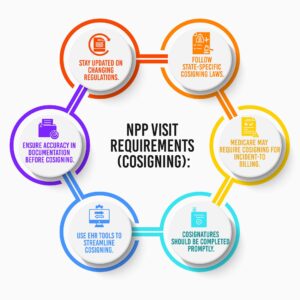
Nonphysician Practitioners (NPPs)—primarily Nurse Practitioners (NPs) and Physician Assistants (PAs)—are essential to modern healthcare delivery. Across primary care, urgent care, internal medicine, pediatrics, women’s health, behavioral health, orthopedics, pain management, and multispecialty clinics, NPPs play a major role in improving patient access, reducing wait times, expanding service lines, and improving practice growth. As more medical practices depend on NPP-led visits, practices must also modernize their documentation and compliance workflows to ensure oversight, quality control, reimbursement accuracy, and audit readiness. One of the most important—and most frequently misunderstood—requirements in NPP-driven practices is co-signing. Co-signature workflows determine how and when an NPP’s notes, orders, or clinical documentation must be reviewed and signed by a supervising or collaborating physician, medical director, or credentialed provider. In 2026, co-sign requirements remain highly relevant because they impact payer compliance, incident-to billing rules, onboarding and clinical governance policies, hospital or facility credentialing guidelines, malpractice risk management protocols, and state-specific supervision frameworks. This guide explains NPP co-sign requirements, clarifies when co-signatures are legally or operationally required, outlines the difference between state law and payer policy, and shows how DocVilla EHR supports robust co-signer workflows for NPP-based medical practices. The goal of this article is to drive traffic from medical practices and providers researching EHR/EMR and practice management software—especially those looking for compliant, efficient co-signing capabilities in a modern cloud EHR. … Read More