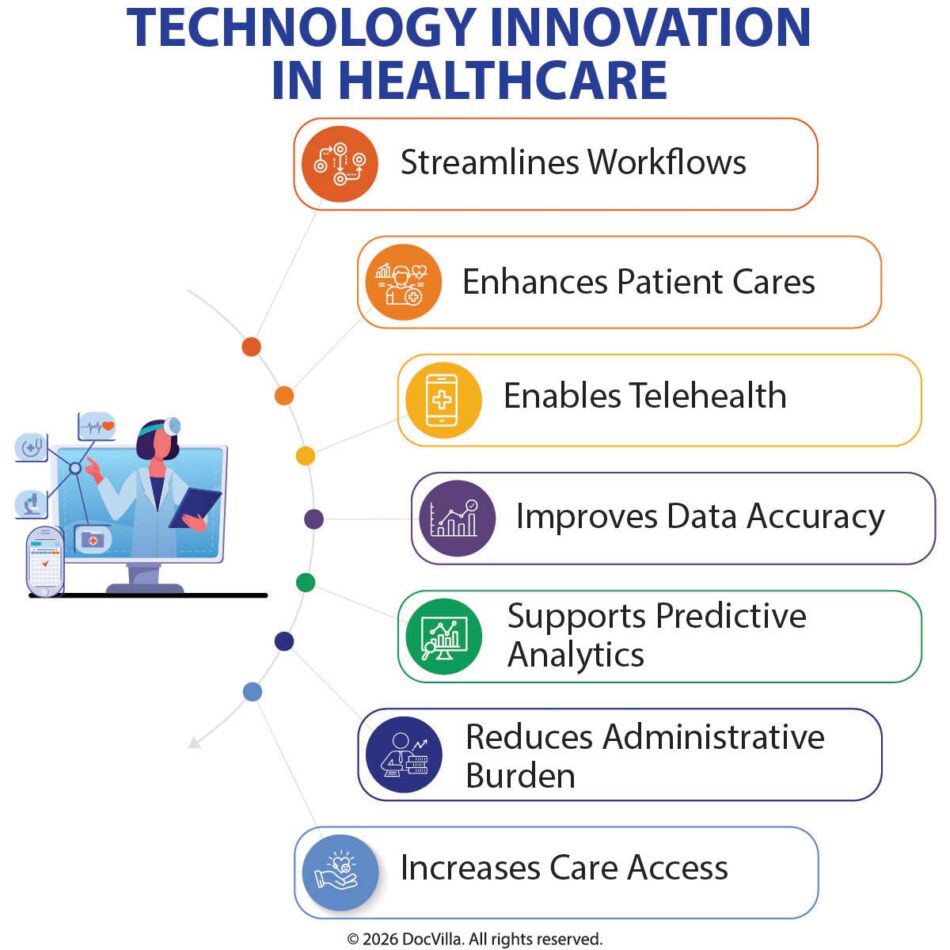
Healthcare has always evolved alongside technological advancement. From the invention of the stethoscope to modern imaging systems, technology has continuously improved the ability of clinicians to diagnose, treat, and manage patient care. However, the pace of technological innovation in healthcare has accelerated dramatically over the past decade. Digital transformation is now reshaping how medical practices operate, how providers interact with patients, how healthcare data is analyzed, and how clinical decisions are supported. In 2026, healthcare technology innovation is not simply about introducing new tools; it is about transforming the entire healthcare delivery ecosystem. Electronic Health Records (EHR), practice management software, telehealth platforms, artificial intelligence, data analytics, remote patient monitoring, automation, and patient engagement technologies are all contributing to a more connected, efficient, and patient-centered healthcare system. For independent medical practices and healthcare organizations, understanding how technology innovation is shaping the future of healthcare is essential for staying competitive and delivering high-quality care. The practices that adopt modern digital solutions today will be better positioned to improve clinical outcomes, streamline operations, enhance patient engagement, and maintain financial sustainability in the evolving healthcare environment. … Read More
EHR Press Releases and Articles
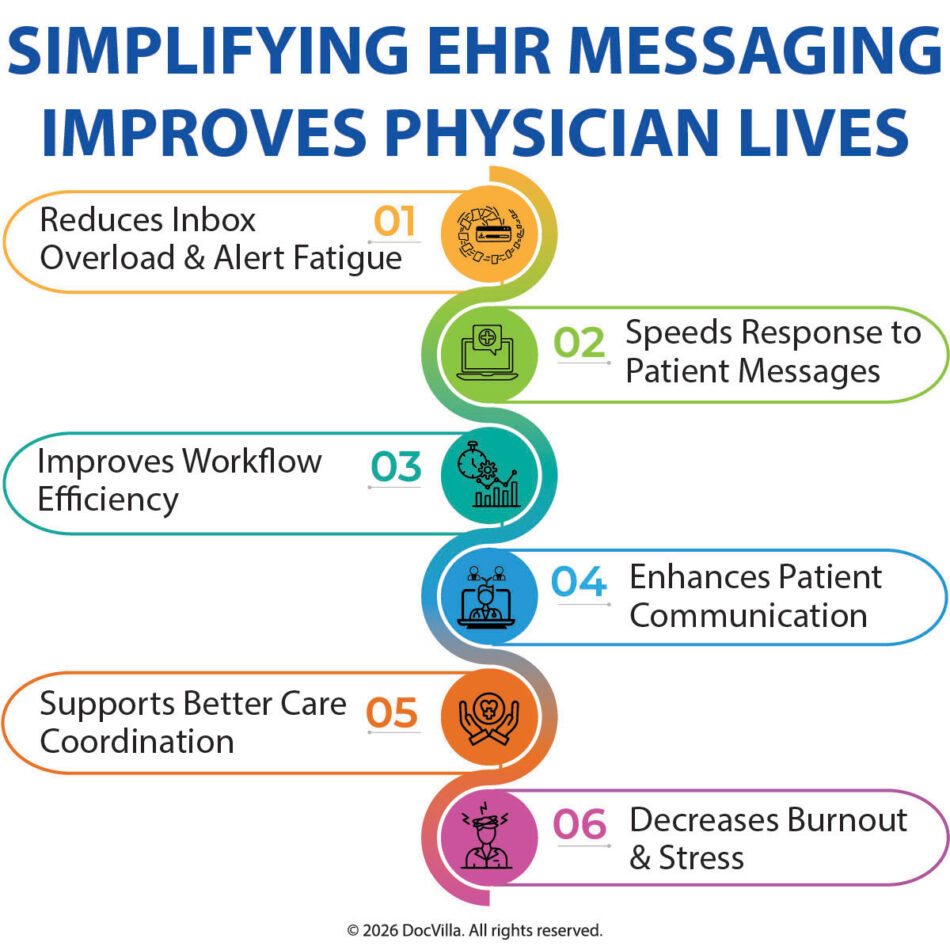
Simplifying EHR Messaging Improves Physician Lives: Reducing Administrative Burden and Enhancing Workflow Efficiency in Modern Medical Practices
Electronic Health Records have transformed healthcare delivery over the past two decades. They have improved documentation accuracy, enabled digital prescribing, facilitated patient data sharing, and strengthened regulatory compliance. However, one area where EHR systems have created unintended complexity is messaging. In modern medical practices, EHR messaging is used for internal communication between staff, patient portal communication, lab result notifications, prescription refill requests, billing coordination, referral tracking, and administrative alerts. While these tools are essential for coordinated care, poorly designed messaging systems can overwhelm physicians and clinical staff. In many practices, physicians receive dozens or even hundreds of messages daily. These messages range from clinical inquiries to administrative updates and patient requests. When messaging workflows are inefficient or poorly filtered, physicians experience notification fatigue, administrative overload, and reduced productivity. Simplifying EHR messaging has therefore become one of the most important strategies for improving physician work-life balance and clinic efficiency. By designing messaging systems that prioritize clinical relevance, automate routine tasks, and integrate seamlessly with practice management workflows, modern EHR platforms can significantly improve physician satisfaction while maintaining high-quality patient communication. For medical practices evaluating EHR, EMR, and practice management software, messaging efficiency has become a key factor in determining whether a system supports or hinders physician productivity. … Read More
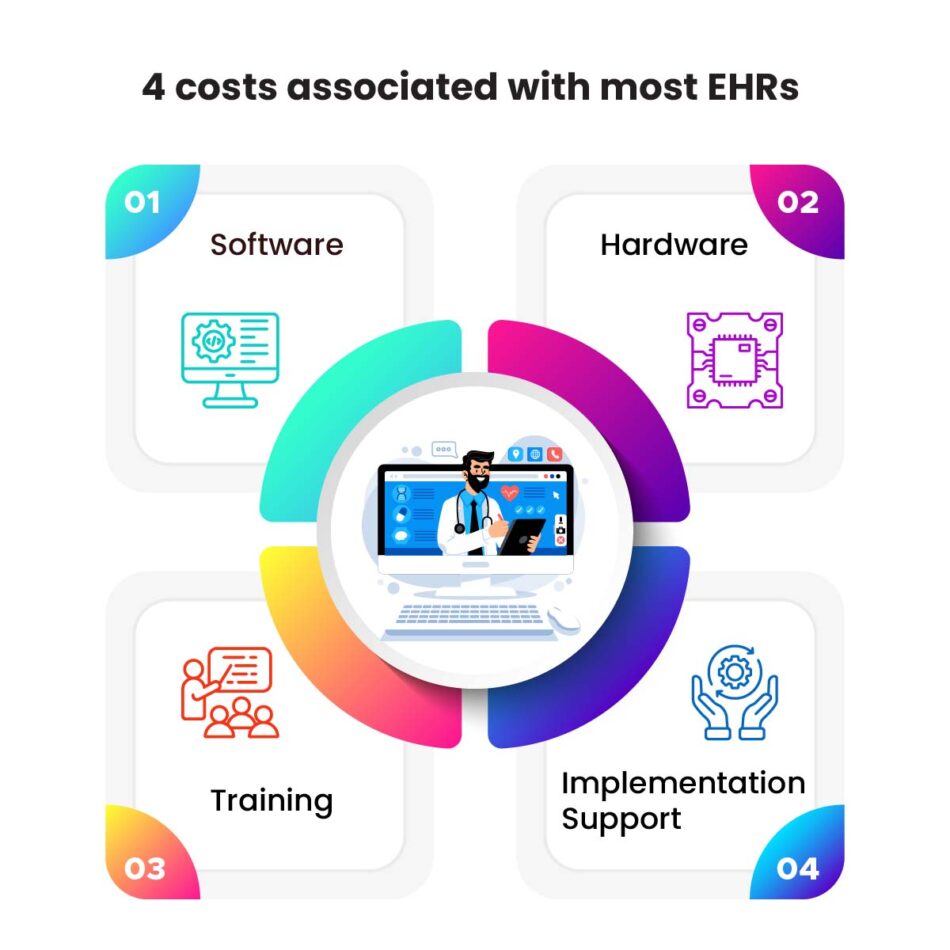
4 Costs Associated with Most EHRs and EMRs: What Medical Practices Must Understand Before Signing a Contract
Electronic Health Records (EHRs) and Electronic Medical Records (EMRs) are no longer optional in modern healthcare. In 2026, every medical practice—from solo primary care clinics to multispecialty groups—relies on digital systems for documentation, scheduling, billing, prescribing, reporting, and patient engagement. Yet despite widespread adoption, many providers underestimate the true cost structure of EHR and EMR systems. Vendors often advertise competitive monthly subscription pricing, but the visible fee is only one part of the financial equation. The real cost of an EHR includes direct expenses, indirect productivity impact, technology infrastructure requirements, integration fees, compliance considerations, and long-term scalability implications. For medical practices evaluating EHR, EMR, and practice management software, understanding the four major cost categories associated with most systems is essential to making a financially sound decision. These costs are: subscription and licensing fees, implementation and training expenses, productivity and workflow impact, and integration plus hidden add-on costs. Each of these influences total cost of ownership (TCO) and long-term return on investment. This guide breaks down each cost in detail and explains how integrated cloud-based platforms can reduce overall expense while improving operational performance. … Read More
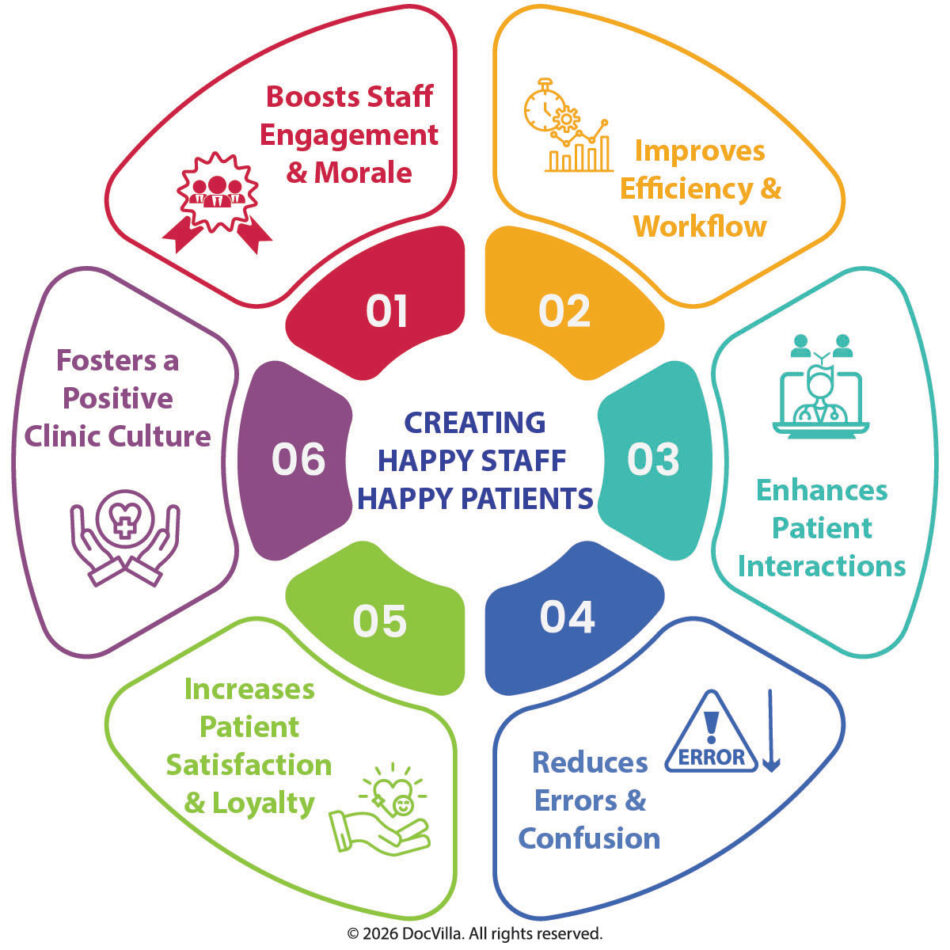
How Creating Happy Staff Members Results in Happy Patients: The Operational Link Between Workplace Culture and Patient Satisfaction in Modern Medical Practices
Healthcare organizations have long focused on patient satisfaction as a key measure of success. In 2026, patient experience scores, online reviews, retention rates, and referral patterns all influence the growth and reputation of medical practices. However, one factor that is sometimes overlooked in the pursuit of patient satisfaction is staff happiness. The truth is that the patient experience is inseparable from the employee experience. The nurses, medical assistants, front desk staff, billers, and administrative coordinators who interact with patients every day shape the atmosphere of a clinic. When staff members feel respected, supported, and empowered, they communicate more effectively, show more empathy, resolve problems more quickly, and contribute to a positive environment that patients notice immediately. When staff members feel overwhelmed, underappreciated, or burdened by inefficient workflows, the opposite occurs. Stress becomes visible, communication deteriorates, errors increase, and patient experiences suffer. For medical practices seeking sustainable growth, creating happy staff members is not merely a human resources objective—it is a strategic operational investment that improves patient satisfaction, clinical outcomes, and financial performance. This article explores the direct relationship between employee satisfaction and patient experiences, the operational factors that influence staff happiness, and how modern EHR, EMR, and practice management software can support a positive workplace culture. … Read More
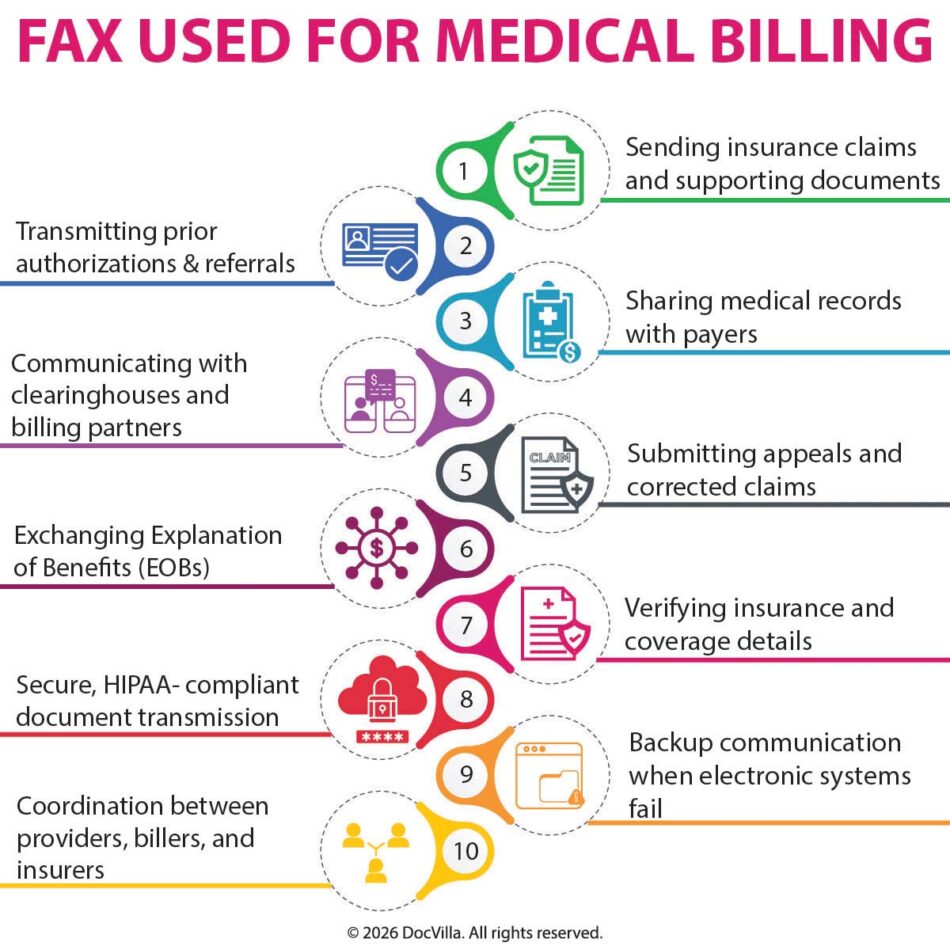
Why Fax Is Still Used for Medical Communication and Medical Billing in 2026: Understanding the Reality Behind Healthcare Workflows
In an era defined by cloud computing, secure messaging platforms, telemedicine, artificial intelligence, and fully integrated Electronic Health Records (EHR), one might assume that fax machines would be obsolete in healthcare. Yet in 2026, fax remains deeply embedded in medical communication and medical billing workflows across the United States. From independent primary care clinics to large multispecialty groups, fax continues to play a central role in transmitting referrals, authorizations, medical records, lab orders, billing documentation, and insurance correspondence. For many healthcare professionals, fax is viewed as outdated and inefficient. However, its continued use is rooted in regulatory realities, interoperability gaps, payer requirements, and workflow habits that have evolved over decades. Understanding why fax persists—and how modern EHR and practice management software integrate electronic fax solutions—is critical for medical practices seeking operational efficiency without disrupting essential communication channels. This comprehensive guide explains why fax remains prevalent, the risks and limitations of traditional faxing, how electronic fax (eFax) modernizes legacy workflows, and why integrated EHR systems must support secure fax communication to ensure seamless operations. … Read More
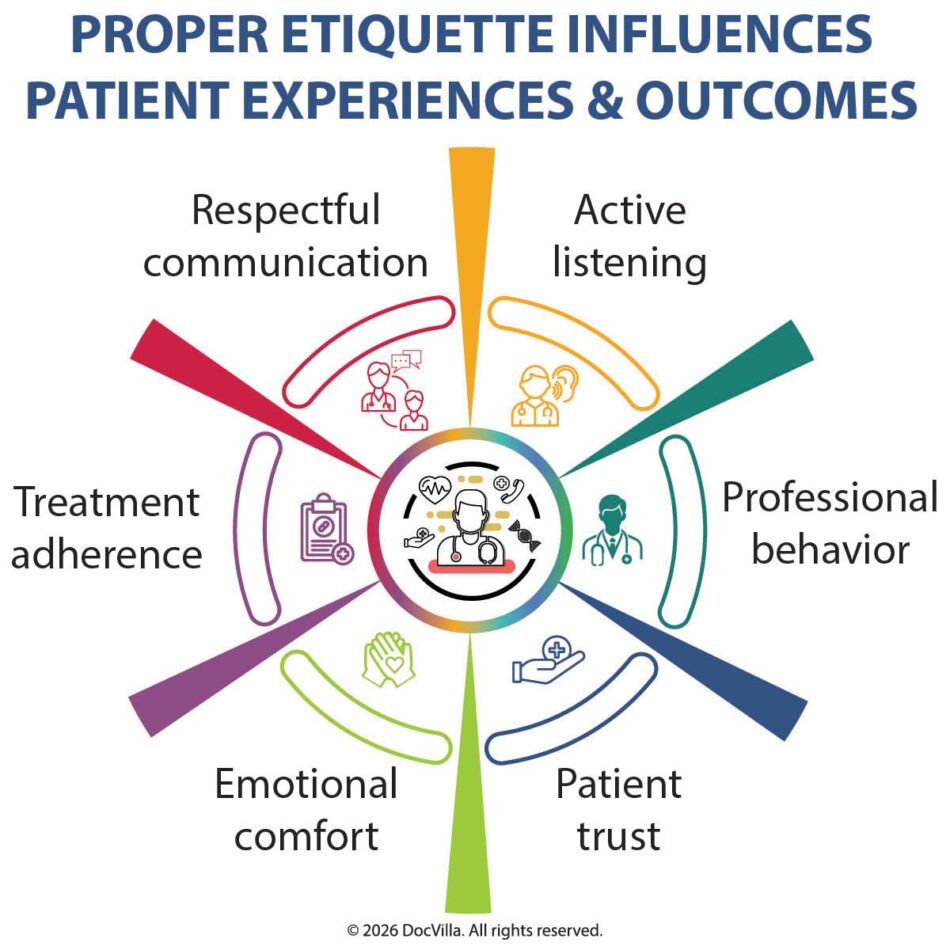
Proper Etiquette Influences Patient Experiences and Outcomes: Why Professional Conduct Matters More Than Ever in Modern Medical Practices
In 2026, healthcare is more technologically advanced, more data-driven, and more efficiency-focused than ever before. Electronic Health Records (EHR), telemedicine platforms, automated scheduling systems, artificial intelligence tools, and integrated practice management software have transformed the operational side of medicine. Yet despite these technological advancements, one factor continues to have an outsized impact on patient experiences and clinical outcomes: proper etiquette. Professional etiquette in healthcare is not simply about politeness or bedside manners. It encompasses communication style, tone, body language, timeliness, respect, confidentiality awareness, cultural sensitivity, digital conduct, and administrative professionalism. Proper etiquette influences patient trust, treatment adherence, satisfaction scores, online reputation, retention rates, malpractice risk, and overall health outcomes. In competitive healthcare markets, especially for independent medical practices, etiquette has become a strategic advantage. When supported by efficient EHR and practice management systems, proper etiquette amplifies operational performance and strengthens patient loyalty. This comprehensive guide explores how etiquette influences patient experiences and outcomes, how it intersects with workflow efficiency, and why medical practices must align professional conduct with modern healthcare technology to achieve sustainable growth. … Read More
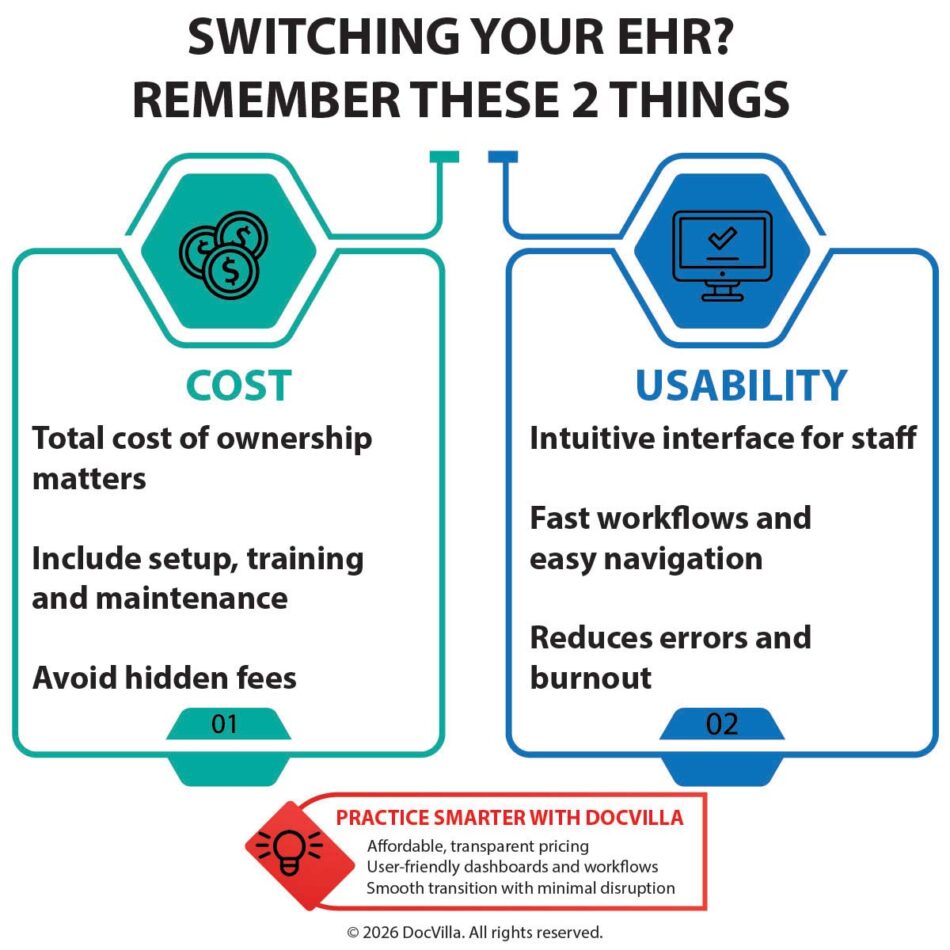
Switching Your EHR? Make Sure You Remember Two Things – Cost and Usability (2026 Guide for Medical Practices)
Switching your Electronic Health Record system is one of the most disruptive yet strategically important decisions a medical practice can make. In 2026, EHR platforms are no longer simple digital charting tools. They are integrated ecosystems that control documentation, scheduling, billing, telehealth, patient engagement, reporting, compliance workflows, and revenue cycle management. When practices outgrow their current EHR or become frustrated with inefficiencies, the instinct is often to search for a “better” system. However, many clinics make the mistake of focusing on feature lists or vendor marketing without fully evaluating two critical variables: cost and usability. Cost determines long-term financial sustainability. Usability determines daily operational efficiency, provider satisfaction, and revenue performance. Together, these two factors shape the true return on investment of an EHR switch. This comprehensive guide explores why practices switch EHR systems, the hidden costs of migration, how usability directly impacts performance, and how medical practices can make a financially sound, usability-driven decision when selecting new EHR, EMR, and practice management software. … Read More
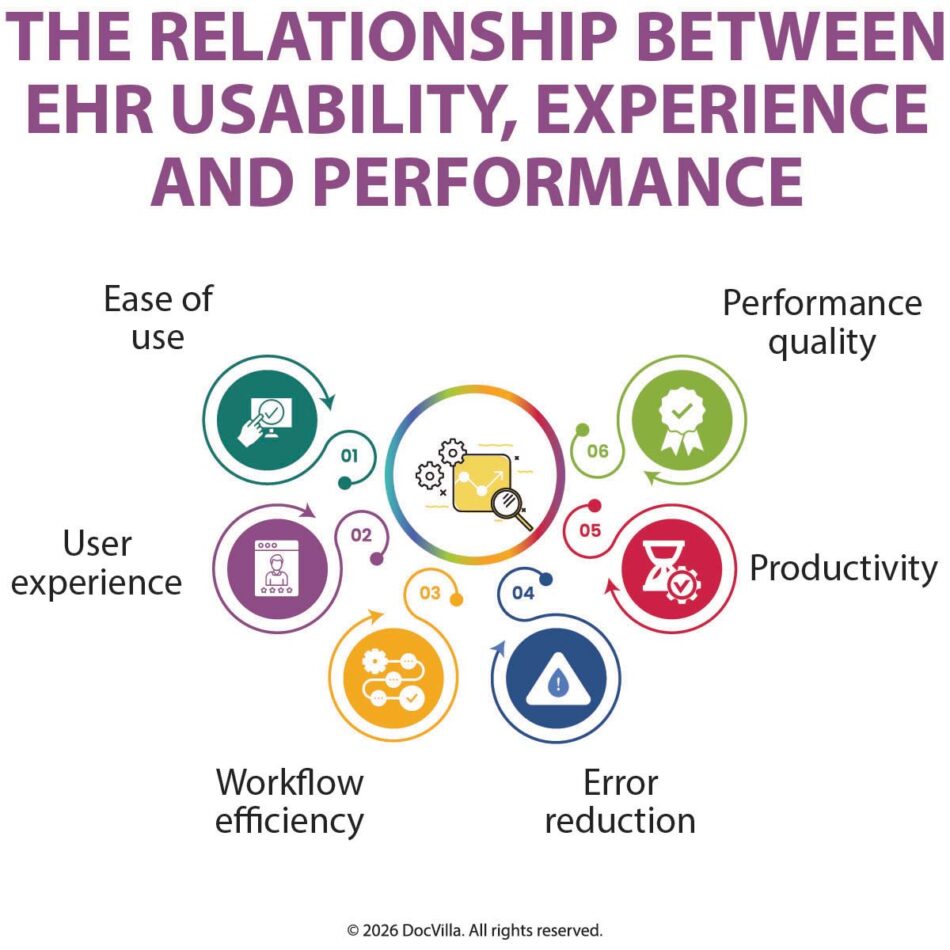
The Relationship Between EHR Usability, Experience, and Performance: Why It Matters for Modern Medical Practices in 2026
Electronic Health Records are no longer optional tools; they are the operational backbone of every modern medical practice. In 2026, the conversation has shifted from whether a clinic should use an EHR to how well that EHR performs in real-world workflows. Increasingly, medical practices are discovering that EHR usability directly impacts clinical efficiency, provider experience, staff productivity, patient satisfaction, revenue cycle performance, and long-term business growth. The relationship between EHR usability, user experience, and practice performance is not theoretical—it is measurable and financially significant. When an EHR is intuitive, fast, and aligned with clinical workflows, providers complete charts faster, billing accuracy improves, no-shows decrease, and staff morale rises. When usability is poor, documentation time increases, burnout accelerates, errors multiply, and revenue suffers. This article explores in depth how EHR usability influences the experience of physicians, nurse practitioners, physician assistants, billing teams, and administrative staff—and how that experience translates into operational performance. For medical practices evaluating EHR, EMR, and practice management software, understanding this relationship is critical to making a strategic technology investment. … Read More
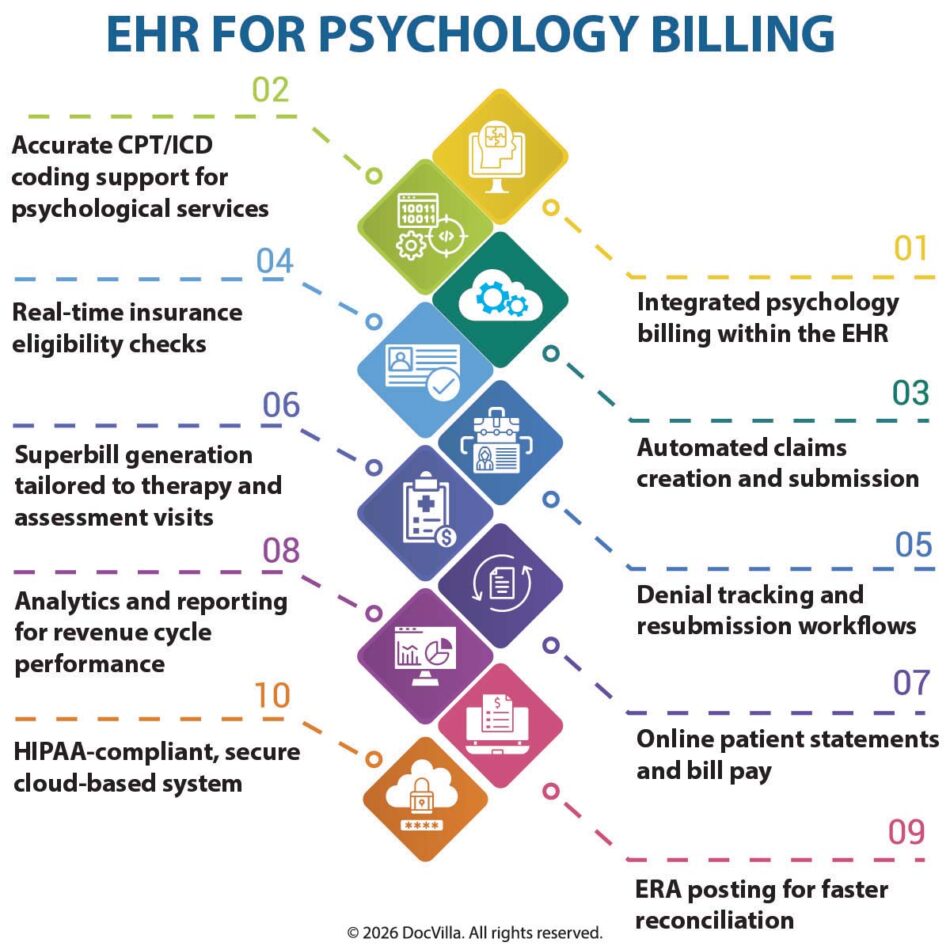
Psychology Billing Services for Streamlined Cash Flow: A 2026 Guide for Behavioral Health Practices
Behavioral health practices face unique financial challenges compared to many other medical specialties. Psychologists, psychiatrists, licensed therapists, and multi-provider behavioral health groups operate in a reimbursement environment that includes complex CPT coding structures, time-based billing, authorization requirements, varying payer rules, and increasingly strict documentation audits. At the same time, many psychology practices operate as small or mid-sized independent clinics, where administrative overhead must be carefully controlled to maintain profitability. In 2026, psychology billing services have become more than just claim submission tools—they are strategic systems that determine cash flow stability, claim approval rates, patient payment collections, and long-term financial sustainability. For behavioral health practices looking to improve revenue cycle performance, understanding how psychology billing services integrate with EHR, EMR, and practice management software is essential. This comprehensive guide explores how psychology billing works, the most common revenue challenges behavioral health practices face, how streamlined billing improves cash flow, and how integrated EHR and practice management platforms support financial success. … Read More
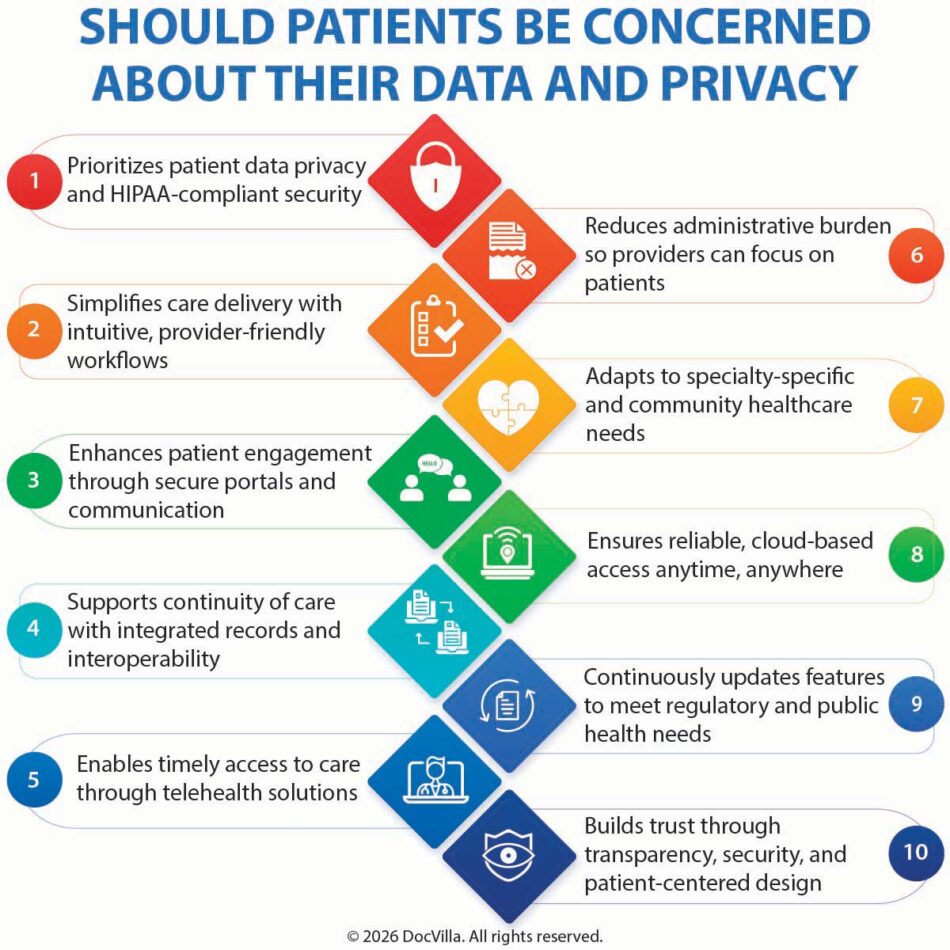
Should Patients Be Concerned About Their Data and Privacy? A 2026 Guide for Modern Medical Practices
Healthcare has become increasingly digital. Medical records are stored electronically. Prescriptions are transmitted electronically. Lab results move through digital interfaces. Telemedicine visits occur over encrypted video platforms. Patients message their doctors through portals. Bills are paid online. In 2026, almost every interaction between a patient and a medical practice leaves a digital footprint. With the rise of cyberattacks, data breaches, ransomware incidents, and identity theft, it is natural for patients to ask an important question: should they be concerned about their healthcare data and privacy? The short answer is that healthcare data is highly sensitive and therefore valuable, which makes it a target. However, the more important answer is that patients should not panic—but they should expect medical practices to use secure, compliant, modern systems to protect their information. For medical practices, this topic is no longer optional. Patient trust is directly tied to data protection practices. Choosing the right EHR, EMR, and practice management software is one of the most critical decisions a clinic can make to safeguard patient privacy while delivering efficient care. This article explores the realities of healthcare data privacy in 2026, the risks patients should understand, the safeguards practices must implement, and how modern cloud-based EHR systems help protect sensitive information. … Read More