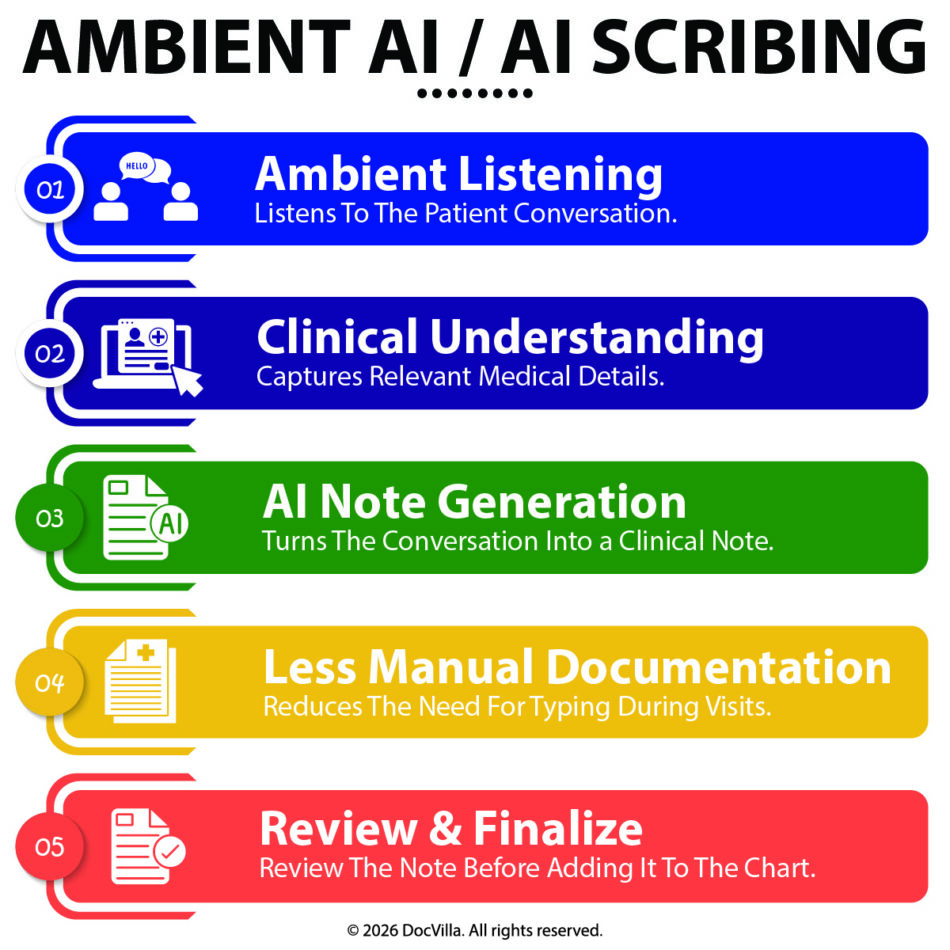
DocVilla’s AI claim scrubbing checks each claim against payer, coding-consistency, and formatting rules before it leaves the EHR, so avoidable rejections are fixed in the office, not from a remittance. … Read More
EHR EMR articles
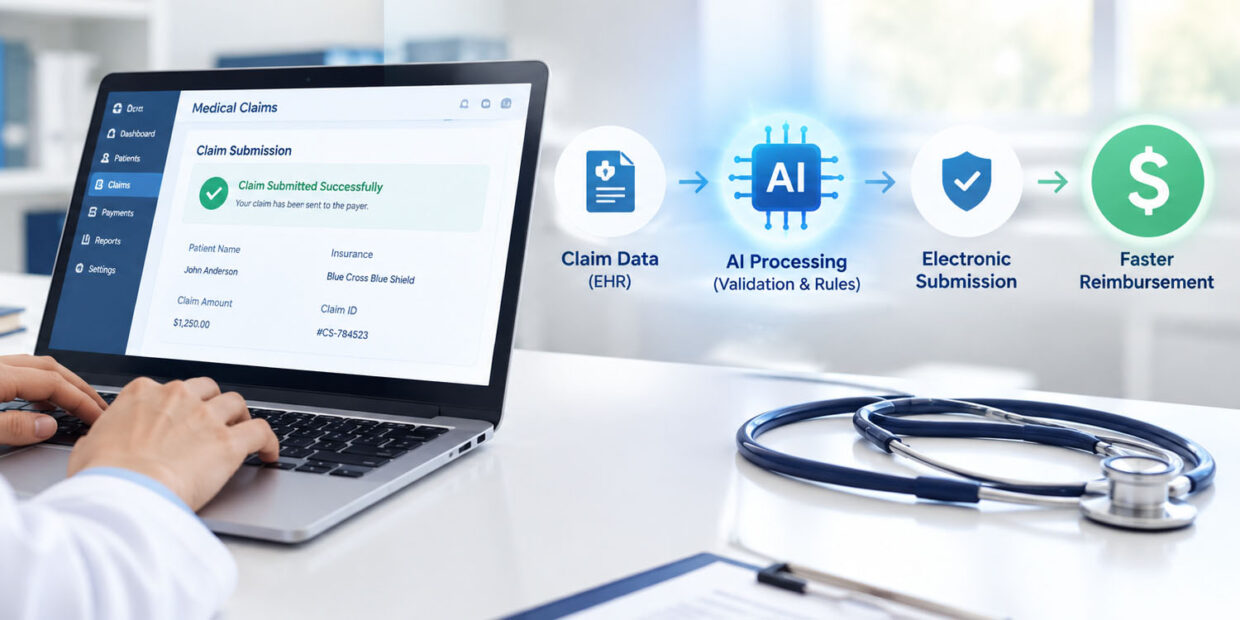
AI Claim Scrubbing in DocVilla: Cleaner Claims Before They Leave the EHR
DocVilla’s AI claim scrubbing checks each claim against payer, coding-consistency, and formatting rules before it leaves the EHR, so avoidable rejections are fixed in the office, not from a remittance. … Read More

Patient AI Summary in DocVilla: AI-Generated Chart Summaries Before Every Visit
Patient AI Summary generates a concise, structured recap of a patient’s recent encounters inside DocVilla so providers start each visit oriented — a review aid, available as an add-on. … Read More

Denial Codes Explained: CO-45, CO-97, CO-16, and the Other CARC Codes Every Practice Sees (and How to Fix Each)
See how DocVilla compares side by side with 23 leading EHR and practice management systems, from Athenahealth and eClinicalWorks to WebPT and SimplePractice. … Read More

Provider Credentialing for a New Medical Practice: CAQH, PECOS, Timelines, and How Enrollment Differs
See how DocVilla compares side by side with 23 leading EHR and practice management systems, from Athenahealth and eClinicalWorks to WebPT and SimplePractice. … Read More

DocVilla vs Other EHRs: 23 Side-by-Side EHR Comparisons
See how DocVilla compares side by side with 23 leading EHR and practice management systems, from Athenahealth and eClinicalWorks to WebPT and SimplePractice. … Read More
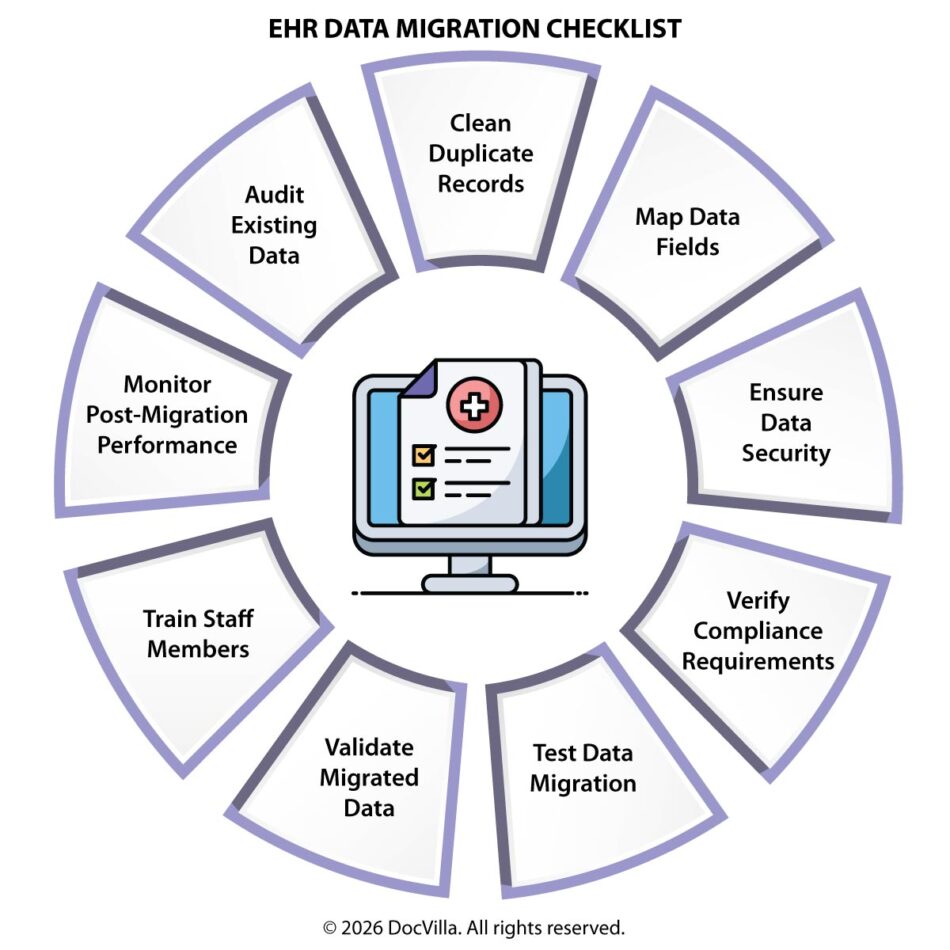
EHR Data Migration Checklist: A Complete Guide for Medical Practices Switching Systems
Switching Electronic Health Record (EHR) systems is one of the most complex and high-risk transitions a medical practice can undertake. While the decision to move to a new EHR or integrated practice management platform is often driven by the need for better workflows, improved usability, or enhanced features, the process of migrating data from one system to another requires careful planning and execution. Patient records contain critical clinical, financial, and operational information that must be transferred accurately to ensure continuity of care. Any errors during migration can disrupt workflows, delay patient care, and create compliance risks. For this reason, medical practices must approach EHR data migration with a structured strategy that minimizes risk and ensures data integrity. A well-defined migration checklist helps practices prepare for each stage of the process, from initial planning and data mapping to testing, validation, and post-migration optimization. Practices that follow a comprehensive migration plan can avoid common pitfalls such as data loss, mismatched records, and workflow disruptions. In addition, selecting a modern, cloud-based EHR and practice management platform can simplify migration by offering better tools for data import, integration, and ongoing system updates. This guide provides a detailed EHR data migration checklist designed to help medical practices transition smoothly to a new system while maintaining operational efficiency and patient care quality. … Read More
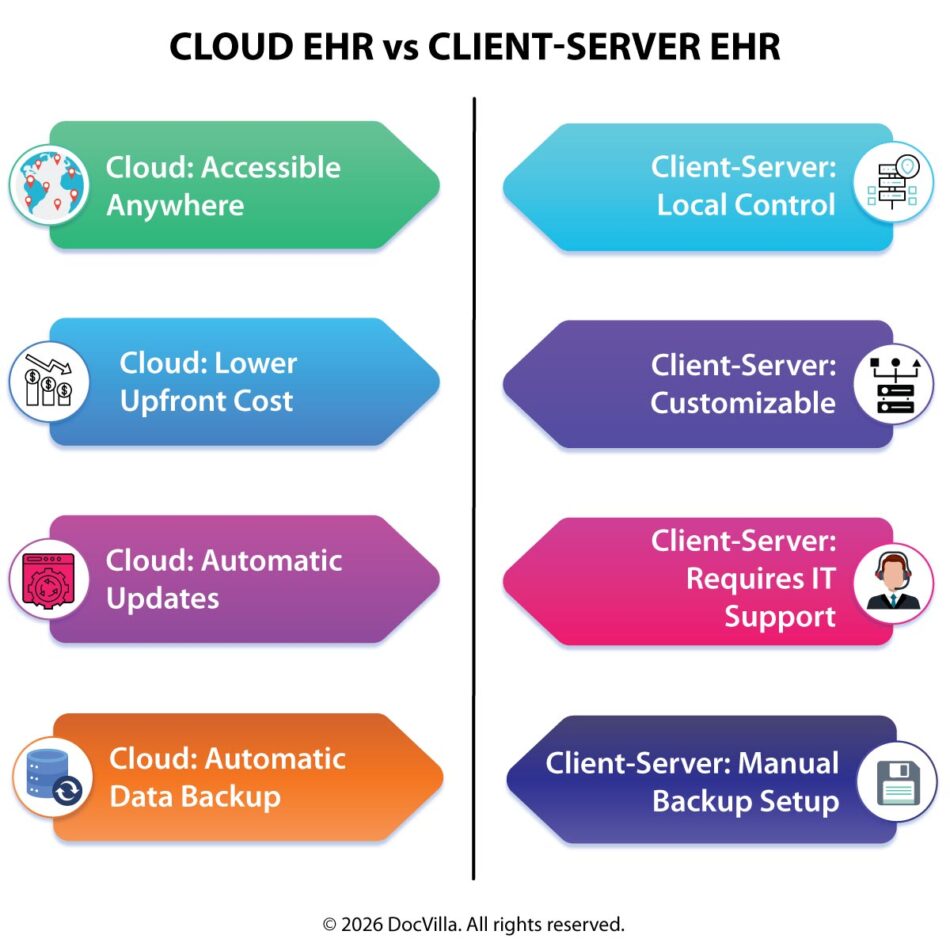
Cloud EHR vs Client-Server EHR: Which Is the Better Choice for Modern Medical Practices?
The healthcare industry has undergone a dramatic technological transformation over the past two decades. Medical records that were once stored in paper charts have largely been replaced by Electronic Health Records (EHR) and Electronic Medical Records (EMR) systems that allow providers to store, access, and manage patient data digitally. As healthcare practices adopt digital systems, one of the most important technology decisions they must make is choosing the type of infrastructure that will host their EHR system. Two primary models dominate the healthcare technology landscape: cloud-based EHR systems and traditional client-server EHR systems. Each approach has its own architecture, benefits, limitations, and cost considerations. For medical practices evaluating EHR, EMR, and practice management software, understanding the differences between these two models is essential for making an informed decision. The infrastructure that supports an EHR system affects accessibility, scalability, maintenance requirements, data security, and long-term operational costs. As healthcare organizations continue to embrace digital transformation, cloud-based systems are increasingly becoming the preferred option for many practices. However, some organizations still rely on client-server systems due to specific operational or regulatory considerations. By understanding how these systems function and evaluating their advantages and disadvantages, medical practices can determine which approach best aligns with their operational goals and technological capabilities. … Read More
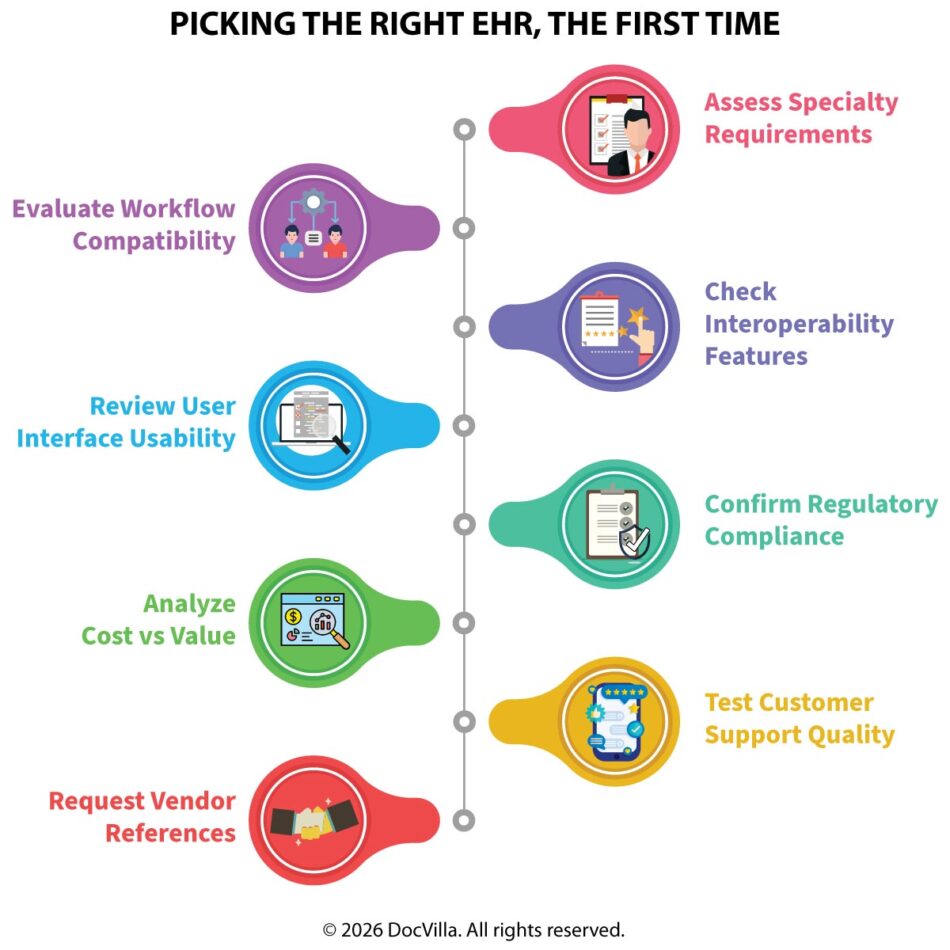
Picking the Right EHR the First Time: A Complete Guide for Medical Practices
Choosing an Electronic Health Record (EHR) system is one of the most important technology decisions a medical practice will make. The EHR platform becomes the digital foundation for nearly every aspect of clinical and administrative operations, including patient documentation, appointment scheduling, billing, prescription management, patient communication, and regulatory reporting. A well-chosen EHR system can streamline workflows, improve patient care, and support practice growth for many years. However, selecting the wrong EHR system can lead to operational inefficiencies, increased administrative workload, staff frustration, and costly system migrations in the future. Many healthcare organizations discover that switching EHR systems after implementation is far more complicated than expected because of data migration challenges, staff retraining, workflow disruptions, and financial costs. For this reason, medical practices must take a strategic approach when selecting an EHR platform. The goal should be to choose a system that aligns with the practice’s clinical workflows, supports long-term scalability, and integrates seamlessly with practice management tools. By carefully evaluating system features, usability, integration capabilities, security standards, and vendor support, medical practices can avoid common pitfalls and select the right EHR solution from the beginning. Making the right choice the first time allows healthcare providers to focus on delivering high-quality patient care rather than struggling with inefficient technology. … Read More
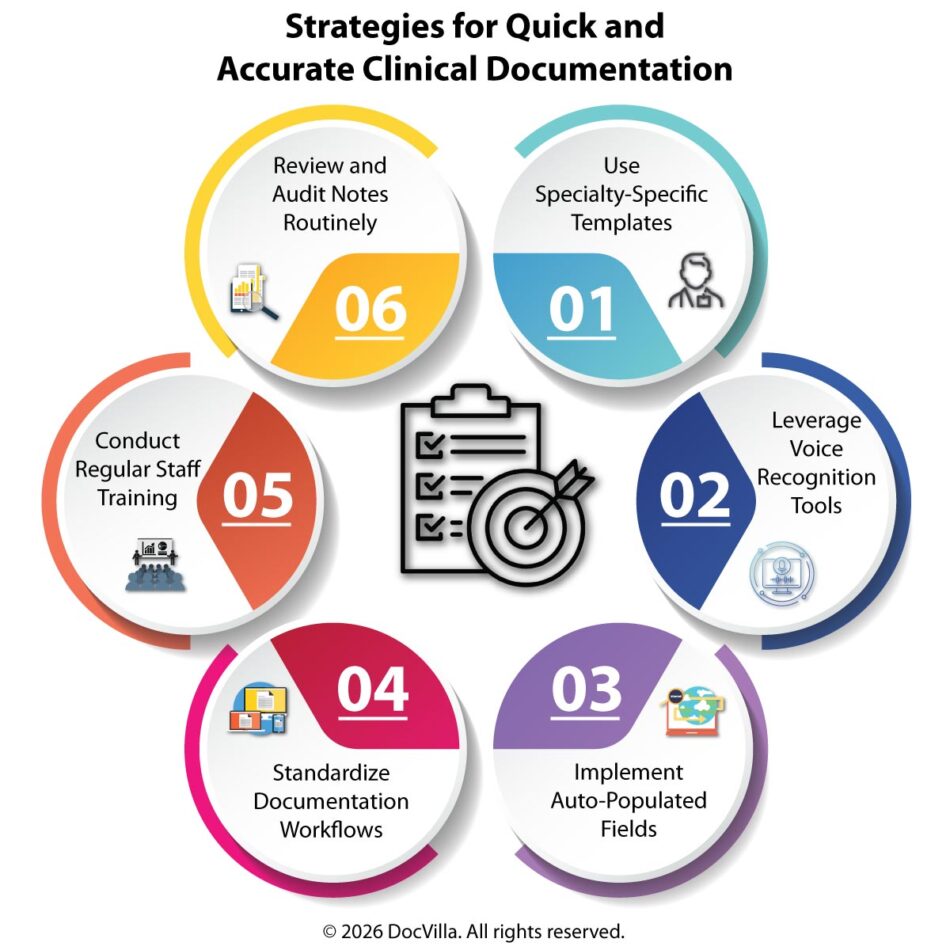
Strategies for Quick and Accurate Clinical Documentation in Modern Medical Practices
Clinical documentation is one of the most important responsibilities in healthcare. Every patient encounter generates critical information that must be recorded accurately to ensure continuity of care, support medical decision-making, and comply with regulatory requirements. Documentation also plays a central role in billing, coding, quality reporting, and legal protection for healthcare providers. However, many physicians and healthcare staff feel overwhelmed by the amount of time required to complete clinical documentation. Providers often report spending hours each day updating electronic charts, reviewing patient records, and completing administrative tasks related to documentation. In some cases, the documentation burden can interfere with patient interactions and contribute to physician burnout. The challenge for modern healthcare organizations is finding ways to document patient encounters quickly without sacrificing accuracy or quality. Effective documentation strategies combine efficient workflows, standardized templates, digital tools, and integrated Electronic Health Record (EHR) systems that streamline data entry and reduce redundant tasks. When documentation processes are optimized, providers can spend less time navigating complex systems and more time focusing on patient care. Modern EHR, EMR, and practice management platforms play a key role in enabling fast and accurate clinical documentation by automating routine tasks, organizing patient data effectively, and supporting intuitive workflows. For medical practices seeking to improve productivity and reduce administrative burdens, adopting strategic documentation practices can significantly enhance operational efficiency while maintaining high standards of care. … Read More